
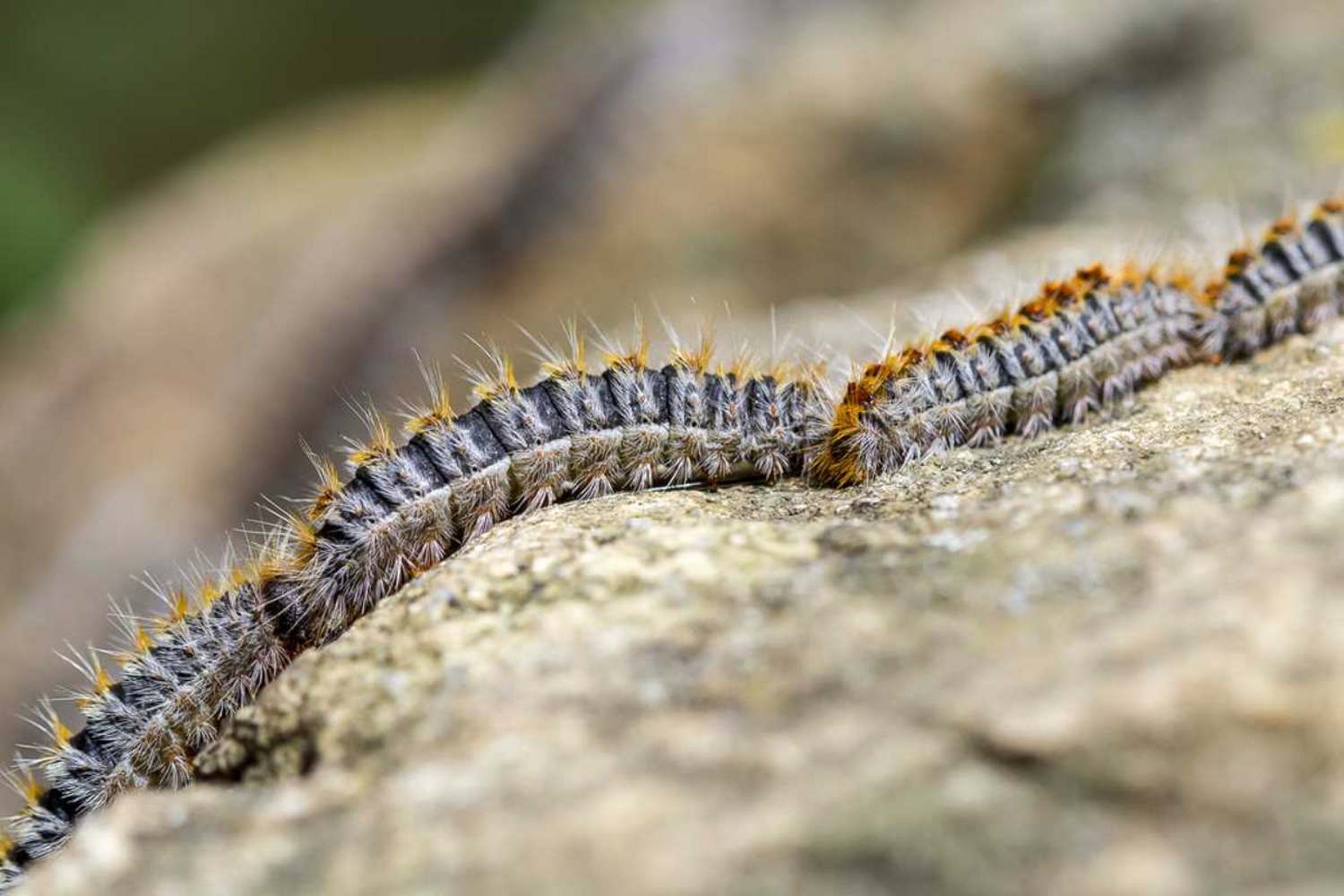
During the spring months, many trees, in particular pines and oaks, host some Special nests, similar to large white cobwebs. Within these structures the processionary larvaea caterpillar covered with stinging hair that can be very dangerous for humans and pets.
Why is the processionary dangerous?
The main threat of this insect lies in its hair, equipped with microscopic Uncini who stick to the skin and release an irritating substance. Contact with these hair can cause serious allergic reactionsskin irritations, breathing difficulties and, in the most serious cases, damage to the eyes or mucous membranes. Pets, like dogs, run an even greater risk: if they lick or accidentally ingest a processionary, they can suffer serious injuries to the mouth, up to the necrosis of the tongue. In extreme situations, ingestion can be fatal.
The life cycle of the processionary
These caterpillars cross several phases before turning into moths. The eggs come laid on the branches during the summer And in autumn the larvae start to feed on the needles of the guest plants. With the arrival of winter they build their protective nests, which can be observed in the parts most exposed to the sun of the trees. In the spring the larvae leave the nests and They move in a row in row towards the groundwhere they interior to complete the metamorphosis in chrysalis. The adult carpets emerge during the summer, ready to start the cycle again.
How to recognize and prevent danger
The processing nests are easily identifiable: they have a Serice consistency and are mainly found on the branches most exposed to sunlight. When the caterpillars come out for their characteristic procession, it is fundamental Avoid contact and keep children and animals away.
To limit the diffusion of the processionary, different methods are used: the endotherapy treatment, which protects trees through repellent substances, and the biological strugglewhich uses natural predators such as some types of birds. Also the sexual pheromoni traps They are effective to reduce the number of adult specimens.
What to do in case of contact?
If you accidentally touch a processionary, it is important wash the skin immediately with plenty of water and soapavoiding rubbing. Clothes must be washed at high temperatures to eliminate stinging hair. In case of serious allergic reactions, it is advisable to take an antihistamine and contact a doctor. For animals, it is essential Rinse the mouth immediately and go to the vet to avoid more serious consequences.
