
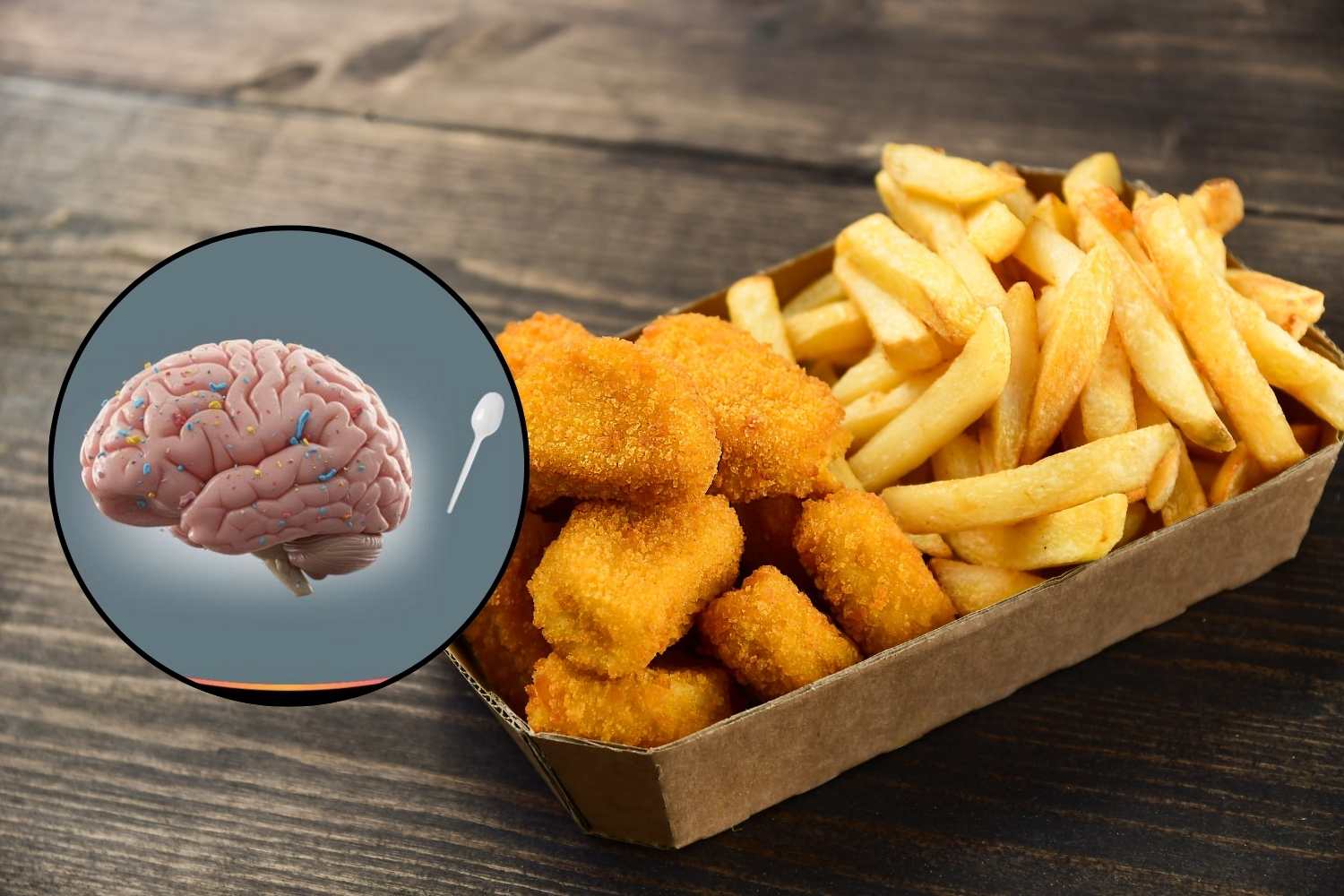
A new study shows that ultra-processed foods, already known for their negative health effects, contain worrying quantities of microplastics that could reach the brain and damage mental health
THE ultra -prompt foods They are now an integral part of our daily diet: we find them everywhere and we often consume them without realizing the possible health risks, that scientific research is highlighting with increasing clarity.
A collection of Four scientific articles published in the magazine Brain Medicine shows a possible connection between the consumption of ultra-processed foods (upf), the presence of microplastics and the increase in mental disorders As depression, anxiety and insomnia.
The studies were conducted by an international group of researchers from the University of Ottawa and the University of Toronto in Canada, Loma Linda University School of Medicine in the United States, and by the Food & Mood Center of the Deakin University in Australia. These highlight how microplastics can enter our body, accumulate in vital organs and contribute to the worsening of psychological well -being.
What are UPF and why they are a problem
Ultra-reprocessive foods (UPF) include a wide range of industrial products, including:
These foods are often rich in added sugars, saturated fats, sodium, chemical additives and, as underlined by the new study, microplastics.
What the study discovered
The researchers analyzed various food products, comparing the content of microplastics in ultra-processed foods than fresh and less processed foods.
A concrete example? THE Industrial chicken morsels (like the classics Nuggets) were containing Up to 30 times more microplasty per gram than fresh chicken breasts.
These tiny particles can cross the blood-brain barrier, reaching the brain and accumulate. One of the most disturbing hypotheses is that in the human brain you can get to have up to a spoonful of microplastics.
The researchers cite substantial evidence that connects the consumption of ultra-processed foods to mental health problems. A recent general revision published on the BMJ found that people who consume ultra-processed foods had a greater risk of 22% of depression, 48% of anxiety and 41% of sleep disorders.
According to dr. Nicholas Fabiano, specializing in psychiatry at the University of Ottawa, “We are witnessing convergent tests that should all worry about us“In fact, microplastics seem to act through biological mechanisms similar to those already observed in the upf, such as: chronic inflammation, oxidative stress, mitochondrial dysfunction and alteration of neurotransmitters.
Dr. Wolfgang Marx, senior researcher in Australia, added: “These overlaps in the action mechanisms make the link between microplastics and particularly credible mental health“.
What we can do to protect us
Although obviously further research is needed to confirm the direct link between microplastics and depression, the current evidence is sufficient to adopt some precautions:
With a consumption of UPF that exceeds 50% of the daily calorie intake in countries such as the United States (and with growing numbers also in Europe), it is essential to reflect not only on the physical effects, but also on the mental ones of our food habits.
As Fabiano concludes: “After all, we are what we eat. And if our food contains plastic, maybe we should start to really worry“.
