
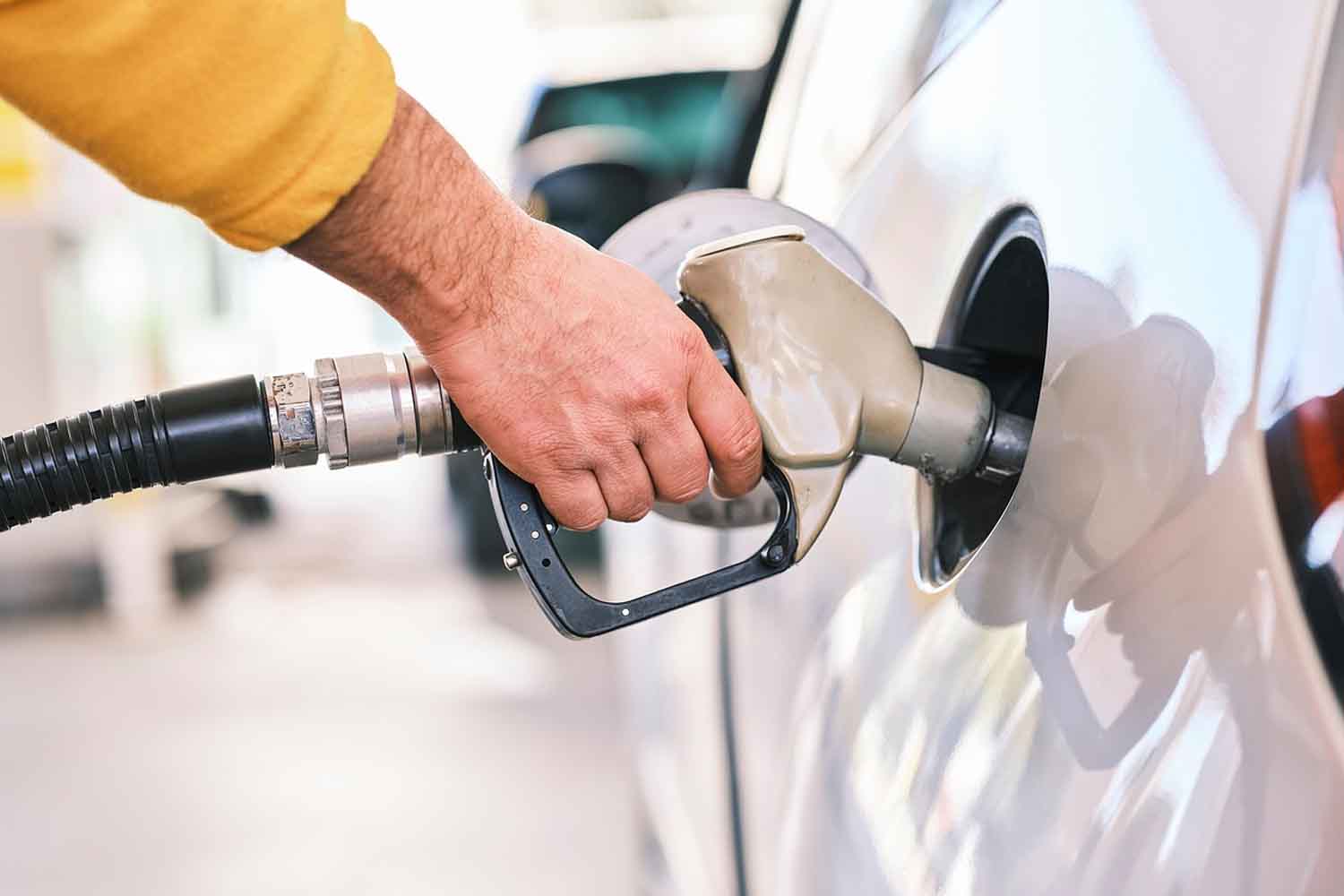
After Eni and Ip, Q8 also puts a ceiling on the price of fuel. The company controlled by the Kuwaiti group has decided to “accept the invitation” of the Meloni Government and will apply a price cap on petrol and diesel for 30 days starting from 1 October.
It is the third major operator to move and with the entry of Q8, which has around 2,900 service stations in Italy, the capped price system now involves a much larger part of the national network.
In a note, Q8 explains that the cap will remain in place for one month and will be enforced through a “modular approach“, therefore not necessarily with a single identical price in all distributors. The company speaks of methods consistent with the different realities that make up its network and has ensured support to managers and partners to preserve the economic sustainability of the supply chain. At the moment, therefore, a single national maximum price like the one chosen by Eni has not been indicated.
A decision consistent with the responsible behavior concretely adopted by the Company in recent months, aimed at protecting consumers and maintaining its competitiveness.
The role of the Government
In fact, Q8’s membership is the result of a strategy that Meloni is pursuing with the main energy operators. After Eni’s decision, which from 28 September set a maximum of 1.99 euros per liter for petrol and 2.19 euros for diesel for 30 days, Socar-IP also responded to the executive’s appeal. Palazzo Chigi then turned its attention to Q8, controlled by the Kuwait Petroleum Corporation, a state-owned company in Kuwait. And today the yes arrived.
I thank Kuwait and the group that controls the Q8 plants in Italy for having accepted the Italian Government’s appeal addressed to energy companies in order to calm the price of fuel – the Prime Minister was quick to declare. After Eni and Socar, according to the Prime Minister, Q8’s decision represents “another important signal of attention to Italian families.
Deputy Prime Minister and Foreign Minister Antonio Tajani instead spoke happily about a “domino effect” which, according to the Government, should help reduce the pressure of price increases on families and businesses.
Yes but for how much?
The Q8 price cap will start on October 1st and will initially last 30 days. It is renewed if the market allows it.
Unlike Eni, as we were saying, the company has not yet communicated two precise national thresholds for petrol and diesel. The reference to an application “modular” suggests that conditions may change within the network, also depending on the type of plant, the relationship with the operators and the different territorial situations.
And it is precisely on this point that consumer associations are asking for greater clarity: to know the effective maximum price, to know how many distributors will be involved and to understand what the real savings will be for those who refuel.
The Government’s “price cap” leaves many questions open
With the participation of Q8, Giorgia Meloni can claim to have convinced three of the main Italian distribution operators to intervene on prices. But precisely now that the operation is expanding, its most controversial point also emerges: we are not faced with a price ceiling decided by the Government, but it is the individual companies who voluntarily choose whether to join, for how long and in what manner.
The strategy was strongly urged by the executive, given the diplomatic contacts activated by Palazzo Chigi with Kuwait to convince Q8 to join, after those with Socar for IP. And Reuters confirms that the Government had opened discussions with Q8 after the decisions of Eni and Socar.
Can the result translate into concrete savings for those who manage to stock up at the stations involved? Of course, but there remains a substantial difference compared to a generalized public intervention: those who buy petrol elsewhere could continue to pay significantly higher prices. Eni, IP and Q8 indeed have a huge presence on the network, but they are not all the network. The choice to push large groups to reduce retail prices therefore risks leaving independent distributors in particular, who do not necessarily have access to the same supply conditions.
Assopetroli-Assoenergia has been reporting this very problem for months: when a large, vertically integrated operator manages to sell at the pump at prices that may be even lower than those paid wholesale by independents, it becomes extremely difficult for the latter to compete. The association explicitly talks about possible effects of margin squeeze and a distortion of the market. After the announcement of Eni’s price cap, the president of Assopetroli Andrea Rossetti once again defined the measure as “distortive”.
In other words, the Government is trying to lower the final price without directly intervening on the mechanism that determines that price. The cost of the operation is borne by the companies that decide to join, while both a part of the distribution and the wholesale market from which numerous independent operators obtain their supplies are left out.
And excise duties?
Yes, what about fuel taxes? The longest-serving Government ever had already used around 2.8 billion euros between temporary reductions in excise duties and concessions linked to the high cost of fuel, but the path chosen now is different: instead of intervening in a generalized way on the fiscal component of the price, Palazzo Chigi is aiming for a “voluntary contribution” from the companies.
It is a choice that allows the State to avoid, at least in the immediate future, a new costly intervention on public finances. But it also means that there is no uniform guarantee on the price paid by motorists: it depends on the company, the distributor and the conditions established by each group.
And the duration, for now, is short. Eni initially set the ceiling for 30 days, while leaving open the possibility of extending it; Q8 in turn announced a 30-day intervention from October 1st, without communicating a single national figure for the moment.
A political success and no structural solution
This is therefore the paradox of the operation: the more companies respond to Palazzo Chigi’s appeal, the more the Government can present the result as a response to the high cost of fuel. Well done! During the election campaign, a stroke of genius.
The “price cap” we are talking about these days is not a maximum price imposed on the Italian market, but rather a sum of company initiatives, obtained also and above all through the political and diplomatic pressure of the executive.
For those who queue and find petrol and diesel at lower prices, they may have a difference in their wallets for a moment, but it remains to be seen what will happen after the thirty days, what will happen to the operators who cannot afford to follow the large groups and, above all, whether, once the emergency is over, the Government will structurally address the issue of taxation, refining and competition in distribution.
