
On March 22nd and 23rd we are called to the polls to express our opinion on some referendum questions regarding the functioning of justice. This is an important vote because it intervenes on sensitive issues such as the responsibility of magistrates, the separation of careers and the functioning of the judicial system.
As often happens with referendums, however, understanding what would really change is not easy. Here is a quick guide to orient yourself among the questions and understand the reasons of those who support yes and those who instead invite you to vote no.
What does the confirmatory referendum on justice provide?
The confirmatory or constitutional referendum (the law approved by Parliament has not reached the qualified majority required by the Constitution and therefore must be subjected to a popular vote to come into force) intervenes on some key points of the Italian judicial system. The objective declared by the promoters is “make justice more efficient, balanced and responsible”, while those who do not support it substantially fear negative effects on the autonomy of the judiciary itself.
To vote you need to tick Yes if you want to confirm the reform, or No if you want to reject it. There is no quorum, but the result will be valid regardless of the turnout.
The ballot paper and the referendum question
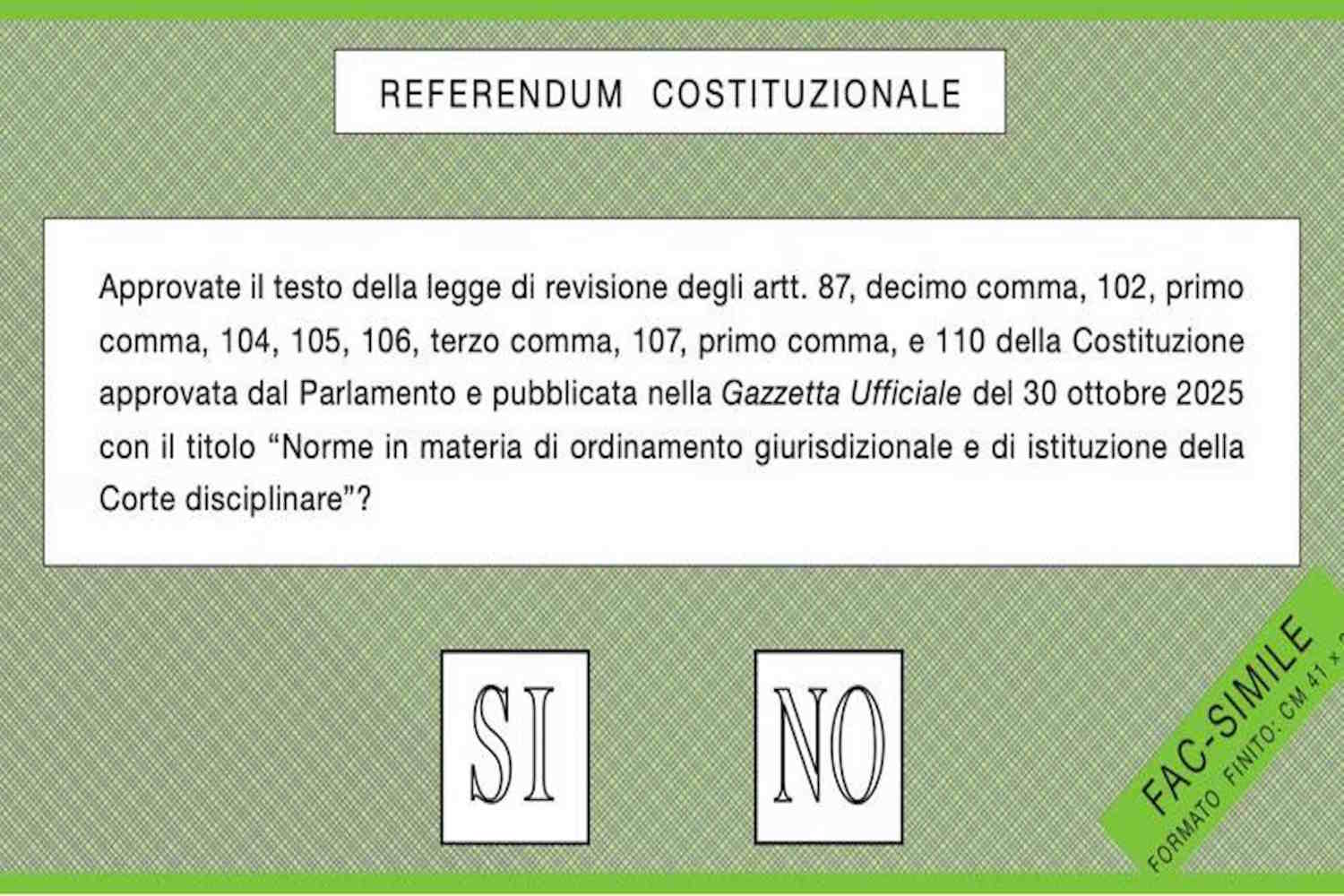
The ballot that voters will receive at the polls will be green. The Ministry of the Interior has published the official facsimile on its website, which reports the question on which Italians will be asked to express their opinion.
The text asks whether the constitutional law approved by Parliament and published in the Official Journal on 30 October 2025, entitled “Regulations regarding the jurisdictional system and the establishment of the Disciplinary Court”. In other words, the referendum asks voters to decide whether or not to confirm a reform that modifies some fundamental rules of the functioning of the judiciary.
The articles of the Constitution involved
The question is:
Approve the text of the law revising the articles. 87, tenth paragraph, 102, first paragraph, 104, 105, 106, third paragraph, 107, first paragraph, and 110 of the Constitution approved by Parliament and published in the Official Journal of 30 October 2025 with the title ‘Regulations regarding the jurisdictional system and the establishment of the Disciplinary Court’?
The reform would therefore like to intervene on seven articles of the Constitution – 87, 102, 104, 105, 106, 107 and 110 – and concerns the organization of the Italian judiciary.
The reform project, known as Nordio reformwould introduce changes ranging from the separation of careers between judges and prosecutors to the creation of two separate Superior Councils of the Judiciary, up to the establishment of a new disciplinary High Court.
What would change with the reform
Today judges and public prosecutors belong to the same order of the judiciary, even if they perform different functions:
The 2022 Cartabia reform had already limited the transition from one function to another, allowing it only once in the first nine years of a career.
With the Nordio reform this step would be eliminated completely: magistrates would have to choose from the beginning whether to become judges or prosecutors, with no longer the possibility of changing roles.
Currently the Constitution provides for a single Superior Council of the Judiciary (CSM), composed of 33 members and chaired by the President of the Republic. The CSM has the task of guaranteeing the independence of magistrates and supervising their activities.
The reform instead provides for the creation of two distinct bodies:
Both would however be presided over by the Head of State. The modification would therefore strengthen the separation between the two careers also at the level of self-government of the judiciary.
Another innovation would concern the system for selecting the members of the new Superior Councils of the Judiciary. Today many members are elected. With the reform, however, a part of the members would be drawn by lot from lists prepared by Parliament and the judiciary, with the declared objective of reducing the weight of internal currents.
The reform would also like to introduce a new body: the High Disciplinary Court. This body would be made up of 15 members, partly magistrates and partly “lay” members, chosen through a mixed system of nomination and draw. The Court would have the task of dealing with disciplinary proceedings concerning magistrates.
The reasons for yes
Those who support the yes believe that the changes can improve the functioning of justice and increase citizens’ trust in the system.
Among the main reasons:
According to yes supporters, these reforms would serve to make justice more transparent, faster and closer to citizens.
The reasons for the no
Those who call for a no vote, however, fear that some changes could compromise the balance of the judicial system. The main criticisms concern:
According to those against, therefore, the referendum questions do not represent the structural solution to the critical issues of the judicial system.
When you vote
The polls will be open:
