
There are things that we see before our eyes every day that we stop seeing. The refrigerator, for example. We open it absentmindedly, insert a bottle, close it again. End. Yet, right there, along that rubber edge that we never look at, one of the reasons why the bill goes up for no apparent reason could be hidden.
The refrigerator is not the most “spectacular” appliance in the home. It doesn’t make noise like the washing machine, it doesn’t heat up like the oven. But he works in silence, without breaks, 24 hours a day, all year round. The indications on energy efficiency released by ENEA and the European Commission include it among the appliances with the highest number of operating hours per year. And it is precisely this continuity that makes it delicate: just one detail out of place is enough to increase consumption. That detail, often, is the gasket.
The seal is the rubber band that runs along the perimeter of the door. Its task is simple and fundamental: to guarantee an hermetic closure. Over time, however, it can stiffen, deform and lose grip. It doesn’t happen suddenly. It is a slow, almost invisible deterioration.
When the closure is no longer perfect, the cold air gradually escapes. The engine, to compensate, turns on more often. And each reactivation means additional consumption. It’s not a noticeable peak, but a silent sum that accumulates day after day. The point, however, is not just about energy. An unstable internal temperature directly affects food preservation. If the cold does not remain constant, the food spoils more quickly. And at that point the problem is no longer just the bill.
According to data from ISPRA and the Waste Watcher observatory, a significant portion of domestic waste is made up of thrown food. Poor storage directly contributes to this phenomenon. And it can all start from a door that doesn’t close properly. Checking the gasket, therefore, is not a technical obsession. It is a concrete gesture that has economic and practical effects, inside the home.
The sheet of paper test
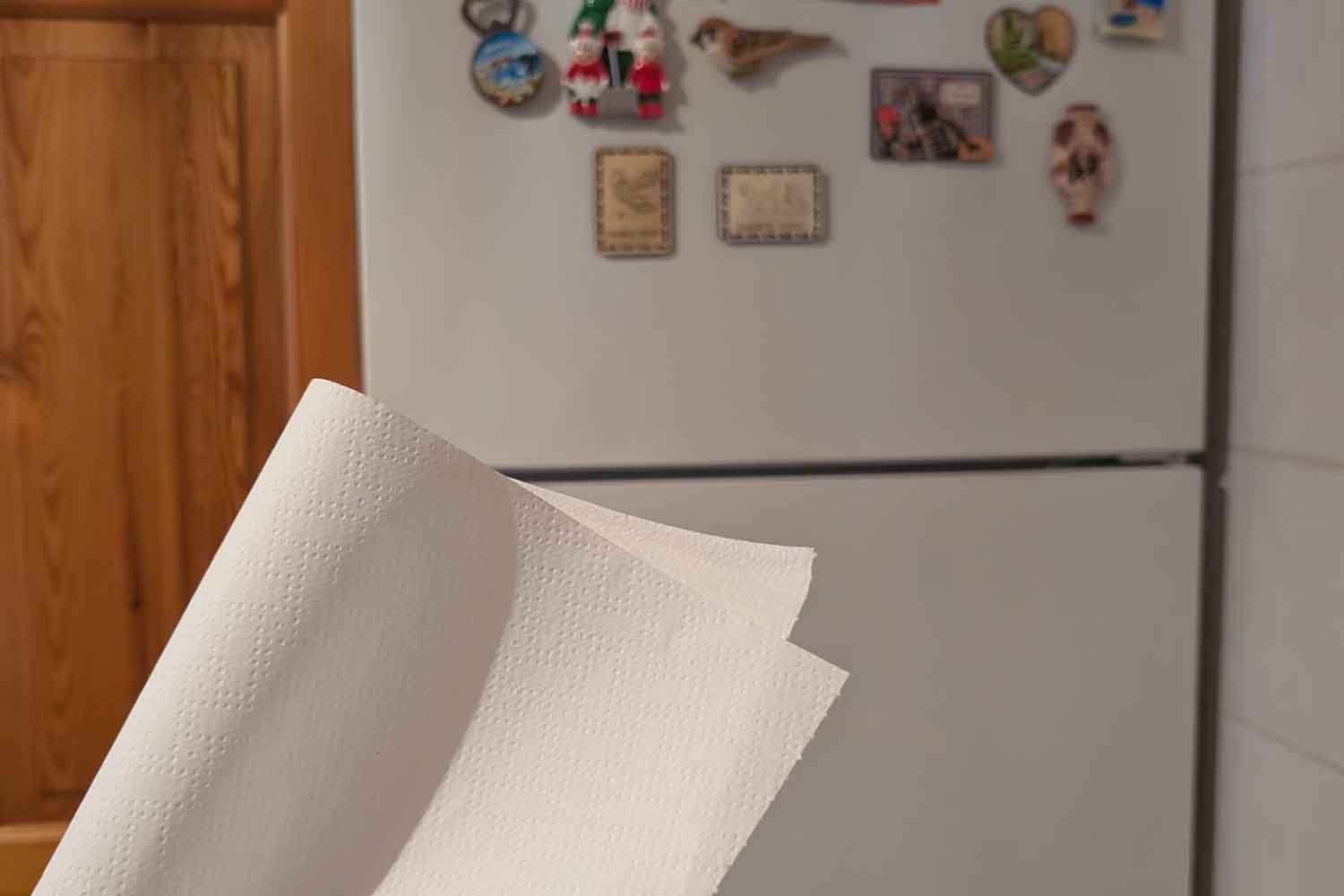
Verification is simpler than it seems. No professional tools or technical skills are needed. Take a sheet of paper towel. Insert it between the seal and the refrigerator structure, then close the door gently. At this point try pulling it.
If the sheet resists and you have to use a little force to remove it, the closure is still effective. If, however, it slips away without friction, it means that the gasket no longer adheres correctly. It is a homemade method, but reliable. And above all immediate. It can avoid weeks, months of unnecessary consumption.
If the test highlights a problem, you can try a temporary solution: heat the gasket with a hair dryer at a moderate temperature to soften it and reshape it manually. It’s not a permanent repair, but it can improve adhesion. Replacement remains the most effective solution and has a low cost, on average around 20 euros.
Refrigerator maintenance: habits that make the difference
There is another common mistake: lowering the temperature excessively thinking it will preserve food better. In reality, all that is achieved is an increase in consumption. The Ministry of Health recommends keeping the refrigerator between 4 and 6 °C, while the freezer should remain at -18 °C. These values guarantee correct conservation without energy waste.
EFSA also underlines the importance of adequate temperatures to limit bacterial proliferation and reduce the risk of food contamination. Going below these thresholds does not increase safety. It only increases consumption. And if the gasket doesn’t hold, maintaining those parameters becomes even more difficult, because the engine will be forced to work more often to compensate for the leaks.
Regular cleaning of the gasket helps keep it supple and tight. Residues of dirt and crumbs can compromise its seal. The internal layout also matters: overloading the shelves hinders the circulation of cold air. Every opening of the door causes a loss of temperature. If the closure is not perfect, the refrigerator will have to recover even more cold. It is a delicate balance, made of details.
Sometimes all it takes is a sheet of paper to realize that something isn’t working as it should. And intervene before the problem translates into wasted energy and thrown away food.
You might also be interested in:
