
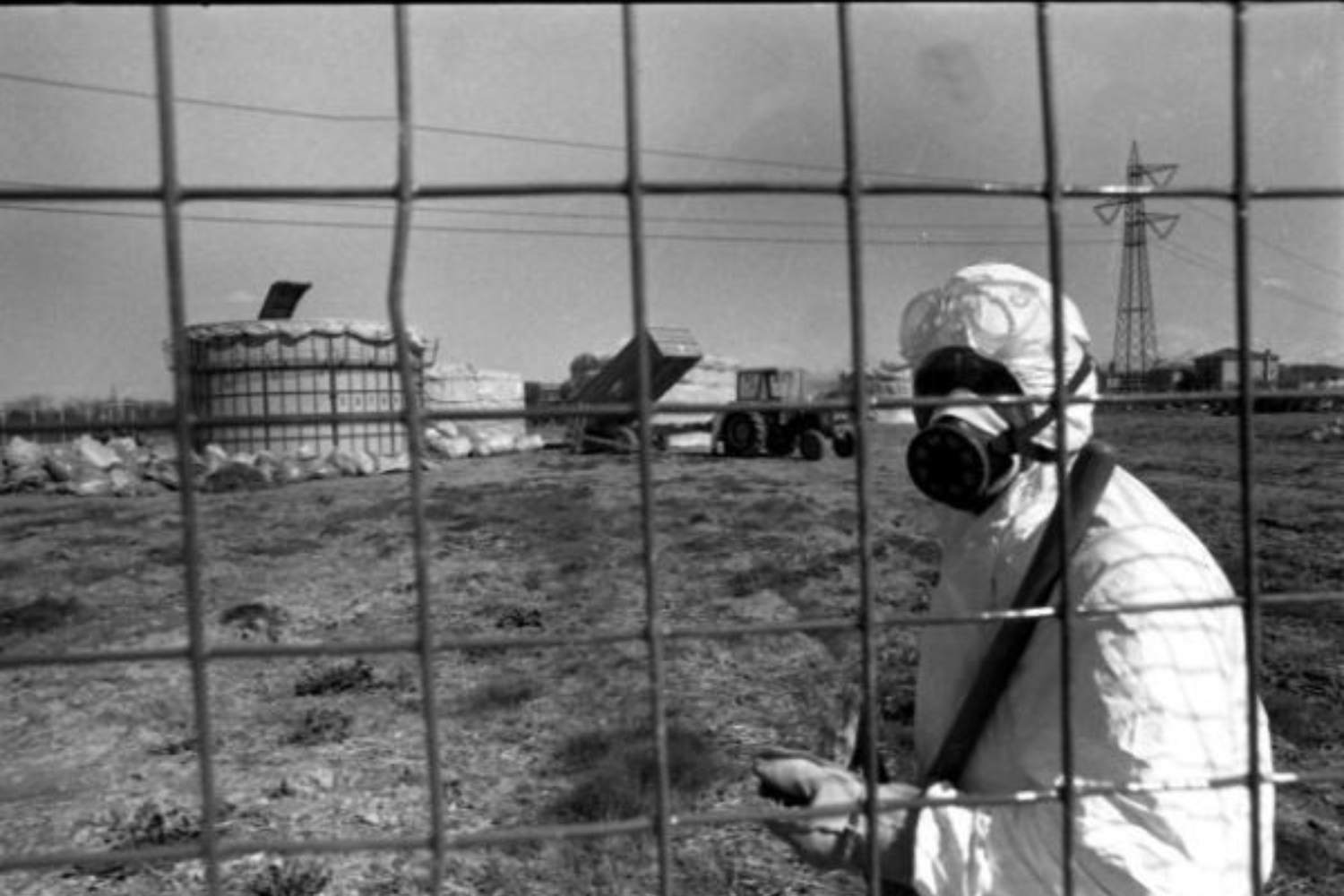
It was the July 10, 1976 When a toxic cloud loaded with dioxin, he rose from the icmesa reactor, a chemical industry in Meda, in the province of Monza and Brianza. That cloud invested the nearby town of Seveso, causing a catastrophe: children with skin lesions, abortions, hundreds of intoxicated, thousands of dead animals, families forced to abandon their homes.
It was one of the worst environmental disasters of Europe. Yet, almost 50 years after the incident, the question remains: what did we really learn from Seveso? The most honest answer is: much less than we should.
View this post on Instagram
The reconstruction of the disaster and the crucial role of Laura Conti
It all began on 10 July 1976 at 12.37, when the control system of a chemical reactor of the Icmesa company – which produced chemical and pharmaceutical substances – went to failure. The high temperature triggered a dangerous reaction that produced Tcdd, a highly toxic dioxin that was renamed “Dioxina Seveso”. The gigantic cloud contaminated a large and populous territory, poisoning people, animals, land. For women, the consequences of this disaster were even more dramatic: dioxin, in fact, causes fetal malformations and puts gestation at risk. In those dramatic hours to lose their lives were over 3000 animals, but in the following days of About 76,000 were demolished by precaution; while over 700 people were evacuated by the most affected areas. Numerous inhabitants, especially children, developed a serious skin disease called Cloracne.
The managers of the icmesa tried to minimize the accident, leaving the workers, the citizens and the mayors of the Brianzole cities more affected such as Seveso and Meda in the dark about the seriousness of the situation. For days, these people continued their daily activities – breathing contaminated air, consuming poisoned vegetables from their gardens – without knowing they are exposed to a deadly poison. And only on July 18 the Icmesa company was closed.
For Over a week the accident remained covered by silence, until the press began to deal with it, also pushed by the decisive intervention of Laura Conti, Considered pioneer of Italian environmentalism. Partisan, doctor, scientist and politics, from the first moments he made himself a spokesperson for the community affected by the disaster, tearing the veil of silence dropped on Seveso and supporting women subjected to psychological terrorism to which he was prevented from abortion (despite the risk of malformations due to dioxin). In his role as a Lombard regional councilor, Conti beat himself strenuously to contain the damage of the disaster, but found himself dealing with the inadequacy and bureaucratic slowness of public institutions, unable to respond with the speed and effectiveness required by the severity of the emergency and the extreme danger of dioxin.
Seveso and the lessons we have ignored
After the terrible accident of Seveso, Europe introduced the Seveso directive, With the aim of preventing significant accidents connected to certain dangerous industrial activities. It was the attempt to learn from errors and putting an argument to the greed and negligence of companies. But the problem was not only the lack of laws: it was and is a culture of profit that does not look in the face of anyone and puts health and environment at risk. From Seveso onwards, industrial accidents, spills and contaminations have repeated themselves. From Chernobyl to Fukushima, the place changes, the substances change, but the dynamic almost always remains the same: An underestimated risk, an avoidable disaster, a population and the ecosystems that pay the consequences.
In Italy there are currently 24 sites of national interest (SIN) considered seriously contaminated, which occupy a total area of 1,772 km², where the reclamation proceeds slowly or are completely firm. Some, like that of Seveso himself, have been partially redeveloped (but dioxin is still present), but in too many cases the reclamation are hindered by political interests, bureaucracy and crime, such as in the land of fires, and local communities often discover only in retrospect to live alongside dangerous sites.
We need a new culture of risk, prevention, environmental justice. It is not enough to commemorate: it is necessary to supervise, report, educate.
