
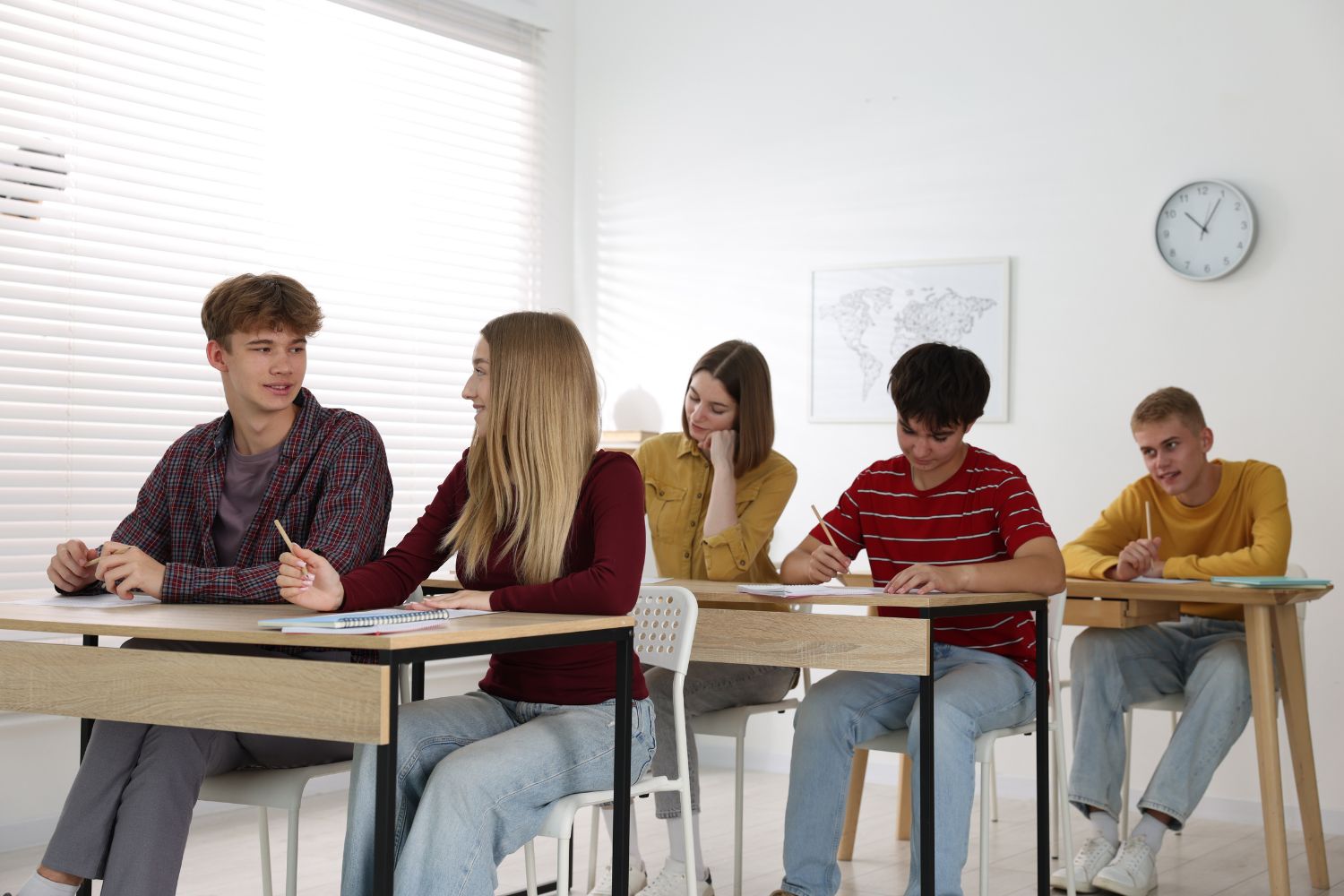
A rewriting of the programs that aims to change the face of Italian high schools. The commission led by the pedagogist Loredana Perla delivered the new teaching instructions to the Ministry of Education, the result of the work of over 130 experts including teachers, academics and school managers. The document introduces a series of innovations intended to open the debate: from the structural entry of artificial intelligence into disciplines to the strengthening of the study of Italian, up to the return of geography as an autonomous subject.
It is not just a question of technical updates, but of a change of perspective that aims to make the school more in line with contemporaneity, without giving up the pillars of cultural tradition. The declared objective is to build a more flexible curriculum, capable of integrating linguistic, digital and humanistic skills.
Artificial intelligence enters the classroom
The most obvious innovation concerns the introduction of AI as a transversal tool. Not a subject in itself, but a technology destined to influence all disciplines: from mathematics to philosophy, from literature to foreign languages. The idea is to teach students to use these tools in a critical and conscious way, transforming them into study support and not shortcuts.
Alongside technological innovation, the importance of the Italian language is growing, considered a central element for cultural education. The document strengthens the focus on writing, understanding and conscious use of language, with the aim of consolidating students’ expressive skills in every high school curriculum.
Autonomous geography and new vision of history
Among the most symbolic changes is the end of geohistory introduced in 2010. Geography returns as an autonomous discipline, with its own educational path and dedicated materials. The hours do not increase, but the approach changes: greater attention to reading the territory, global dynamics and contemporary phenomena.
History also changes perspective. The new plant starts from the West and then expands to the rest of the world. A choice that aims to strengthen the understanding of European cultural roots, without excluding comparison with other civilisations. An approach intended to spark discussion, but designed to offer a more structured narrative of the past.
Languages, philosophy and new languages
The indications also include the expansion of foreign languages, with CLIL methodology and opening up to hitherto marginal languages. There is also room for a philosophy more linked to current events and a literature that includes graphic novels, screenplays and visual languages.
The result is a project that tries to keep tradition and innovation together. More technology, more Italian, new historical and educational perspectives. A transformation that could change the way Italian students learn, read the present and build their future.
You might also be interested in:
