
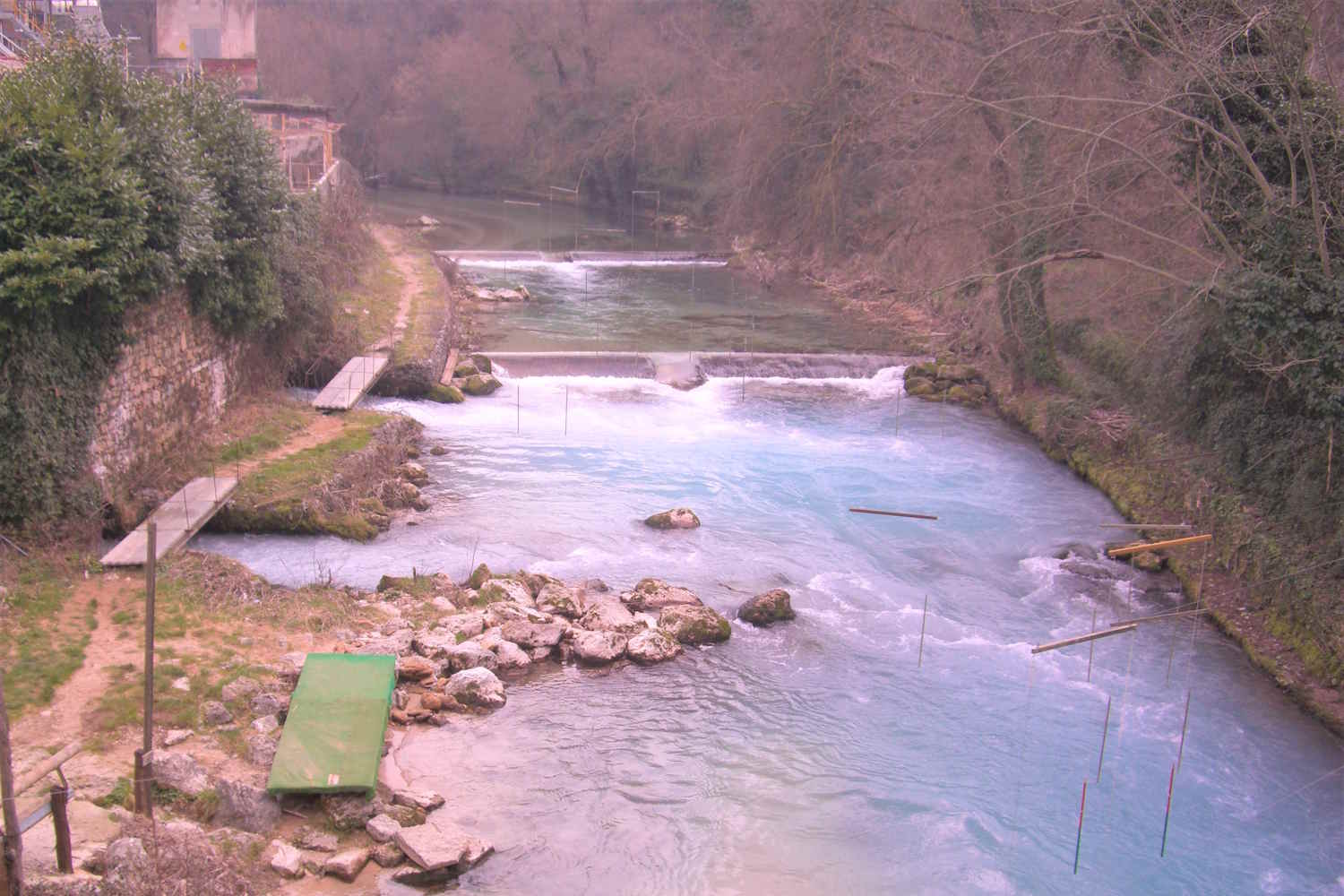
In a country where over 57% of waterways are not in good ecological status, talking about rivers is an environmental emergency and a serious issue that concerns our future. And the numbers tell very well how fragile the situation is.
In 2025 alone, during monitoring activities linked to the WWF Adopt Rivers and Lakes project, volunteers scientifically cataloged 7,895 waste belonging to 183 different types. The Po river is among the main transport vectors towards the Adriatic: of the almost 8,000 pieces of waste scientifically cataloged in the 2025 initiative, 62% were found to be plastic.
Even more impressive are the data from the actual cleaning: 19,693 waste removed in total, of which around 6,000 at the mouth of the Sarno river alone, one of the most compromised areas in Italy. In just 1,000 square meters, 2,173 pieces of waste were recorded, almost 28% of the total cataloged. A concentration of degradation that explains well the role of rivers as waste highways towards the sea.
And in fact it is no coincidence that around 80% of the plastic present in the oceans comes from waterways. The Mediterranean is no exception and among the main carriers of waste transport towards the Adriatic is the Po river, one of the largest European river systems.
Italian rivers are under pressure
Thanks to the activities of citizen sciencecitizens, with the help of experts, cataloged 7,895 waste objects, belonging to 183 different types, with a clear predominance of plastic materials (62%).
The most frequent categories include:
In absolute terms, considering all the cleaning operations, the volunteers removed 19,693 pieces of waste, of which approximately 6,000 at the mouth of the Sarno river alone, one of the most critical areas in the country. In this area, in the activities monitored alone, 2,173 wastes were recorded (equal to 27.5% of the total catalogued) over an area of just 1,000 square metres, confirming the strong environmental degradation of the basin and the role of the river as a carrier of waste towards the sea.
This is the starting point for the WWF’s appeal on the occasion of the International Day of Action for Rivers, celebrated last 14 March. The invitation is simple but powerful: “adopt” a stretch of river or lake, contributing to its care and monitoring.
Last year the initiative mobilized over 1,000 volunteers throughout Italy, leading to 64 cleaning interventions in 14 regions, from Lombardy to Basilicata, from Veneto to Puglia. Not just river banks: rivers, lakes, seabeds and even two coastal stretches have been cleaned, demonstrating how the problem of plastic pollution is systemic and interconnected.
During the activities, the volunteers also identified bridles, artificial barriers, unauthorized discharges and waste deposits in 11 different locations, valuable reports for better understanding the real state of river ecosystems.
The objective is ambitious: to regenerate river continuity and contribute to the European goal of restoring at least 25,000 kilometers of rivers to their natural state by 2030.
Monitoring activities are also opening up new technological avenues. On the Tiber river, for example, microplastic sampling campaigns were carried out using the so-called manta nets, scientific instruments used to intercept the smallest particles transported by the current.
But that’s not all. Zeno, an underwater robot developed by the Department of Information Engineering of the University of Pisa, was tested in the waters of Desenzano del Garda. The autonomous vehicle identified tires, plastic objects, clay pigeons and other submerged waste, recording their geographical position and high-precision images.
This is the first experimentation of this robot in a lake, and the results show how much the technology can help identify waste that is difficult for divers to reach.
