
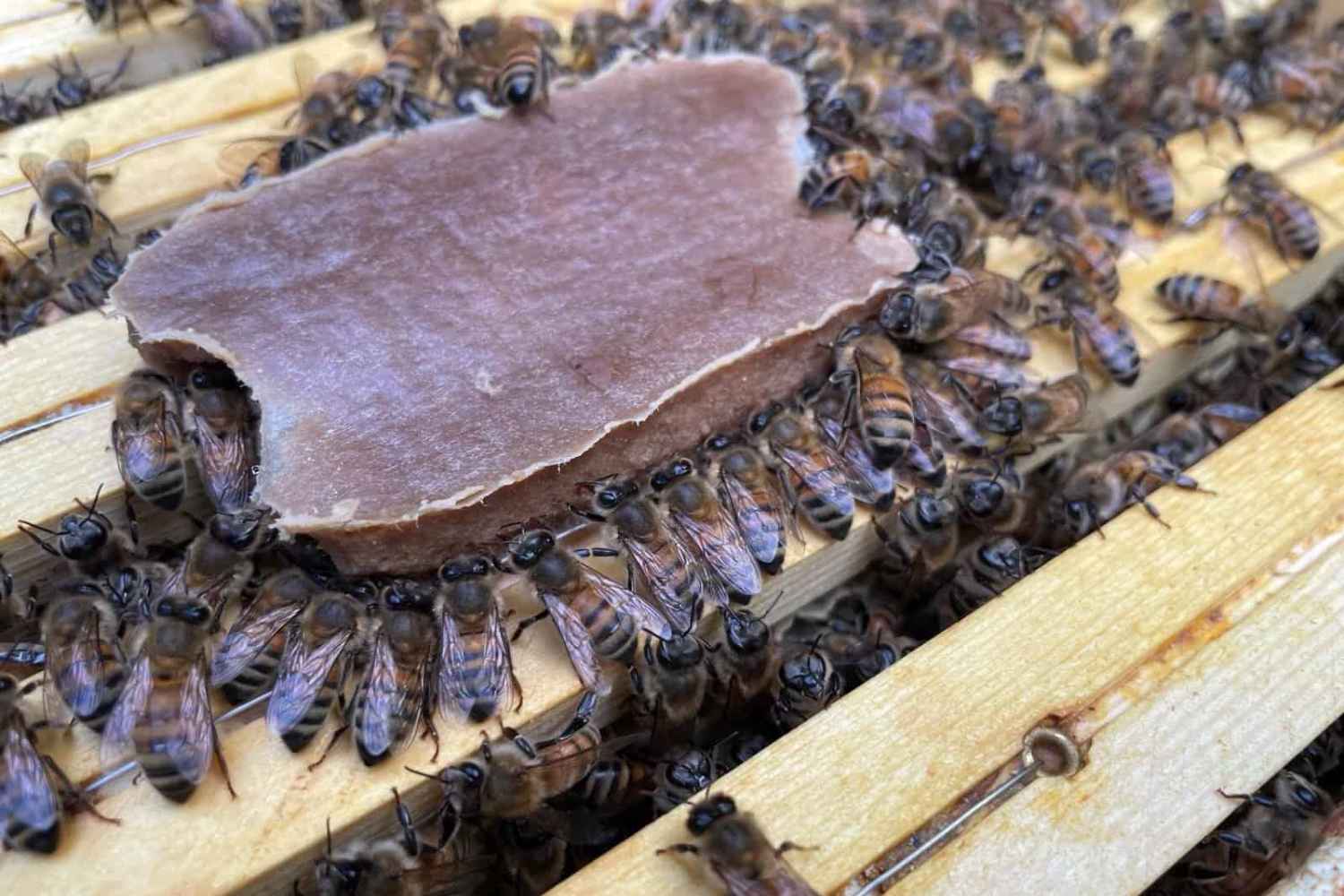
In an era in which i climate change and urbanization they put a strain on the survival of pollinatorsa historic turning point for honey bees arrives: a Complete synthetic food that can replace pollenensuring the survival of colonies even in the absence of flowers.
To sign this discovery are the researchers of the Washington State University In collaboration with Apix BiosciencesBelgian company specialized in biotechnology. After ten years of studies, they created a “Power bar for bees”a nourishing bar designed to cover all the food needs of the colonies.
The product looks like a compact mass, similar to a paté, which comes inserted directly in the hives. Inside they are found Proteins, vitamins and vegetable sterolsall designed to simulate the nutritional variety that bees normally obtain from the pollen of several plant species.
The secret ingredient: isofucosterol
The real twist is linked to a compound that has so far neglected in the nutrition of bees: isofucosterolone vegetable pound. Scientists discovered that his absence leads to serious neurological problemsreduction of the production of larvae and even paralysis in some specimens.
In comparison, another pound 24-Methylenecholesterolturned out to be less critical. This discovery Change the cards to the table in the physiology of bees, showing that too specific micronutrients play a fundamental role in maintaining the health of the colonies.
The new food was successfully tested Both in controlled environments and during the tiring season of commercial pollination, in particular on crops of blueberries and sunflowers, notoriously poor in quality pollen. The colonies fed with the “power bar” have prosperedwhile those fed with conventional diets or without supplements have struggled to survive.
With a mortality of the colonies in the USA close to 60%this innovative food could offer one concrete solution To reduce losses and make the pollination in certain crops economically sustainable. The commercial launch of the product is scheduled for the 2026and the researchers are already working to integrate this new resource in modern agricultural management. For bees, it could be the beginning of a new food era.
