

There are more than 300 genetic mutations linked to depression never identified before: this has been demonstrated by a research group led by the University of Edinburgh and King’s College London (UK) in the largest and most diversified study on this disease. The discovery could lead to increasingly targeted treatments
The largest and most diverse genetic study on depression he revealed more than 300 genetic mutations linked to this disease but identified earlier: a guided research group has demonstrated this University of Edinburgh and from King’s College London (United Kingdom). The discovery could lead to increasingly targeted treatments.
As reported by our Higher Institute of Healthdepression is a disease also related to physical health problems: from the PASSI 2022-2023 data collected in Italy, it emerged that those suffering from these problems lived on average almost 10 days in poor physical conditions compared to less than 2 days reported by people free from depressive symptoms, and almost 8 with limitations to usual daily activities versus less than 1 day reported by people without depressive symptoms.
These are generally more frequent with advancing age, among women (7%), among the most socially disadvantaged people, due to economic difficulties (19%), job insecurity (8%) or low education (10%), among those who live alone (7%) and among those suffering from a chronic pathology (11%).
There are huge gaps in our understanding of clinical depression that limit opportunities to improve outcomes for those affected – explains Andrew McIntosh, co-author of this latest work – Larger, globally representative studies are essential to provide the information needed to develop new and better therapies and prevent the disease in those who are at higher risk of developing the condition
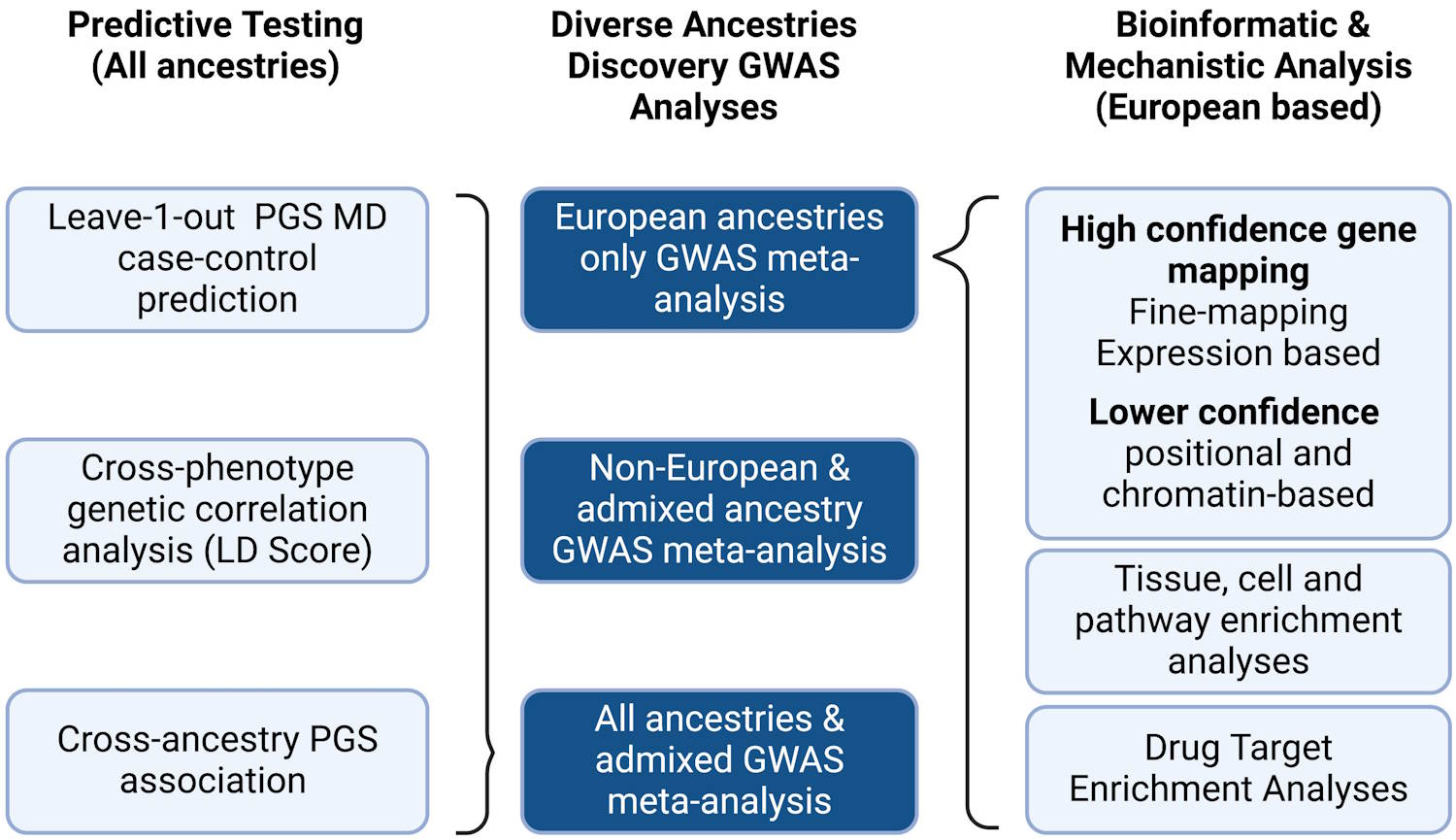
The research was conducted using anonymized genetic data from over five million people in 29 countries around the world, of which one in four was of non-European origin: in this regard, it is underlined, the experts explain, that 100 of the new mutations were identified by including people of African, East Asian, Hispanic and South Asian. And this is a very relevant fact in the therapeutic context.
In fact, previous research on the genetics of depression has mainly focused on white populations descended from people who lived in Europetherefore treatments with genetic approaches developed so far may not be effective in other ethnicities, widening existing health inequalities.
The researchers were also able to more accurately predict an individual’s risk of depression by taking into account the newly identified variants, and clarified that a single genetic variant has a very small effect on the overall risk of developing depression, but also that, if a person has more variations, these small effects can add up.
This work is truly a milestone in the field: researchers have identified a total of 700 variants in the genetic code of individuals linked to the development of depression, nearly half of whom had never been associated with the condition before, implicating 308 specific genes.
These variants were found to be linked to neurons in multiple brain regionsincluding areas that control emotions: such findings offer new insight into the impact of depression on the brain and present possible new targets for treatment, experts say.
Depression is a very widespread disorder and we still have much to learn about its biological foundations – explains Cathryn Lewis, another co-author – Our study identifies hundreds of additional genetic variants that play a role in depression. These results show that depression is highly polygenic and open downstream pathways to translate these findings into a better assistance for people with depression
The study, funded by NIH, Wellcome National Institute for Health And Care Research Maudsley Biomedical Research Centrewas published on Cell.
Sources: University of Edinburgh / Cell
