
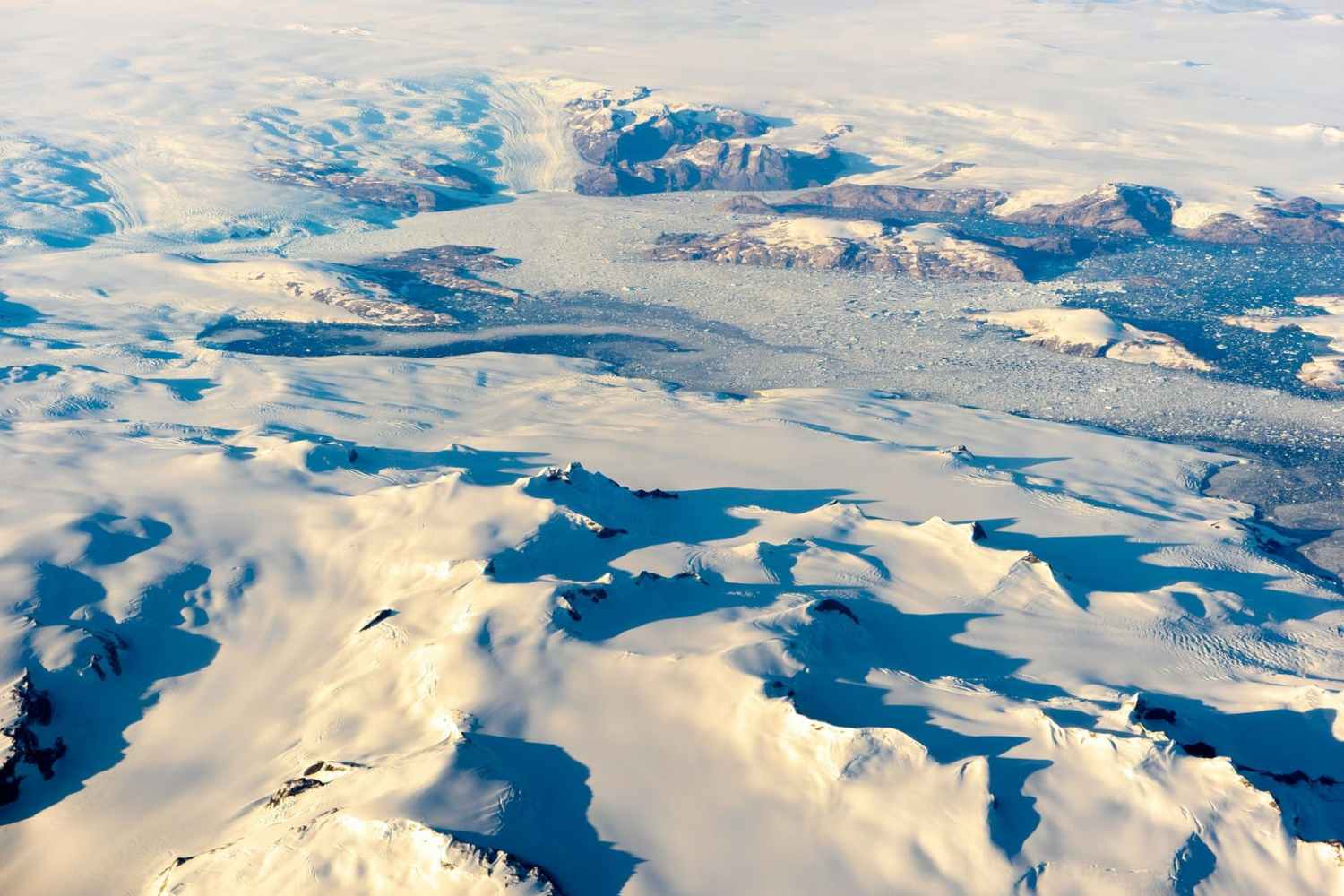
As sea levels continue to rise almost everywhere in the world, there is one place where the opposite will happen: Greenland. Here, according to a new study, the sea will lower. And the cause is precisely the melting of the ice. How is this possible?
The study, published on Nature Communicationsshows how sea levels around Greenland could fall by about 0.9 meters by 2100 in a low-emissions scenario, and as much as 2.5 meters in a high-emissions scenario.
An only apparent paradox, which tells how complex the Earth system is and how the effects of the climate crisis are not the same everywhere.
Why does the sea go down while the ice melts?
The first key factor is the so-called glacial isostatic rebound. The Greenland ice sheet – up to a kilometer and a half thick and capable of covering 80% of the island – is losing around 200 billion tonnes of ice per year.
When such an enormous mass becomes lighter, the underlying Earth’s crust begins to rise.
It’s like a memory foam mattress when you get up,” explains Lauren Lewright, first author of the study and a doctoral student in geophysics at Columbia Climate School’s Lamont-Doherty Earth Observatory. The less weight on top, the more the earth rises. And when the land rises, the sea, compared to the coast, seems to descend.
Then there is another element often ignored in the climate debate: gravity.
Large ice sheets are not just ice: they are enormous masses that physically attract ocean water towards them. When the shell loses mass, this gravitational attraction also decreases.
Result? The water “moves away” from Greenland. According to the researchers, this effect could explain up to 30% of the predicted sea level drop around the island.
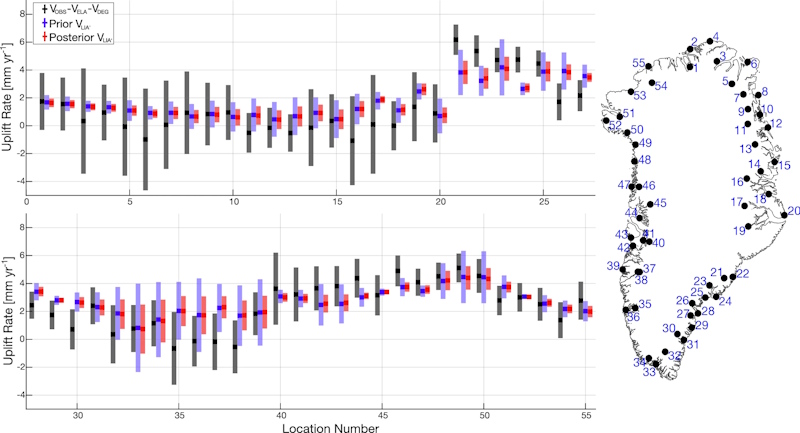
What makes these results particularly robust is the method. In fact, the team combined sea level data dating back thousands of years, over twenty years of satellite measurements, and signals from 57 GPS stations scattered across Greenland.
The comparison between models and real observations led to an important conclusion: the Earth reacts to ice loss faster than previously thought. This means that the local effects of climate change may manifest themselves earlier – and more markedly – than previously estimated.
Not good news
But be careful: the lowering of sea levels in Greenland is not “good news”. It’s a sign of massive ice loss, contributing to rising seas elsewhere, putting coastal cities and millions of people at risk.
In Greenland, the impacts will be different but equally relevant: infrastructures built at current sea level could find themselves far from the water, navigation routes, fishing activities and access to ports would change. And only partially could the lowering of the sea help stabilize some coastal glaciers: scientists do not yet know if it will be enough.
This research reminds us of one key thing: climate change is not uniform. There is no single “global sea level” that tells the whole story.
Each region responds differently, based on local factors such as geology, ice loss, gravity.
And this is precisely why continuing to deny, trivialize or politicize the climate crisis is not only wrong, but dangerous. Because even when the sea seems to be falling, it is actually telling us how quickly we are changing the planet.
