
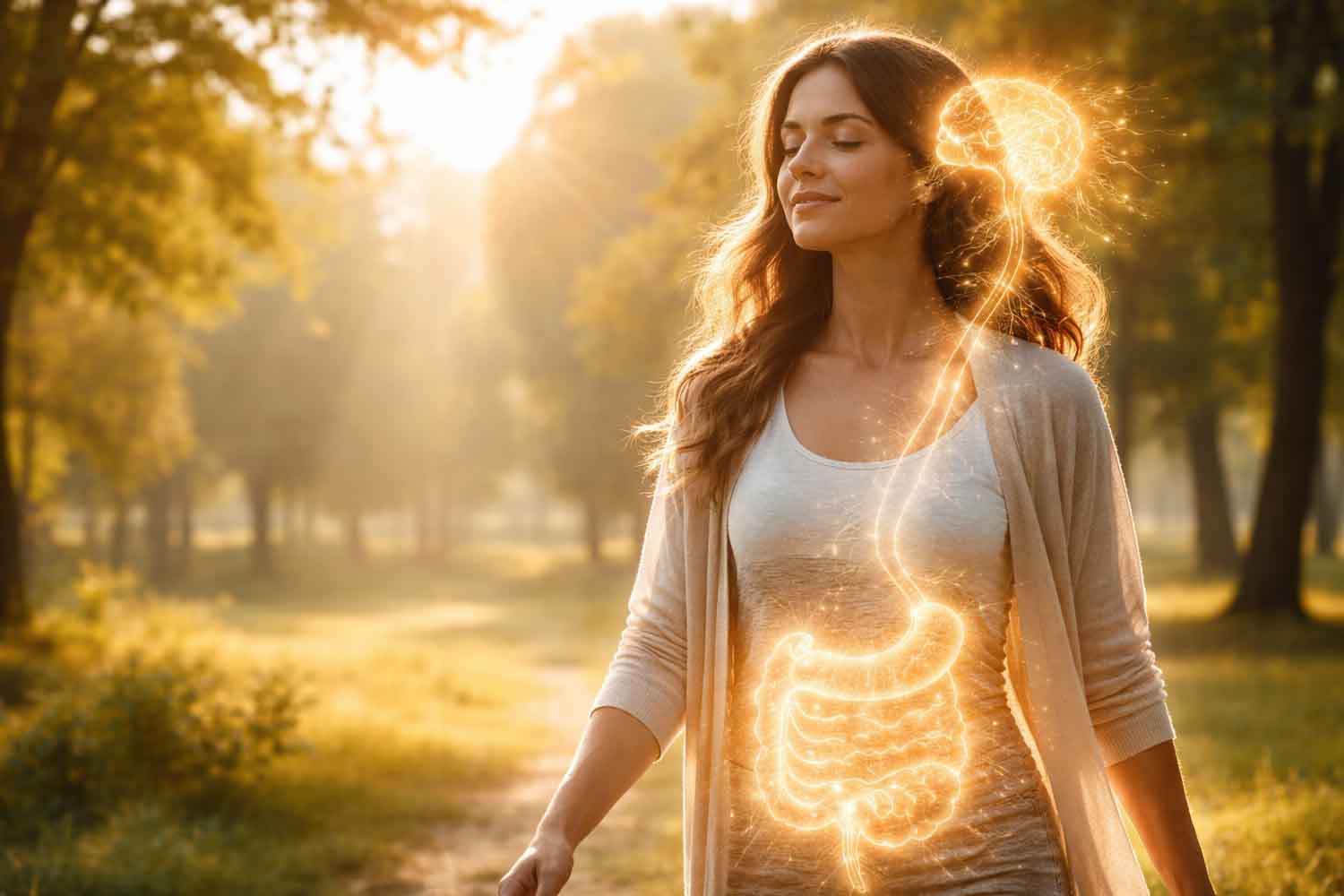
For years we have been told that serotonin is the molecule of happiness, the one that is activated when we smile, when we are in love, when we finally feel light. It is a reassuring, almost romantic definition. Yet, the reality is much more complex and, as often happens when it comes to health, infinitely more fascinating.
Serotonin doesn’t just govern mood. It participates in the regulation of sleep, digestion, immunity, sexual desire, pain perception and even the risk of some chronic diseases. And above all, the fact that completely changes perspective, over 90% of serotonin is produced in the intestine, not in the brain.
This means that when we talk about mental well-being we are inevitably also talking about microbiota, nutrition, sunlight, movement. The body works like an orchestra in which each instrument communicates with the other, and serotonin is one of those violins that alone seem silent, but which together determine harmony.
What serotonin does in the brain
In the brain stem there is a network of neurons that produce serotonin and send signals to different brain areas influencing emotional stability, concentration, response to stress, appetite, sleep and pain perception.
Brain serotonin is also the starting point for the production of melatonin, the hormone that regulates the circadian rhythm and therefore our sleep-wake cycle. When this balance is altered, the body immediately feels it: insomnia, irritability, chronic fatigue become signs of a system that is struggling to find its own rhythm.
Interestingly, serotonin produced in the gut cannot cross the blood-brain barrier. However, its precursor, the amino acid L-tryptophan, does. We find it in foods such as turkey, chicken, eggs, salmon, tofu, seeds and dried fruit, and once it reaches the brain it is transformed into serotonin. Nutrition and mental health, once again, are intertwined.
The heart of serotonin is in the gut
In the intestine, serotonin performs a completely different task than in the brain. Here it regulates intestinal motility, coordinates the muscular contractions that allow food to move forward and contributes to the balance of appetite.
Gastroenterologist Will Bulsiewicz explained that the intestine has its own rhythm and when this rhythm is harmonious, digestion works efficiently and general well-being improves. However, when the balance is broken, symptoms such as bloating, constipation or diarrhea appear, signals that something in the intestine-brain communication has broken down.
The cells of the intestinal mucosa perceive food and release serotonin which binds to the receptors of enteric neurons, activating peristalsis. This mechanism explains why adequate levels of serotonin promote healthy intestinal regularity and why the gut-brain axis is today the focus of scientific research.
Three natural strategies to support serotonin according to science
Serotonin is also the precursor of intestinal melatonin, present in surprisingly higher quantities than in the pineal gland. In the intestine, melatonin plays an antioxidant role and helps strengthen the intestinal barrier, which represents a real line of defense against chronic inflammation.
An intact intestinal barrier can also have protective effects against neurodegenerative pathologies such as Alzheimer’s disease, Parkinson’s disease and multiple sclerosis, areas in which research is increasingly exploring the role of systemic inflammation. It also intervenes in skin healing and, together with dopamine, contributes to the regulation of sexual desire. Reducing it to a simple “hormone of happiness” means ignoring a network of functions essential for the balance of the organism. There are some strategies to support it correctly, let’s see them in detail.
Expose yourself to morning light
Natural light, especially in the early hours of the day, stimulates the production of serotonin and synchronizes the circadian rhythm. When light enters the eyes it activates brain mechanisms that favor the morning peak of cortisol, increasing energy and alertness, and prepares the evening release of melatonin which facilitates sleep.
A study published in Biological Timing and Sleep observed that greater exposure to morning light is associated with a reduction in depressive symptoms and stress, even in people taking SSRI antidepressants. Spending time outdoors, walking in the sun, opening the windows as soon as you wake up may seem like a banal gesture, yet it represents a powerful intervention on our neurochemical balance.
Follow a diet rich in fiber and inspired by the Mediterranean diet
The intestine also produces serotonin thanks to the work of the microbiota, which uses fibers to generate short-chain fatty acids involved in the synthesis of neurotransmitters. A diet low in fiber and rich in ultra-processed foods promotes inflammation and alters the balance of the gut-brain axis.
Nutritional psychiatrist Drew Ramsey underlines how important it is to include nutrition and the consumption of fermented foods in the path of those suffering from anxiety and depression. Yogurt, kimchi and sauerkraut contain probiotics that help increase intestinal serotonin.
A study published in Nutrients highlighted that adhering to the Mediterranean diet is associated with a 40-45% reduction in the risk of moderate or severe depression. Legumes, whole grains, seasonal vegetables, fresh fruit, extra virgin olive oil and oily fish thus become concrete allies of mental well-being.
Practice aerobic exercise regularly
Aerobic physical activity, which increases the heart rate and makes it difficult to carry on a conversation, has been shown to increase serotonin levels even after just one intense session.
A study of teenagers engaging in daily basketball workouts found a significant increase in serotonin after eight weeks, while research in sedentary women with fibromyalgia showed that aerobic exercise improved symptoms and serotonin levels more than stretching.
In the case of fibromyalgia, low serotonin levels are associated with sleep disturbances, hormonal imbalances and anxiety. The movement therefore confirms itself as an accessible, sustainable and profoundly effective tool for supporting psychophysical well-being.
When the balance is broken
Supporting natural serotonin production is beneficial, but too much can have negative effects. Intestinal surplus can weaken bone density, increasing the risk of osteoporosis, while nausea and gastrointestinal disorders are frequent side effects of SSRI antidepressants.
There is also a rare condition called serotonin syndrome, caused by drug interactions that cause a rapid increase in serotonin in the body.
Rediscover the biological rhythm
Many of the factors that influence serotonin are part of our evolutionary biology: exposure to natural light, daily movement, simple and unprocessed nutrition.
The gap between how we live today and how we are biologically designed to have a profound impact on our neurochemical balance. Returning to more natural rhythms means supporting the body in its invisible and silent work, the one that keeps the intestine, brain and immune system together in a continuous conversation. Serotonin is not a magic wand, but it is a key. And that key is often found in everyday choices.
You might also be interested in:
