
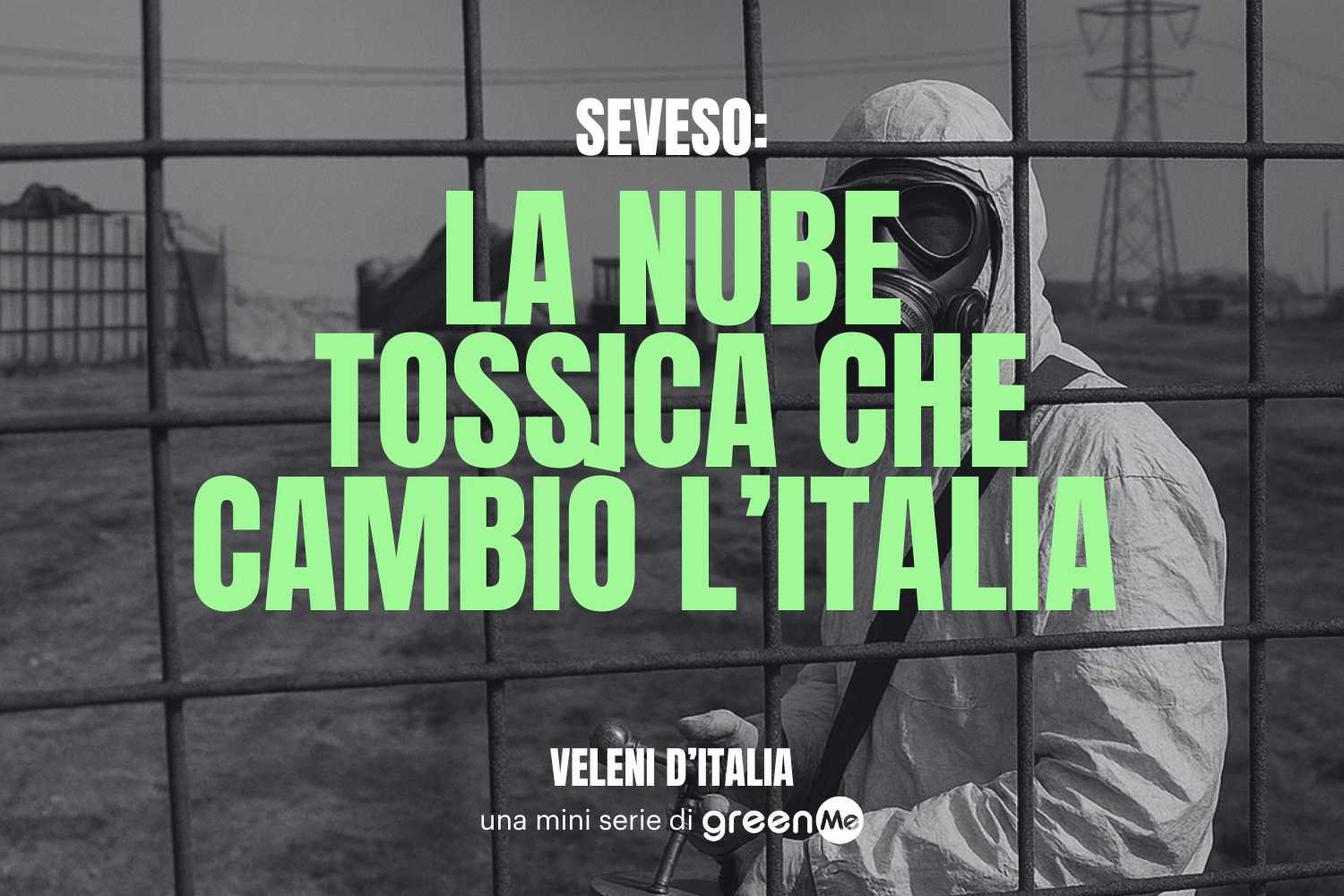
What exactly happened on that hot July day in Brianza? And why is Seveso one of the most serious environmental accidents in history? We try to draw the threads in the fourth episode of our “Poisons of Italy”
July 10, 1976 is one of those dates that remain imprinted forever, even when time tries to fade them. That day, an invisible and lethal cloud changed the lives of the inhabitants of Seveso, Meda and the nearby municipalities forever. We are in Lombardy and here, without warning, a silent poison spread through the air, marking one of the most serious environmental disasters in Italian history.
A tragedy that originated from the Icmesa plant, a chemical industry located between Meda and Seveso, already frowned upon by those who lived in the area. Pungent odors, suspicious discharges and polluted groundwater were part of everyday life, to the point that already two years before the disaster the company director had been reported for having contaminated the groundwater. But despite the evidence, he was acquitted and the community’s concerns went unheeded.
Then came that Saturday in July. At 12:37, a failure in the cooling system of a reactor caused abnormal overheating. In a few moments, an out-of-control chemical reaction generated TCDD, one of the most toxic dioxins in the world. The “Seveso dioxin”, as it would later be called.
The toxic cloud hit the surrounding areas but, despite the severity of the incident, the factory was closed only eight days later and the area was evacuated two weeks after the accident. Meanwhile, people continued to live unaware, to cultivate contaminated vegetable gardens, to breathe compromised air. Only thanks to the courage of people like Laura Conti, doctor, environmentalist and regional councilor, did the veil of silence begin to fall. It was she who publicly denounced the incident and stood by the population in those dramatic days, attempting to shake up immobile institutions.
The consequences were devastating: houses destroyed, animals exterminated, plantations destroyed. About 700 displaced people, 200 cases of chloracne among the most exposed. And an entire community deeply affected, not only in the body but also in the soul.
In the following years, the most contaminated area was reclaimed and transformed into a park: the Bosco delle Querce, a symbol of rebirth but also of living memory. And it was from Seveso that a regulatory turning point began: the famous “Seveso Directive” of 1982, which still requires all member states of the European Union to identify and monitor industrial plants at risk.
The Seveso disaster became the first major environmental tragedy to occupy the front pages of Italian newspapers. But, as often happens, over time the media interest faded. The images of children affected by chloracne, the evacuations, the medical tests, everything was slowly forgotten by those who had not experienced it firsthand.
Yet, Seveso is not just a story of the past. It is a warning, a wound that reminds us how fragile the environment is and how essential it is to monitor, report and act. Because what we breathe, what we eat and what we drink is our life. And that cloud of ’76 taught us this in the cruelest way possible.
