
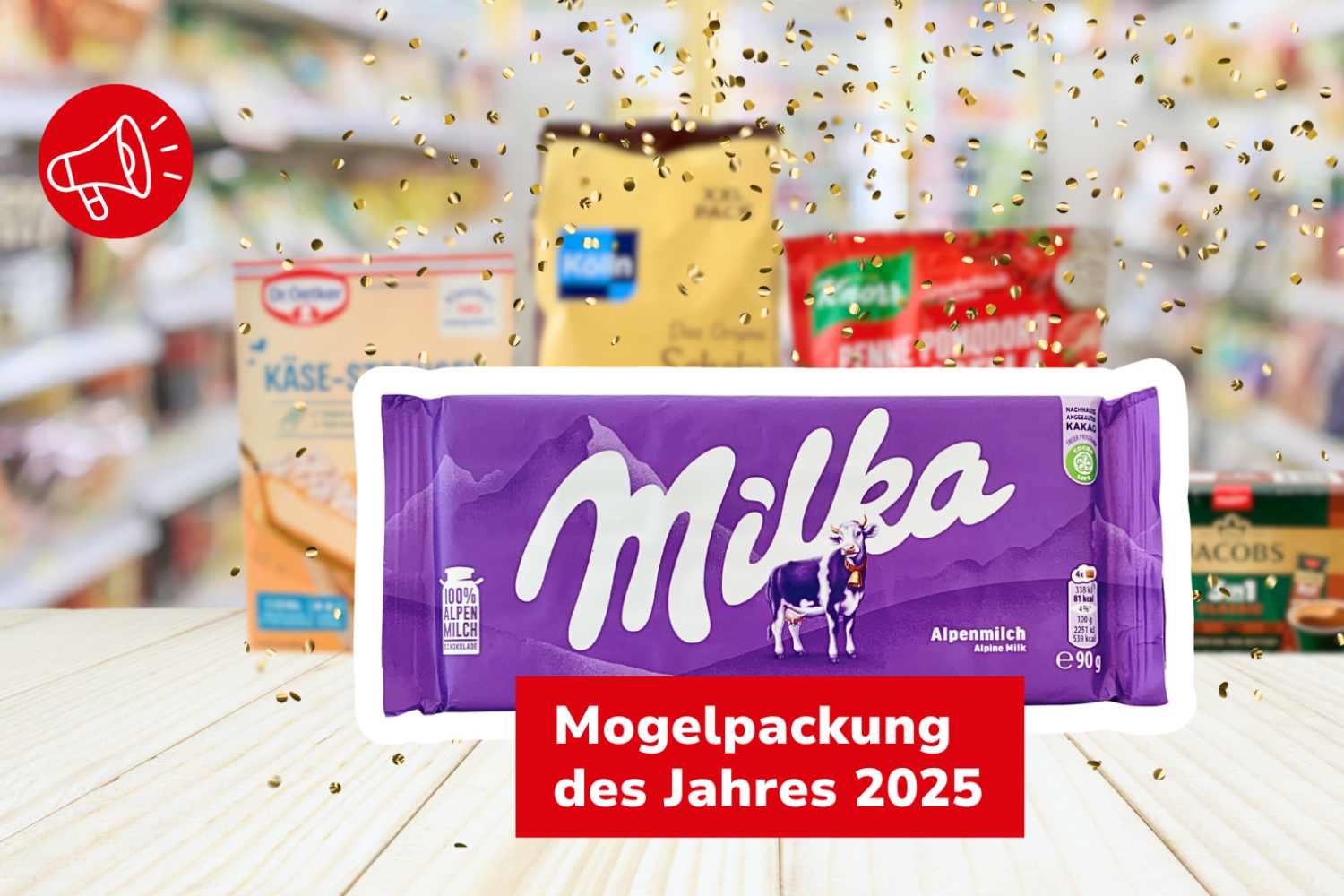
The purple bar that we all know and which contains Milka’s Alpine milk chocolate was crowned – among several products in the running – the one with the most misleading packaging of 2025. Certainly not a great record assigned by the Verbraucherzentrale Hamburg (Hamburg Consumer Center), which collected two thirds of the votes expressed by citizens. A clear verdict, which tells a story of shrunken packaging and skyrocketing prices.
What happened? Well, the classic Milka bar has gone from 100 to 90 grams, losing 10% of its weight. But the real surprise comes in the price: from 1.49 euros it has gone to 1.99 euros, with an increase of 48%. Translated? Consumers pay almost half as much to receive less chocolate.
According to the Hamburg Consumer Center, this is a clear case of shrinkflation, the increasingly widespread practice in which companies reduce product quantities while maintaining or even increasing prices. All of this, obviously, without the consumer realizing it.
And the issue has not gone unnoticed. The German consumer protection agency has decided to file a lawsuit against Mondelez, the multinational that produces Milka, for misleading advertising. The accusation is that the packaging hides the small quantities, effectively deceiving the buyer.
The company’s official justification? As always the increase in raw material costs. It’s a shame that, as the Consumer Center points out, the company’s financial reports tell a different story, one of growing profits.
The other “winners”
Milka is not alone in this less than honorable ranking. In second place we find Dr. Oetker’s cheese crumble mix, which has seen its package halved from 730 to 370 grams, with a hidden increase in price of almost 90% per kilogram. The product is passed off as “new”, but the recipe has remained practically unchanged.
Then on the podium is Kölln’s XXL oat and chocolate muesli, reduced from 1,700 to 1,050 grams but still advertised as an XXL package. The increase in cost per kilo? About 30%. The company’s justifications speak of the needs of “modern families” and the fight against food waste, but consumers do not seem convinced.
Next we find the 3in1 Classic Coffee Sticks Jacobs. In the packaging, the number of individual coffee sachets has remained unchanged, but the content of each stick has been reduced. The total weight of the package has dropped from 180 to 120 grams. At the same time, the price increased slightly.
Knorr’s Pomodoro Mozzarella pens close the ranking. The quantity of the ready-made pasta dish has been slightly increased, while the price has risen from €1.39 to €1.99, with an increase of approximately 29%. Knorr advertises “more flavor” thanks to more intensive preparation, but the ingredient list shows a reduction in the percentage of tomato powder and mozzarella.
What consumers are asking for (and what should change)
In 2025 alone, 77 new cases of misleading packaging were reported. Studies reveal that 76% of Germans feel deceived by these business practices. An understandable feeling, considering that shopping has become a real detective exercise.
Faced with this scenario, the Hamburg Consumer Center has made specific requests: mandatory labeling of quantity reductions directly on the packaging, clearly visible signs in shops indicating the changes and smaller packaging, adapted to the actual content and more sustainable for the environment.
As underlined by consumer groups, no one should have to pay more for less content without being able to see it clearly. An increasingly urgent principle of transparency to be defended in a market where trust between producers and consumers risks crumbling day after day.
