
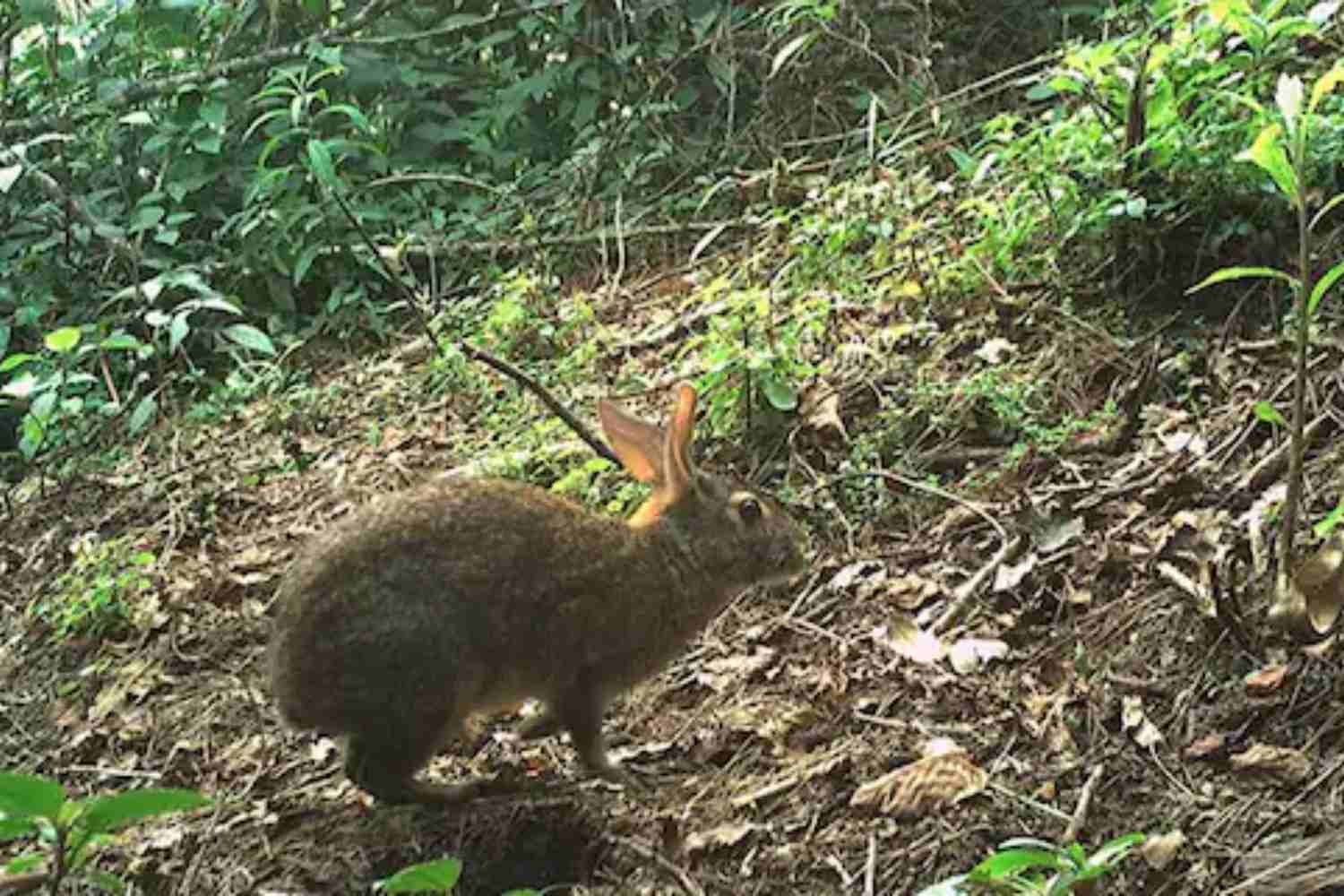
After over a centurythe mysterious Homiltemi rabbit it was finally rediscovered In the remote rain forests of the Sierra of the Sur, in Mexico. This little mammal, also known as Sylvilagus Insonushad disappeared from the scientific radar from the distance 1904leaving behind only uncertain reports and a legendary aura.
The return of this endemic species It is the result of a patient and widespread work conducted for five years by the biologist José Alberto Almazán-Cotalán and his team, which have combined cutting -edge technologies with the precious support of the local communities. Thanks to photographic traps, drones And field interviewsthe researchers managed to get The first irrefutable visual tests of the existence of the animal in its original habitat.
The Homiltemi rabbit stands out from the most common species for some unique physical characteristicslike the short and black tail and a more compact bodywho in the past had favored the incorrect identification. These distinctive traits are today fundamental for outline conservation strategies effective.
Why didn’t he show up for over 100 years?
The involvement of the local inhabitantswho for years have been telling sightings of a “Rabbit with a dark tail”, Often ignored by the scientific community. Only through theirs active collaboration It was possible to concentrate efforts in the most promising areas, demonstrating how crucial it is to integrate the traditional knowledge in ecological projects.
The causes of its very long absence There are multiple: limited geographical distribution, difficult habitat to explore, poor scientific interest and taxonomic confusion have helped to make it practically invisible for decades.
The rediscovery of this animal has important implications: the Homiltemi rabbit is a key element of ecological balance localsince it represents a prey For predators such as Puma, ocelot and owls, and promotes the dispersion of the seeds, contributing to the regeneration of the forest.
This milestone is part of the Search for Lost global project Species of Re: Wildand marks the thirteenth rediscovery of success. A confirmation that, with the right tools and listening to the communities, even what seemed lost can return to live in our ecosystems.
View this post on Instagram
