
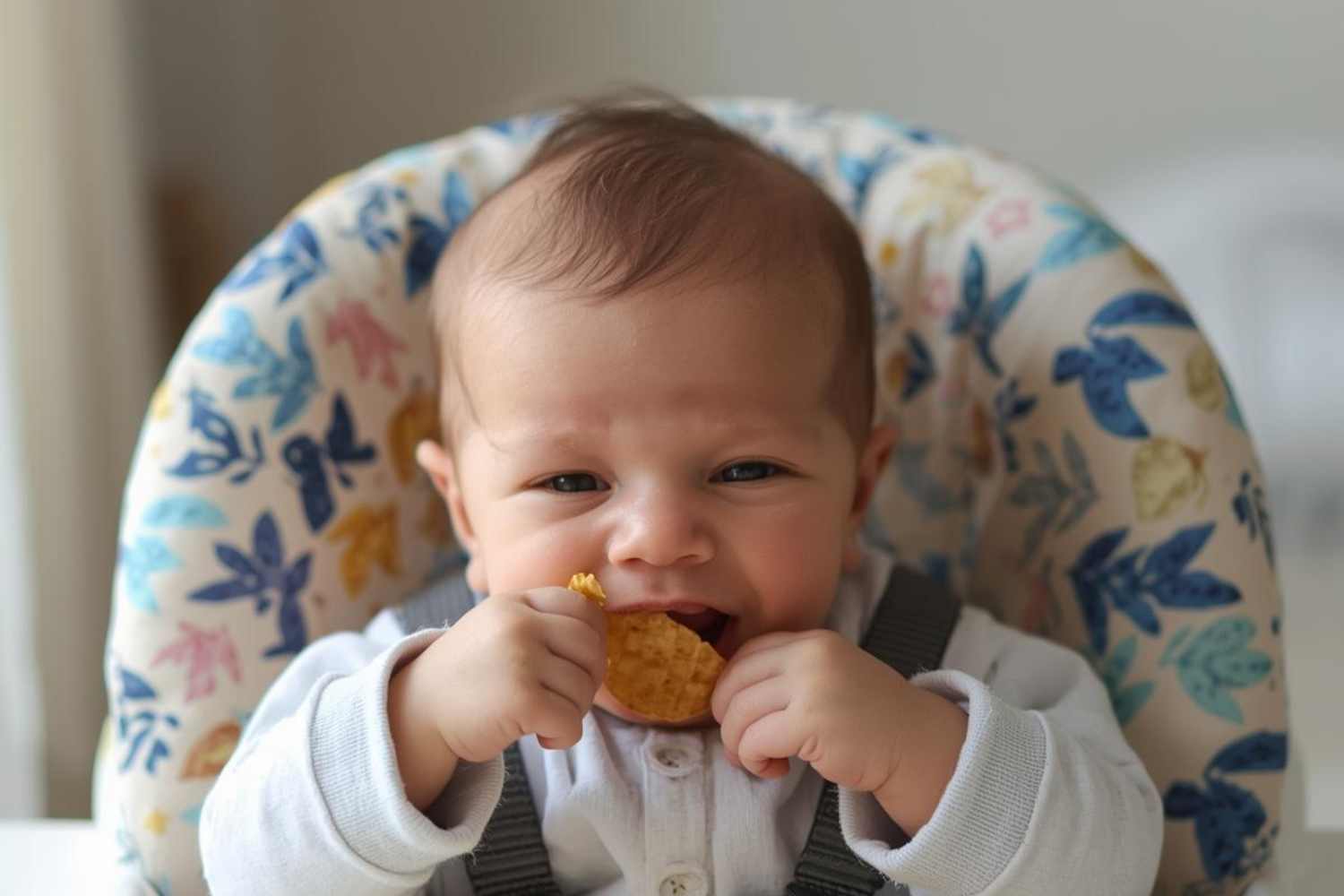
Colorful puffs, mini-cheese breadsticks, “vegetable” sticks: the world of snacks dedicated to babies under one year of age is rapidly expanding. But behind attractive packaging and health promises lies much more. A French investigation turns the spotlight on this increasingly widespread food trend in Italy too.
The early childhood snacks sector is currently worth almost 4 billion dollars globally and forecasts speak of growth of up to 5 billion by 2029. Products created in the Anglo-Saxon world are also rapidly conquering Europe, including Italy, where brands such as Hipp, Plasmon and Mellin increasingly offer references of this type.
The French magazine 60 Millions of consumers analyzed 15 of these products intended for babies as young as a few months old, and the results are disheartening.
What the investigation found
Out of 15 products, 12 were ultra-processed, with calorie and salt contents among the highest in the entire baby food category. According to the First Steps Nutrition Trust, a British organization specializing in infant nutrition, these snacks have an average of 441 calories per 100 grams and 0.35 grams of salt, higher values than any other category of baby food.
The analysis of individual products confirms this trend: some puffed biscuits reach 433 kcal/100g, while certain biscuits reach 444 kcal/100g with 0.29 grams of salt. Other products analyzed even reach 0.42 grams of salt per 100 grams. Technically these values comply with European regulatory limits (0.25 g of salt per 100 kcal), but they still remain very high for newborns.
The “vegetable” marketing of many products is particularly misleading. Colorful packages promise the presence of carrots, spinach, tomatoes, but the real percentages are symbolic. Some “vegetable” sticks analyzed contain a total of just over 1% of powdered vegetables: 0.4% of tomato, 0.3% of spinach, 0.4% of kale. Rather than plant foods, these are extruded and flavored cereals.
The soft and crunchy texture represents another critical element. These products are designed to dissolve quickly in the mouth, reducing the risk of choking but creating another problem: the brain does not perceive food intake, pushing the child to consume increasingly larger quantities without registering the sensation of satiety.
But it is in the first years of life that the relationship with food and the capacity for food self-regulation are built, warn child nutrition experts. Introducing ultra-processed, energetic and salty products in this delicate phase risks forever compromising the child’s ability to recognize hunger and satiety.
The industry defends itself by claiming to respond to an already existing consumption: better products “adapted” to newborns than snacks for adults. But is it really necessary to educate children as young as a few months old about the concept of an “aperitif” between meals?
Nutritional science on this point is clear: to educate on taste and build a healthy relationship with food you need simple, minimally processed foods, consumed during regular meals. Creating the habit of continuous snacking in children who are still learning to recognize their body’s hunger signals is not harmless, it is a market strategy disguised as innovation, with potential long-term consequences on the health and eating behavior of future generations.
