
There are those who still struggle to differentiate the wet and those who, instead, are planning to transform our physiological needs into a weapon against climate change.
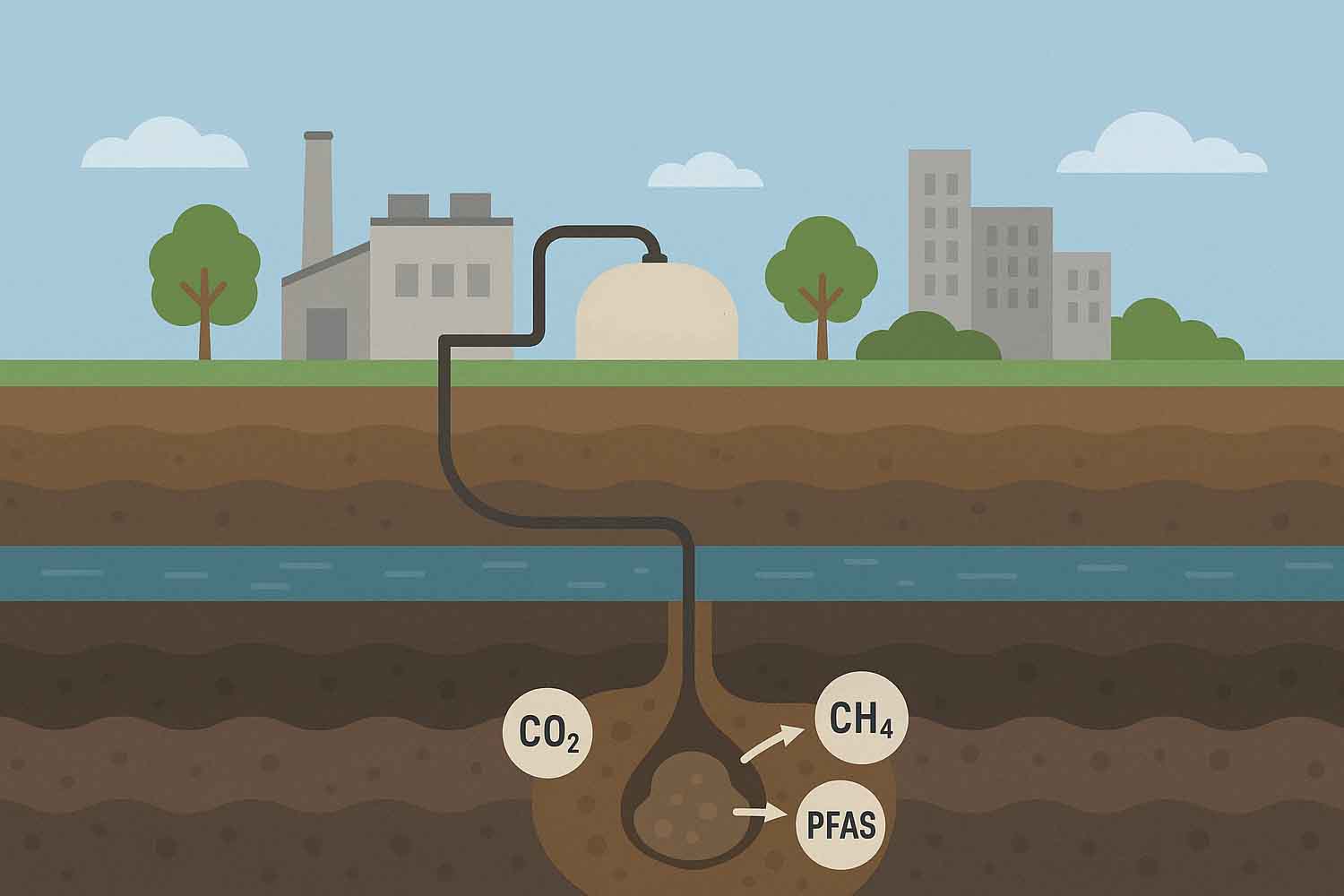
It’s happening in the United States, where the start-up Vaulted Deep, based in Houston, has launched a project as visionary as it is concrete: injecting organic waste such as feces, manure, sewage sludge and food waste into the subsoil, to remove enormous quantities of carbon dioxide (CO₂) from the atmosphere.
And it’s not just theory: the company has already signed a millionaire agreement with Microsoft, which has decided to focus on this method to offset part of its growing emissions.
Not just CO₂
The idea behind it is as simple as it is surprising: mix these organic materials into a sort of liquid mixture with a high concentration of carbon, which is then pumped about 5,000 feet (more than 1,500 meters) underground, into impermeable geological layers where it remains isolated forever. In this way, in addition to preventing the release of greenhouse gases such as methane and CO₂ into the atmosphere, it also prevents harmful substances such as PFAS – the infamous “forever chemicals” – from ending up in surface waters or soil.
This technique, in reality, is not entirely new: for over 15 years it has been used to manage sewage sludge from the city of Los Angeles, and today it also powers a plant in Kansas, where Vaulted Deep processes waste from the city of Derby and manure from local farms.
The Redmond giant has signed a 12-year contract, which provides for the purchase of up to 4.9 million tons of carbon removal, generating certified credits. With a price estimated between 350 and 380 dollars per ton, this is a commitment potentially worth over 1.7 billion dollars.
According to Vaulted Deep, this solution has a crucial advantage over other carbon capture methods: it is already proven, scalable and low technological risk. Furthermore, it is certified by the independent Isometric platform, which attests to its scientific and environmental validity.
Organic waste as a climate resource
Today most sewage sludge is incinerated or used in agriculture, with the risk of dispersing toxic substances into the soil. Vaulted Deep proposes a radical but effective alternative: transforming this waste into a strategic resource for the ecological transition. A system that not only reduces pollution, but also creates new economic opportunities for local communities, thanks to the generation of carbon credits.
Microsoft has said it plans to become carbon negative by 2030 and offset all historical emissions by 2050
You might also be interested in:
