
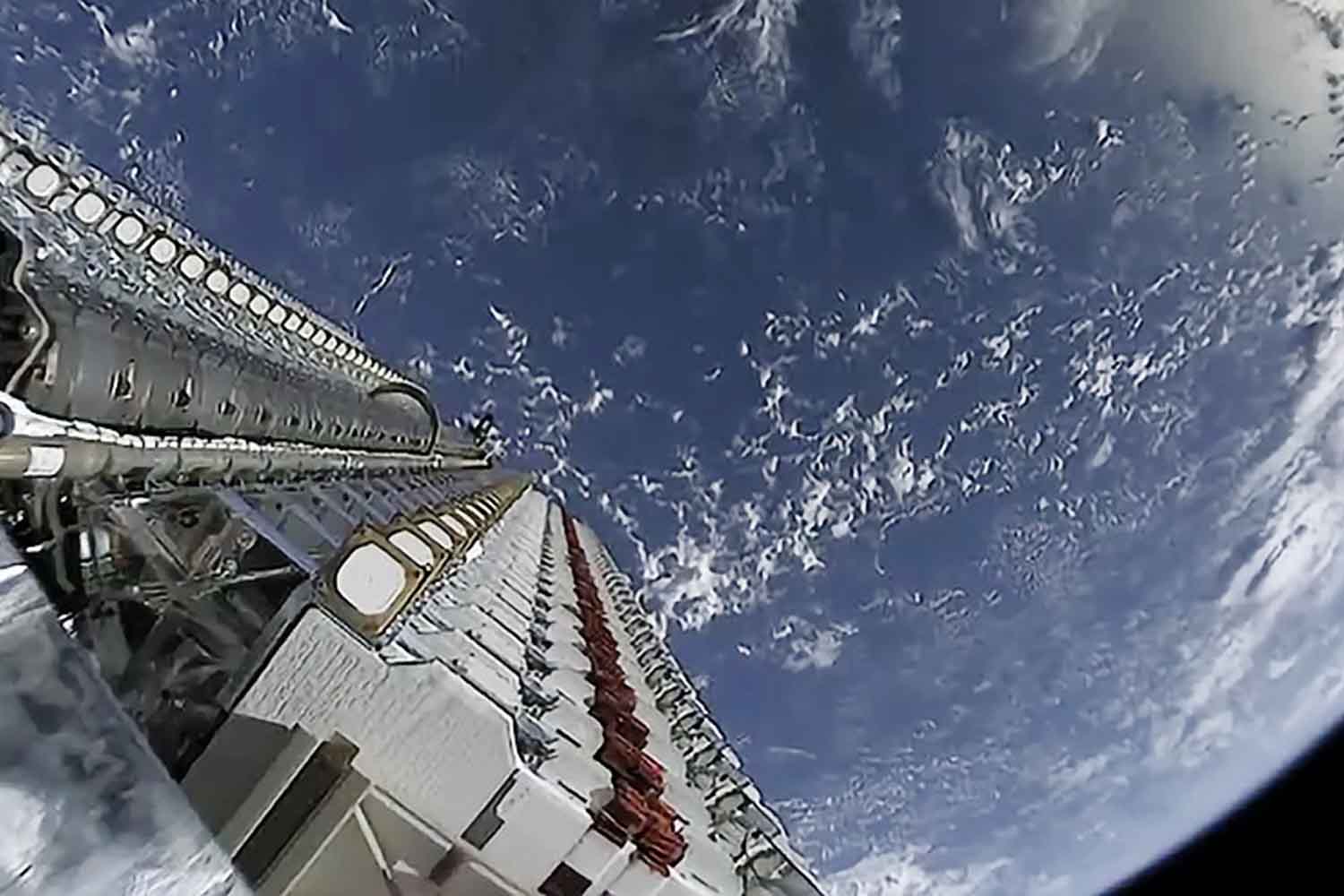
When the sun agitates, the earth reacts. And the space around us also changes: it demonstrates a recent research conducted by three NASA scientists Goddard Space Flight Center and the Goddard Planetary Heliophysics Institute of the University of Maryland, which analyzed the impact of sun activity on the constellation of Starlink satellites. The results are clear: During the peaks of solar activity, the satellites tend to return to the atmosphere much more quickly than expected.
The researchers-Denny Oliveira, Eftyia Zesta and Katherine Garcia-Sage-collected and analyzed the data between 2020 and 2024, coinciding with the current growing phase of the solar cycle. This cycle, which is repeated every eleven years, involves an increase in theintensity of solar stormsinfluencing the terrestrial atmosphere and, consequently, the satellites in low orbit.
Starlink satellites do not hold the heat
During the most active phases of the sun, The high earth atmosphere warms upexpands and becomes denser. This causes a significant increase in drag – The aerodynamic resistance that slows down satellites in low orbit. The result? Starlink satellites, designed to stay in orbit for about five years, begin the final descent to the earth 10-12 days in advance compared to what happens in periods of solar calm.
The researchers examined the reference altitude of about 280 kilometers, noting how the accelerated descent is a phenomenon directly connected to the peaks of geomagnetic activity. This implies, but also one greater possibility of collisions Among the devices themselves, especially within crowded constellations such as Starlink.
When satellites fall without control: space debris and ground risks
There is more: these unexpected returns can also compromise the procedures of controlled return. If a satellite loses altitude too quickly, there is less time to guide it to a safe area of disintegration. In some cases, fragments can reach the ground. It happened in 2024, during the peak of the current solar cycle, when A piece of a Starlink satellite crashed on a farm in Canada. Fortunately, without consequences for people, but the episode lit the spotlight on the problem of management of space debris.
The message of scientists is clear: with the number of satellites in orbit that continues to grow, it becomes Urgent to improve solar activity monitoring systems and develop more effective prevention strategies. The risk does not only concern space, but also what happens here on earth.
