

Man also pollutes space (in addition to the earth): the last report of the European Space Agency (ESA) reports Very worrying dataestimating that the actual number of spatial debris of more than 1 cm (large enough enough to cause catastrophic damage) is higher than 1.2 millionof which over 50,000 larger than 10 cm is size. And the trend It is rapidly growing.
What space waste is
As the ESA explains, our planet is surrounded by space vehicles who carry out an important work to study our climate in continuous evolution, provide global communication and navigation services and help scientists answer important questions.
But some of their orbits are flocking and are increasingly crowded with satellites and disused satellite fragments than they threaten our future in space. In particular, i satellites who remain in their operational orbit at the end of their mission risk fragmenting in dangerous clouds of debris who remain in orbit for many years.
Space waste today
The number and scale of the constellations of commercial satellites in certain low terrestrial orbits they continue to increase from year to year – reports the space agency – In some densely populated altitude bands, the density of active objects is now of the same order of magnitude of space debris
This is because satellites and intact rockets fall into the Earth’s atmosphere on average more than three times a day. However, of satellites abandons the congestion orbits at the end of their life cycle, creating a risk of collision.
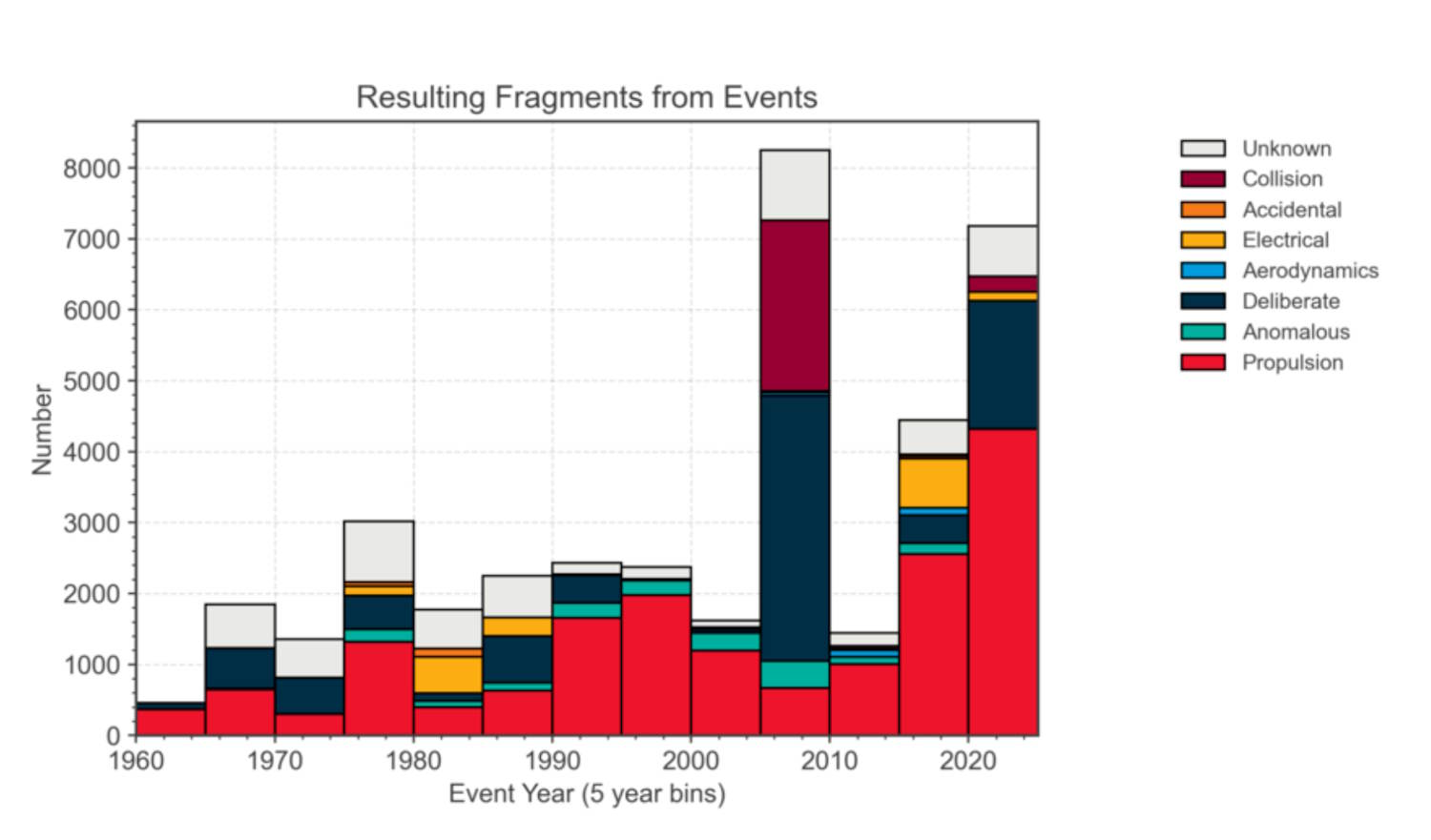
2024 saw several events of fragmentation of considerable entityin addition to many less striking events, which they added Thousands of new debris: about 40,000 objects are currently monitored by the spatial surveillance networks, of which 11,000 are useful active loads.
In general, it is estimated that the actual number of spatial debris of more than 1 cm – large enough to cause catastrophic damage – is higher than 1.2 millionof which over 50,000 larger than 10 cm is size.
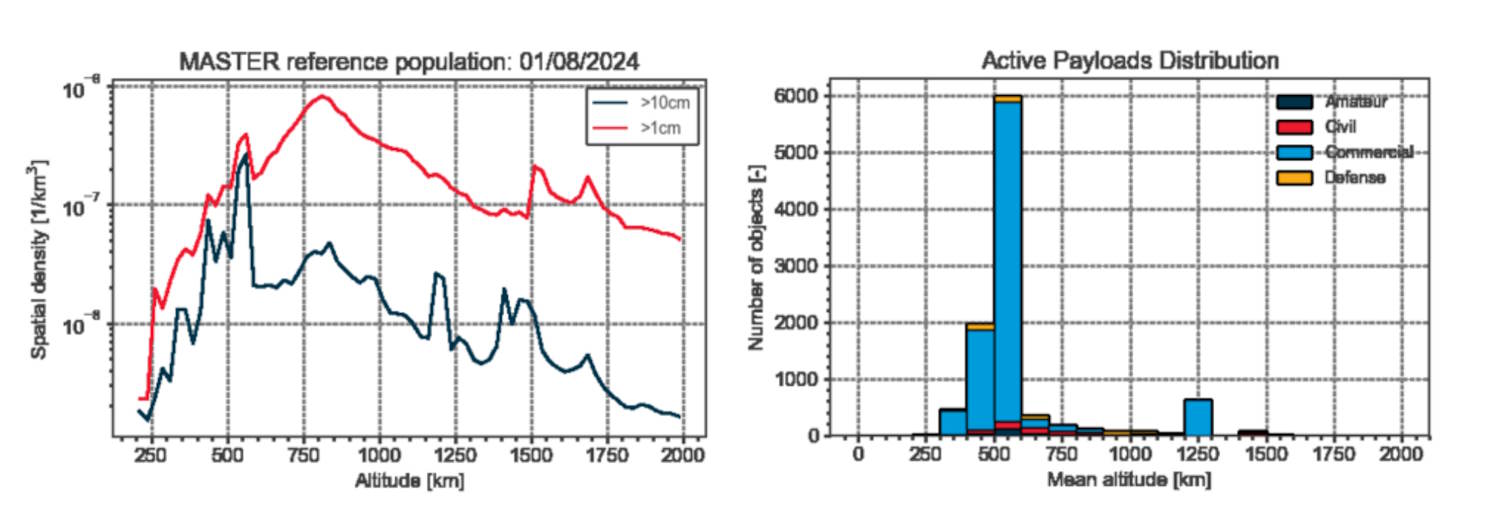
The adherence to the mitigation standards of space debris is slowly improving over the years especially in the commercial sector – explain the experts – but to stop the increase in the number and quantity of space debris “.
Even without further launches, in fact, the number of space debris would continue to grow, since the fragmentation events add new debris to one greater speed of the one with which debris can naturally return to the atmosphere. This is in fact an uncontrolled chain reaction, known as ‘Kessler syndrome’ which, among other things, also has a Connection with climate change.
Space debris and climate change
As reported by the National Institute of Astrophysics (INAF)in fact, the continuous issue of greenhouse gas is bringing toClimate alteration of the Earth’s tropospherebut recent studies seem to highlight effects even at the highest shares, which manifest themselves as cooling and a contraction in the thermosphere.
By contracting, the thermosphere cleares the low terrestrial orbit with space debris less effectively, increasing the Call collision risk: a scenario that leads to the ‘Kessler syndrome‘.
In one study of 2021 In this regard, spatial waste could also emerge could be the cause of a new hole in the ozone.
What can be (and must) do
Currently, despite the improvements in mitigation efforts, the lack of conformity and reclamation interventions has meant that in 2024 a Net growth of the population of space debris. If we extract current trends to the future, the number of catastrophic collisions could increase significantly.
To prevent this situation from intensifying and making some orbits unusable, prevention is certainly necessary through the implementation of passivation measures and reduction of orbital duration, but also the active removal of debris.
And it can be done. In fact, both the bodies of the rockets and the useful loads fall into orbit in number more and more year after year, especially in the commercial sector: about 90% of the bodies of the rockets in low terrestrial orbits is now abandoning precious orbits in accordance with the standards return within 25 years, in force before 2023, and more than half falls in a controlled way.
In addition, about 80% is also compliant with the new more restrictive standard of abandonment of orbits within 5 years, adopted by ESA for their activities in 2023.
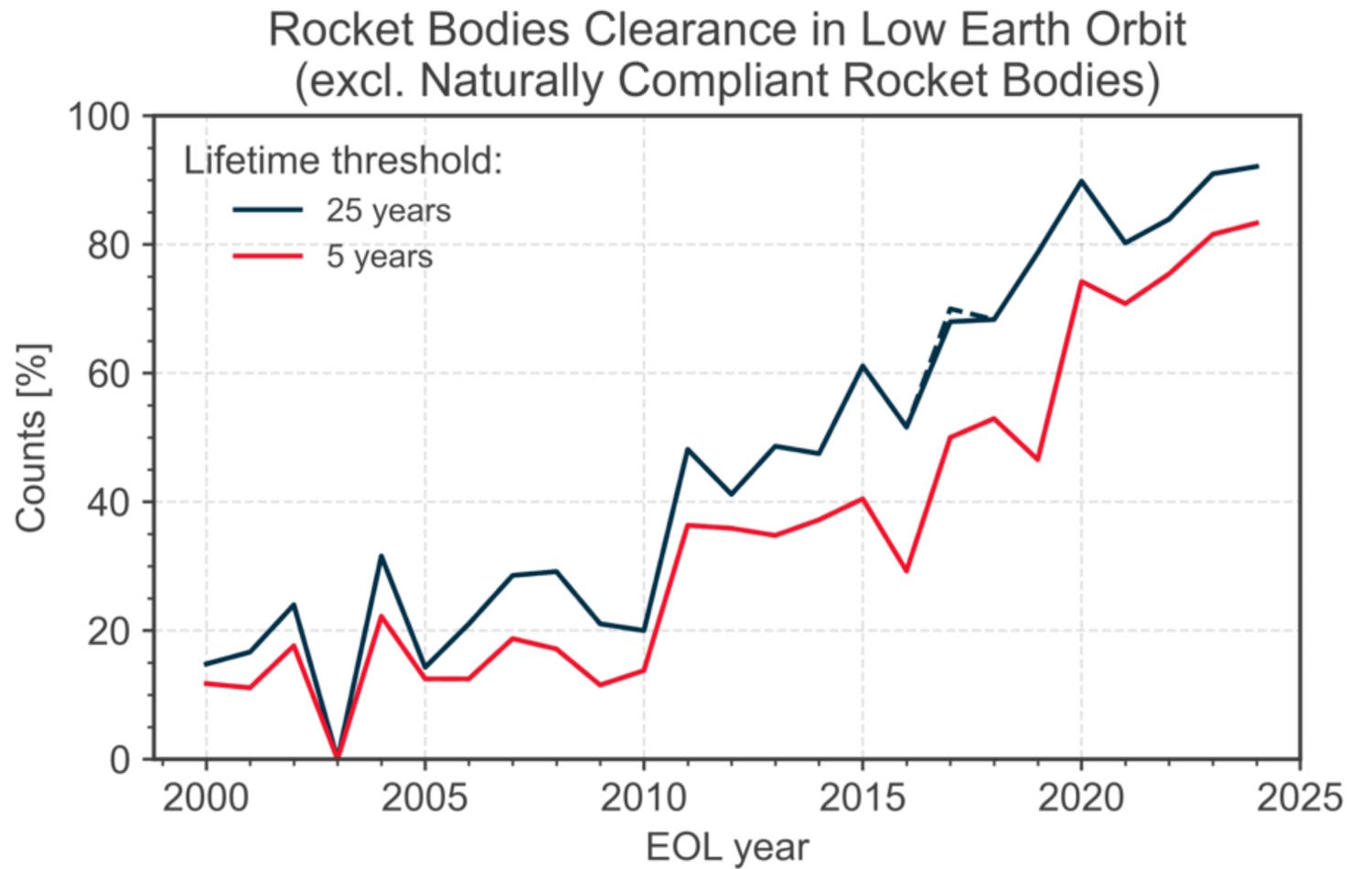
There hasn’t been much time yet to adapt to the new standards, which is why the gap has not yet filled. However, the difference in conformity is not excessive, reaching around 10%, and could fill yourself in the futurehoping that the ESA standards inspire others to follow the example.
There is a growing consensus and a push by the actors of the whole spatial sector on the need to implement globally more rigorous mitigation practices for spatial debris – specifies the ESA – in order to maintain spatial activities sustainableincluding the 5 -year limit for the abandonment of busy orbits
The agency has set out the goal of significantly limit the production of debris In the terrestrial and lunar orbits of all future missions, programs and activities by 2030 through its program ‘Zero Debris’ who outlined and published important guidelines.
He is also trying to Deorbite satellites designed and built well before the entry into force of its current guidelines and to remove from the orbit missions such as Aeolus And Cluster in more sustainable ways than initially expected.
Finally, we also have to Clean the scattered orbits of debristrying to make the missions back safely already in orbit and to carry out the active removal of debris through missions such as Clearspace-1
The report is available for this link.
Source: ESA
