
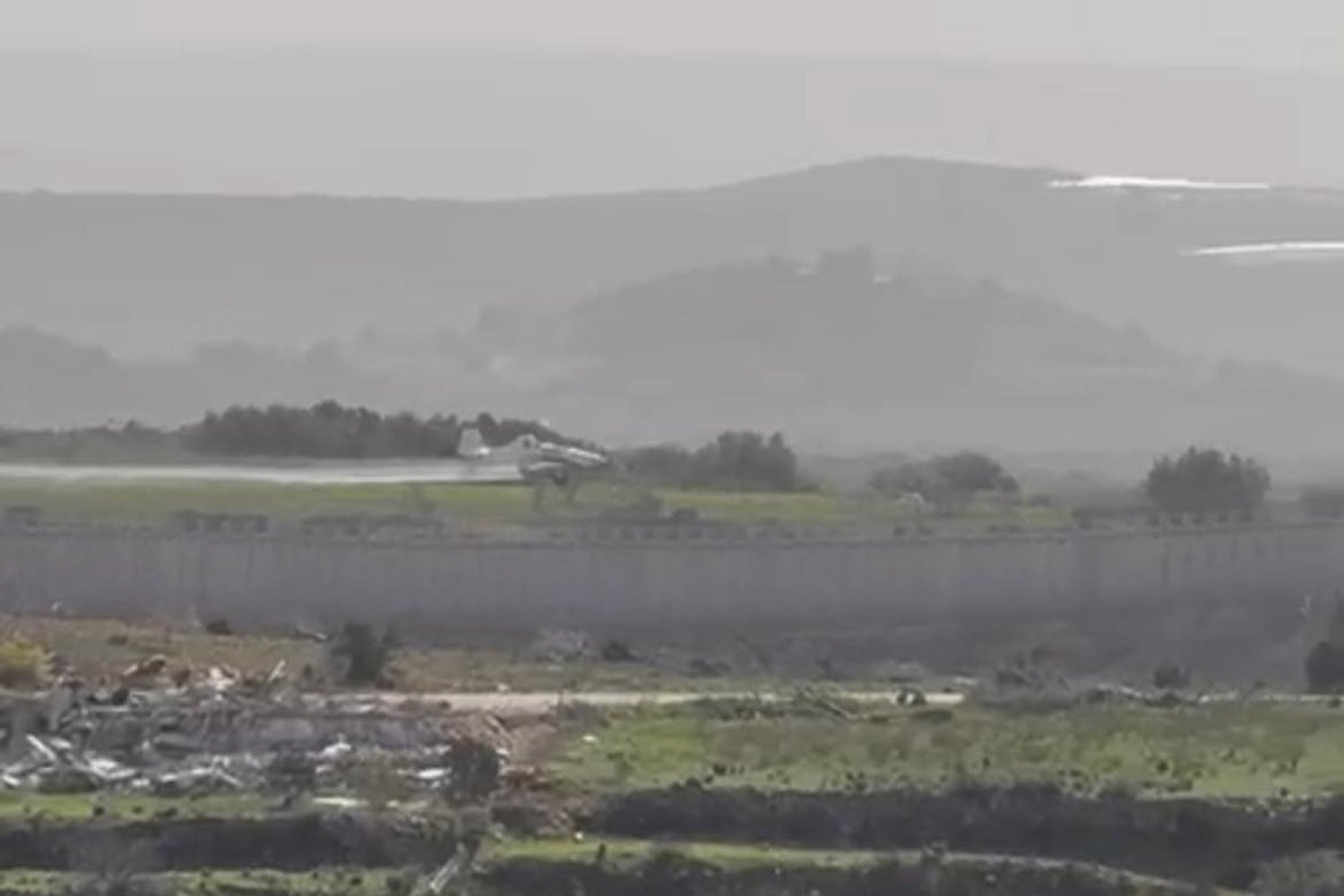
Making not only Gaza and the West Bank unlivable, but also vast portions of southern Lebanon: here, according to reconstructions, the Israeli army is systematically conducting an ecocide campaign with the sole aim of making the territory uninhabitable.
This is the sad reality that emerges from a context in which – and not everyone has realized it – even large Lebanese agricultural territories have already been unusable for some time due to bombings and access restrictions imposed along the border.
In fact, since the beginning of the conflict in Lebanon, dozens of villages have been evacuated and thousands of hectares of agricultural land have been compromised, worsening an already profound economic and food crisis.
Herbicides from the sky
Israel has been accused by Lebanon of spraying potentially carcinogenic herbicides on agricultural land in the south of the country, in what Lebanese authorities call a real “environmental and health crimeo”, capable of putting the food security and economic survival of local farmers at risk.
The Lebanese president also denounced the episode Joseph Aounwhich spoke openly of violation of national sovereignty and promised to undertake “all necessary legal and diplomatic measures” to counter what he considers an assault.
Meanwhile, no official response has been received from the Israeli government, consulted by the Guardian. But it goes without saying that the accusations reinforce the belief that the Israeli army is carrying out a strategy of ecocide aimed at making southern Lebanon uninhabitable, similar to the Palestinian territories of Gaza and the West Bank.
View this post on Instagram
According to reconstructions, the latest episode dates back to a few days ago: the United Nations peacekeepers received orders from the Israeli army to remain sheltered during an air operation in which a chemical substance defined as “non-toxic” was dispersed. Some videos show small aircraft spraying large portions of agricultural areas.
Films and stories, confirmed by the UN mission in southern Lebanon (Unifil), report repeated overflights by Israeli planes that sprayed substances based on glyphosate, one of the most used herbicides in the world and classified in 2015 by the World Health Organization as “probably carcinogenic to humans”.
In a joint statement, the Lebanese Ministries of Agriculture and Environment said that some samples had concentrations of glyphosate.”20-30 times higher than normal levels“A use of this type, they explain, risks damaging the vegetation in the affected areas, with direct effects on agricultural production, soil fertility and the balance of ecosystems.
In the previous days, videos released online would have shown Israeli planes engaged in similar operations also over agricultural areas in Syrian territory, three times in the space of just one week.
Southern Lebanon still bears the marks of a particularly intense military campaign against Hezbollah that ended just over a year ago. The toll is around 4 thousand dead, 17 thousand injured and 1.2 million displaced. Israel was also accused of using white phosphorus, incendiary bombs and cluster munitions, which burned cultivated fields, olive groves and forests, leaving the soil contaminated with heavy metals and littering the territory with unexploded ordnance.
According to Hisham Younes, founder of the Lebanese environmental organization Green Southernersthe repeated attacks on the region’s ecosystem will produce “cumulative, complex and profound” effects. The chemical spraying, he underlines, takes place on land already heavily degraded by the use of incendiary weapons and the accumulation of contaminants resulting from prolonged bombing:
The use of glyphosate-based compounds would add further pressure on insects and pollinators, with immediate consequences for an already devastated agricultural sector.
What is all this? A long tradition of war that aims at the lasting destruction of territories and the conditions necessary for life. From this perspective, this actual chemical attack would not be an isolated episode, but part of an evolving pattern in which environmental (and human) damage becomes increasingly extensive and difficult to reverse.
