
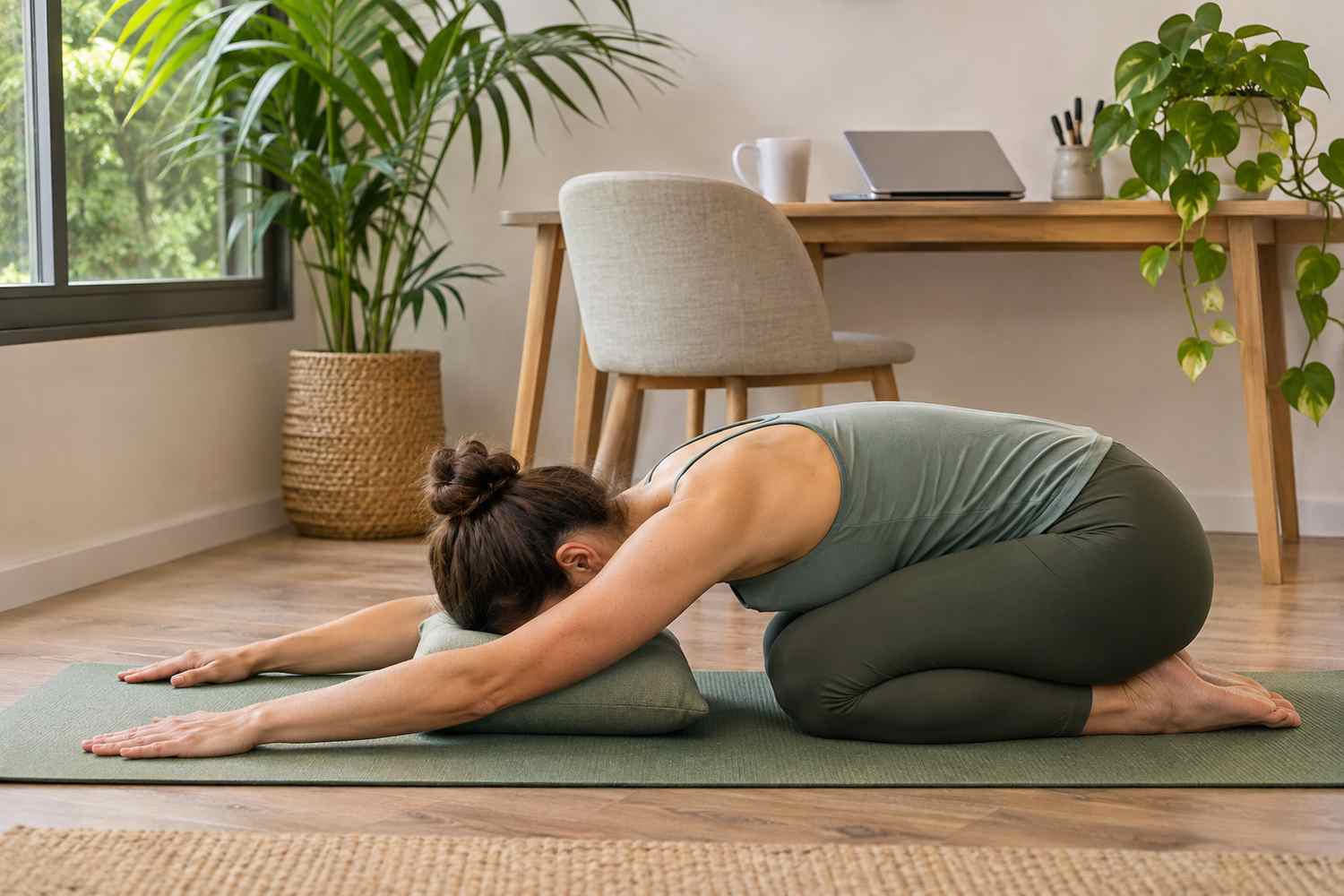
Hours spent in front of the computer, shoulders contracted and that annoying sensation of stiffness along the back that is felt especially when getting up from the chair. Even the best ergonomic seat on the market can do very little if we remain immobile for a good part of the day.
To relax the back muscles we can use two rather simple yoga positions: Viparita Karani, known as the legs to the wall position, and Balasana, the child’s position. Those who already practice yoga, have good mobility and have no contraindications can instead experiment with a more challenging sequence, moving from the candle to the plow and using gravity to encourage the lengthening of the back muscles.
What happens to your back after hours at the computer
You don’t necessarily have to spend eight hours at your desk to start feeling some discomfort. In an experiment published in 2018, researchers asked 20 people to work on computers for two consecutive hours.
Physical discomfort progressively increased, reaching clinically relevant levels especially in the lumbar area, hips, thighs and buttocks. Remaining in the same position for a long time, therefore, can become a source of discomfort even when we try to maintain good posture. Through yoga we can interrupt this static nature, involving muscles and joints in movements different from those we usually perform during the day. In some cases, a mat, a free wall and a cushion are enough.
Two yoga positions to relax your back, even if you are not very flexible
Both Viparita Karani and Balasana can be practiced as part of restorative yoga, which favors relaxation through positions held without excessive effort, possibly with the help of pillows, blankets and other supports.
The first is Viparita Karani, in the variant with the legs resting on the wall. You lie down on the mat near a wall, raising your legs and leaving your pelvis, back and head on the floor. The knees can remain slightly bent and the pelvis can be moved away from the wall as necessary to avoid excessive tension.
@AI generated
In this position we can relax the trunk, concentrate on breathing and let the wall support the legs. As Robert Saper, a doctor at the Cleveland Clinic, explains, one of the advantages compared to more demanding inversions consists precisely in the possibility of lifting the legs without subjecting the neck to the same stresses. The position can also promote venous return from the lower limbs, proving pleasant for those who, in addition to the stiffness of the back, feel a sensation of heaviness in the legs.
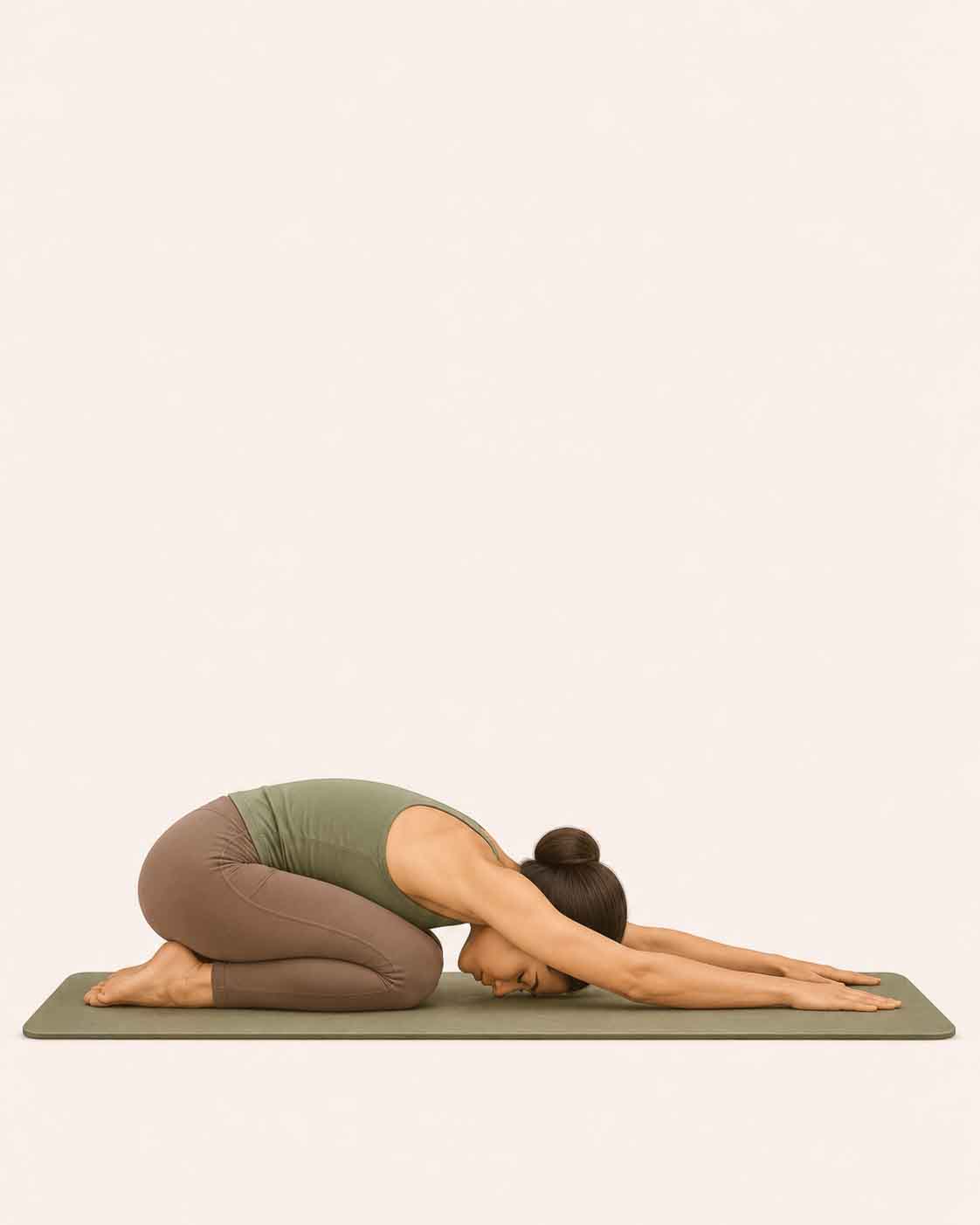
The second asana is Balasana, the child’s pose. Starting from the knees, bring the pelvis towards the heels and tilt the torso forward, leaving the arms extended in front of the body or along the sides.
@AI generated
The position favors a delicate stretching of the posterior muscles of the trunk. If mobility is reduced, we can place a pillow high enough under the torso and forehead, in order to keep the neck relaxed without forcing the back to flex.
Both asanas are featured in the Cleveland Clinic’s guide to restorative yoga. The goal is to find a comfortable position, maintain it while breathing slowly and stop it if pain appears.
Even the simplest asanas, however, have contraindications. Balasana may be uncomfortable in the presence of knee or hip problems, while Viparita Karani is not recommended for those suffering from glaucoma or uncontrolled hypertension. In the presence of vertebral pathologies, persistent neck pain or particular cardiovascular conditions, it is advisable to agree on the exercises with a healthcare professional.
If you already practice yoga: from the candle to the plow
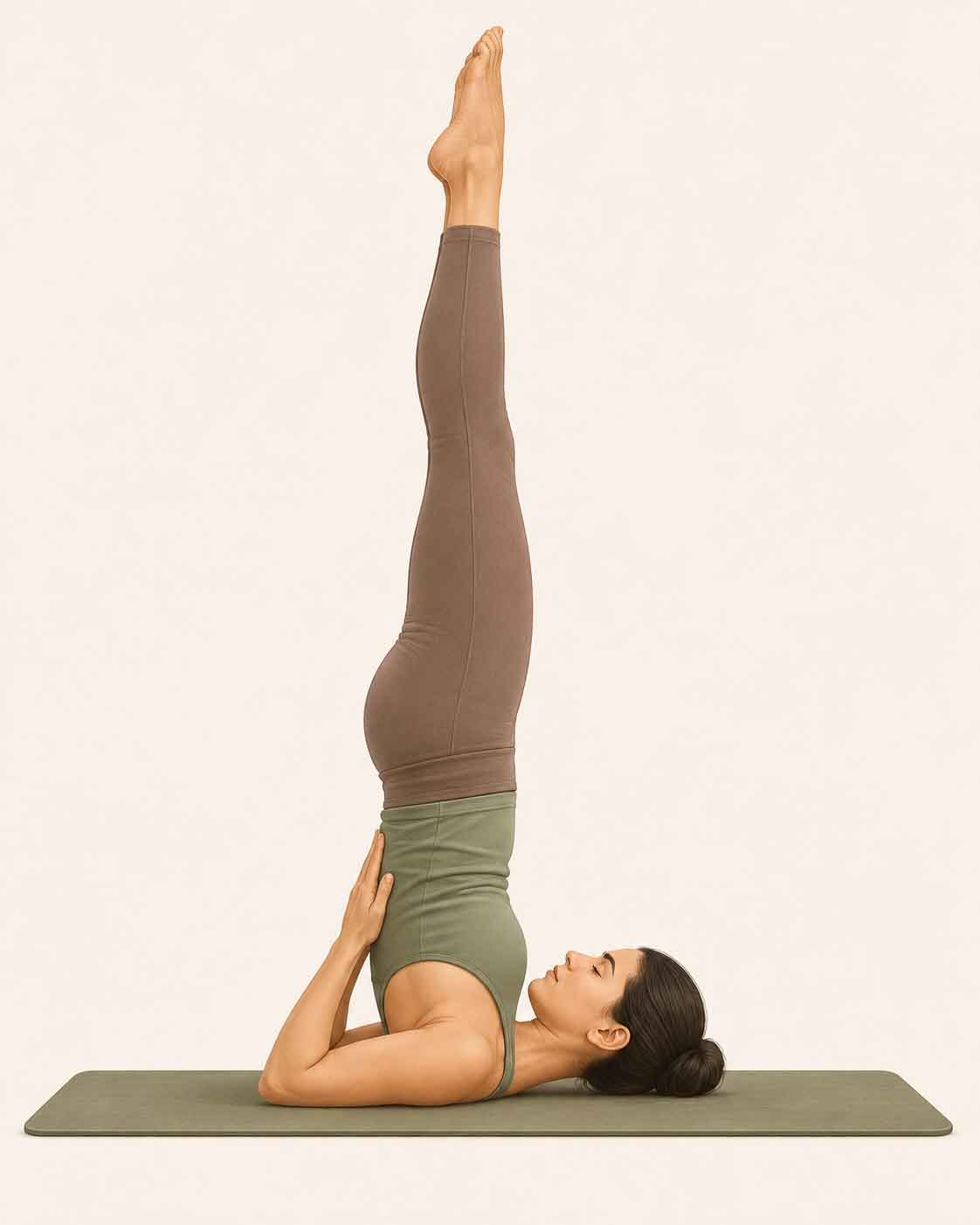
Those who already have experience with yoga can exploit gravity in a different way through two asanas belonging to the family of inverted positions: Sarvangasana and Halasana, the candle and the plow respectively.
In the candle the pelvis and legs are lifted upwards, while the hands support the trunk and the abdominal muscles help to stabilize the position.
@AI generated
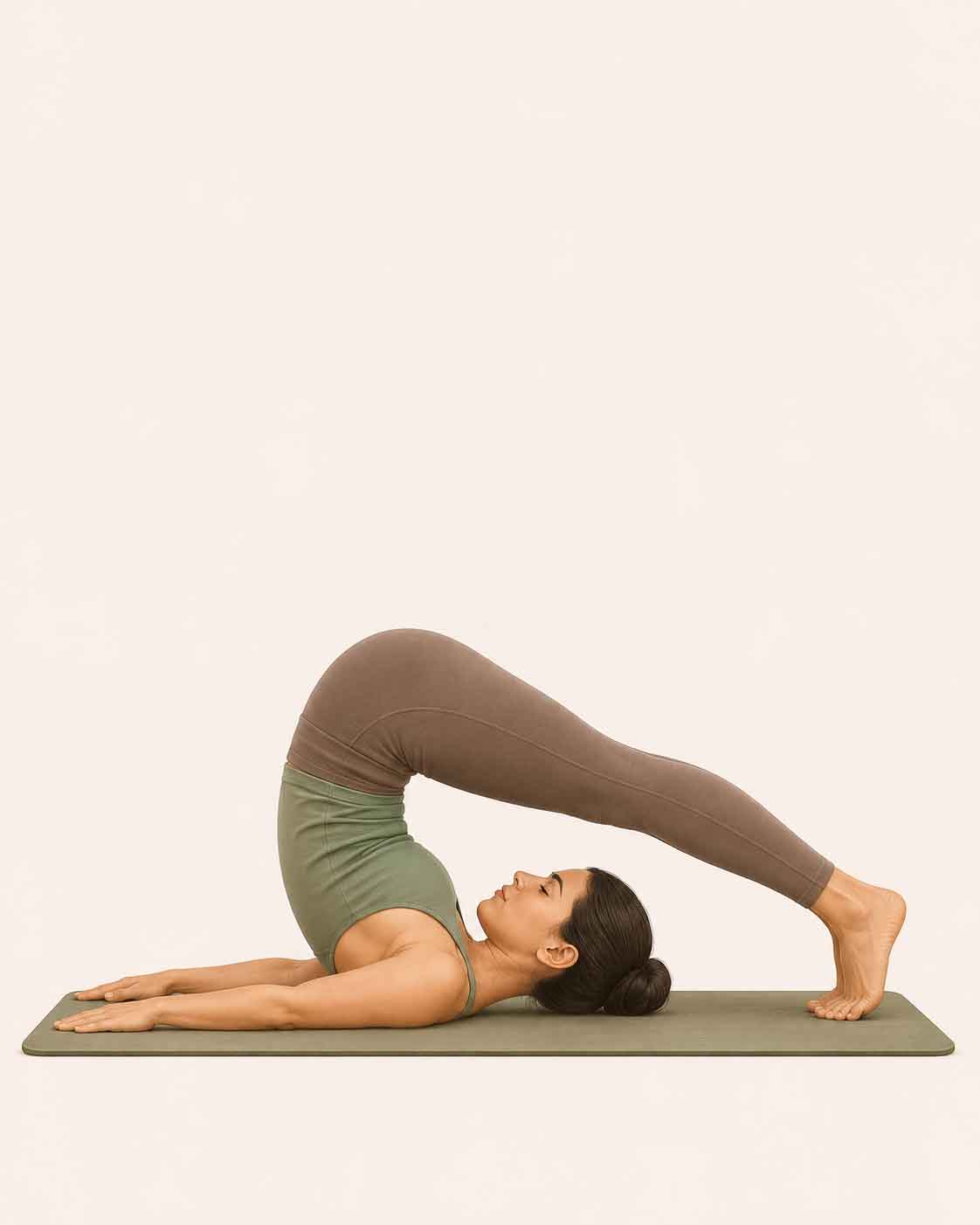
From here you can move on to the plow, slowly accompanying your legs behind your head.
@AI generated
It is above all this second position that is interesting from a biomechanical point of view. Kathleen Sand, a biomechanics expert at the University of Southern California, explained to the American Council on Exercise that when we try to reach our toes while sitting with our legs straight, the stretch of the lumbar paravertebral muscles can be relatively limited.
In the plow, however, gravity facilitates the stretching of the muscles of the mid-dorsal and lumbar region. We are talking about those muscles that run along the spine, helping to support it and control its movements. Their lengthening could explain, at least in part, the sensation of relaxation that can be felt when returning with your back on the mat.
Both poses were also featured in a twelve-week Hatha Yoga program that was the subject of a South Korean study published in 2014 on women with chronic low back pain. Participants who practiced yoga reported reduced pain and improved back flexibility, results attributable to the entire exercise program.
However, the candle and the plow require more than just flexibility: strength, preparation and control of movement. Both involve a marked flexion of the cervical spine and must be learned under the guidance of a qualified teacher.
The US National Center for Complementary and Integrative Health recommends that beginners avoid the most challenging positions, including the candle. Those suffering from neck pain, cervical hernias or other spinal pathologies should avoid experimenting with this sequence on their own. Particular attention is also necessary in the presence of glaucoma and severe hypertension.
Even ten minutes of yoga a day can help your back
During the pandemic, some researchers studied the effects of yoga on people who worked from home. The research published in the journal Human Factors involved 139 volunteers, evaluating the effects of a program of ten minutes of yoga a day for a month. In the exercise group, a reduction in the musculoskeletal discomfort reported by the participants was observed, including those in the upper and lower back.
A 2022 Cochrane review, which analyzed 21 clinical trials with a total of 2,223 participants, also found small improvements in chronic lower back pain and back function compared to inactivity. The documented benefits concern the regular practice of yoga, while the immediate relief offered by individual asanas can vary from person to person.
However, you don’t need to be able to put your feet behind your head to pay some attention to your back. And it would be useful to start even before unrolling the mat, regularly interrupting your work and getting up from your chair. Possibly before his back claims it.
