
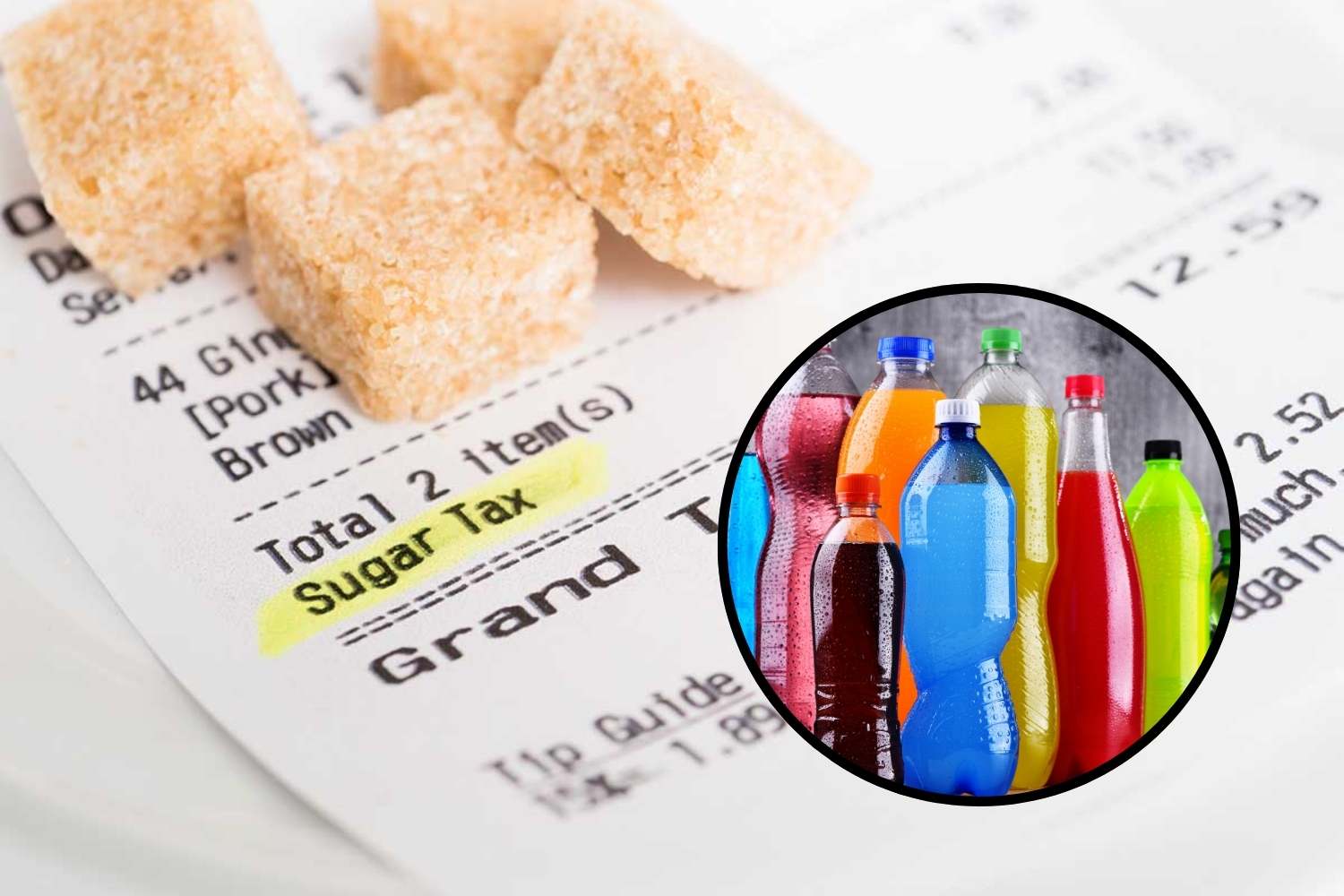
The much contested Sugar Taxthe tax on sugary drinks born with the aim of promoting healthier lifestyles, was postponed for the eighth time. Scheduled for 1 July 2025, His entry into force slips now to 1 January 2026. A decision accepted by favor by companies and trade associations, but which raises many doubts about the real political will to seriously face the health emergency linked to excessive sugar consumption.
What is the sugar tax and because it is so scary
Introduced with the 2020 budget law by the second Conte government, Sugar Tax is a tax that affects producers and importers of sugary non -alcoholic beverages: 10 euros per hectolitre for drinks ready for consumption and 0.25 euros for kg for the products to be diluted. The goal is to discourage the excessive consumption of sugars, in line with what have already done countries such as the United Kingdom, France, Spain, Hungary, Mexico and Colombia.
Despite the declared intentions, in Italy the rule has never managed to enter into force, there have been eight postponements in five years, due to the pressure of industry, to political resistance and the evergreen excuse of the lack of covers.
With the postponement, For now, consumers avoid an estimated increase around 25% on the price of sugary drinks. But to be “spared” is also a potentially effective intervention to reduce, at least in part, the impact of diseases related to excessive sugar consumption, such as obesity, type 2 diabetes and cardiovascular pathologies.
In the public debate we speak almost exclusively of economic costs and impacts on the industry, ignoring the health (even economic) repercussions of the non -intervention.
Criticisms at Sugar Tax
In the government the voices contrary to the Sugar Tax are strong and compact. The measure was called “unfair, ideological and harmful”, accused of having no demonstrable effect on the drop in sugar consumption. Yet international experiences tell a somewhat different story.
According to a study published in Plos Medicine and conducted by the University of Cambridge School of Clinical Medicine, the Sugar Tax introduced in the United Kingdom in 2018 led to a reduction in the 8% obesity in girls of 10-11 years, with about 5,200 cases of obesity less every year in that band. Instead, no significant improvements have been observed among males or younger children.
In Spain, in 2021, the increase in VAT on sugary and sweetened drinks from 10% to 21% determined a reduction in consumption of 13%, but only in 33% of the poorest families. Scarce results? Maybe, but always better than nothing.
Certain, The taxes are not the magic wand To combat obesity, but represent One of the most effective tools for modifying consolidated consumer behaviors.
The drinks industry is obviously at the forefront against the introduction of this tax, with Fosche: According to Assobibe (Confindustria), the introduction of the Sugar Tax would cause a market contraction, a drop in investments (-46 million), a reduction in the purchases of raw materials (-400 million) and almost 5,000 jobs at risk, especially in the South.
But these numbers, provided by a partisan study, must be read with caution. They do not consider, for example, the possible conversion of production to healthier products – an opportunity instead of a threat. Nor is it taken into account the social and health costs associated with the massive consumption of sugars, which continue to fall on the community.
Paradoxically, despite the frontal attacks, no government has managed so far to completely erase the Sugar Tax. The reason is simple: the expected revenue is precious. According to the state accounting of the state, only the six -month postponement entails a loss of 60 million euros. A definitive cancellation would require structural covers, that so far no no one has had the courage or ability to find.
Thus, we go on for the extension and in the meantime, the sugary drinks remain clearly visible on the shelves and in the vending machines, accessible and convenient, especially for the youngest.
