
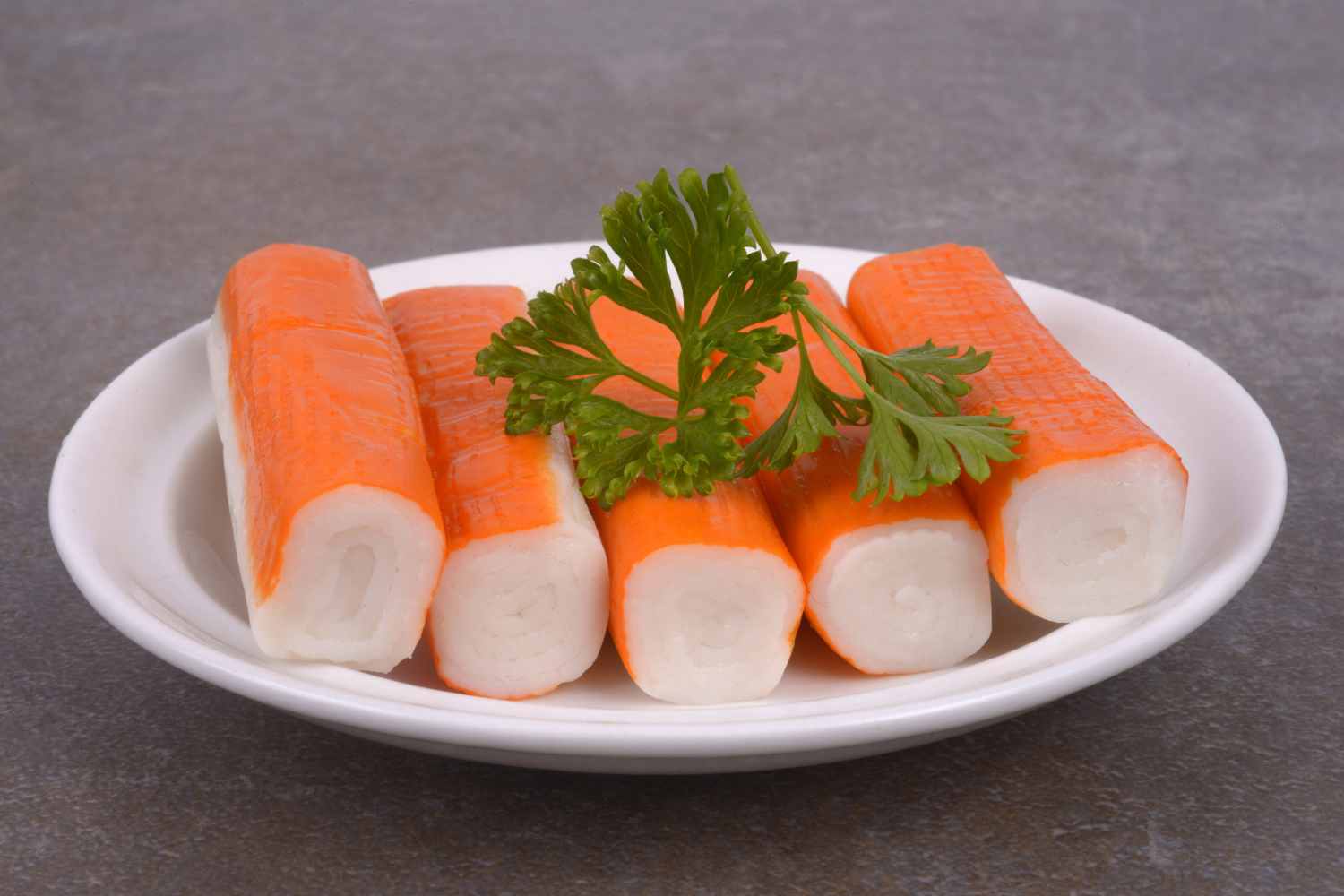
Surimi is often erroneously called “crab pulp”, but reality behind this food product is very different from how many consumers imagine. It is a highly processed food that has little to do with fresh fish and even less with crab.
What is Surimi?
Surimi is not at all a traditional or artisan food, but an industrial product created to expand the market offer. It is presented in various shapes, from small colored cylinders of red outside and white inside, to the imitations of crab that or seaside cold cuts. The production process is complex and provides multiple phases of processing, manipulation and treatment that confirm its highly artificial nature.
How is it produced?
The production begins with “tiles” of frozen fish, mainly composed of processing waste of various fish species such as cod, mackerel, sides and different varieties of Asian carp. These industrial waste are coarsely chopped and added with salt and chemical additives, then mixed with egg white. The mixture is enriched with sugar and vegetable fats, and diluted with frozen water until a whitish pasta with a consistency similar to cement.
This pasta is then modeled in long strips that, rolled up on themselves, create sticks with a frayed consistency that imitates the crab pulp. The final touch is the application of an orange wrinkled film that simulates the veins of the fish meat. After all these processes, Surimi is cut into small sticks and packaged vacuum -packed for distribution in supermarkets.
View this post on Instagram
What’s inside Surimi?
The basic pulp of surimi is practically tasteless, which is why numerous substances are added to improve appearance, flavor and shelf life. Among these we find flavor enhancers such as monosodic glutamate, dyes to obtain typical red or orange shades, potato starch to improve conservation, and often low -quality vegetable oils. Artificial aromas are used to simulate the flavor of crab or lobster. The numerous washes and treatments make the final product low in vitamins and mineral salts, transforming it into a food with a minimum nutritional value.
Is surimi a healthy food?
The consumption of surimi involves several potential health risks. There are no obligations to indicate the specific fish species used on the label, opening the possibility to the use of poor quality or contaminated raw materials. The risk of presence of additives or preservatives in excessive quantities and polyphosphates is added, which in large quantities can interfere with the absorption of football. The presence of contaminants such as pesticides and heavy metals is also possible, as well as a high sodium content, not recommended for those suffering from hypertension or kidney pathologies.
Why is the cost so high?
Although it is produced with food waste and additives of dubious origin, Surimi is often sold at relatively high prices. This represents a paradox considering the quality of the raw materials used and the limited nutritional value of the final product. The images of the surimi production process are revealing and could make many consumers reflect on their food choices. As Dr. Andonova points out, Surimi is only one of the many ultra -prompt foods that may have negative effects on our health, as demonstrated by several scientific studies that connect these products to an increased risk of premature death.
In light of this information, it would be wiser to move towards the consumption of fresh fish, which offers authentic nutritional benefits without the addition of artificial substances. The next time you see those orange sticks in the fridge desk, remember the long industrial process that hides behind that fake “crab pulp”.
View this post on Instagram
