
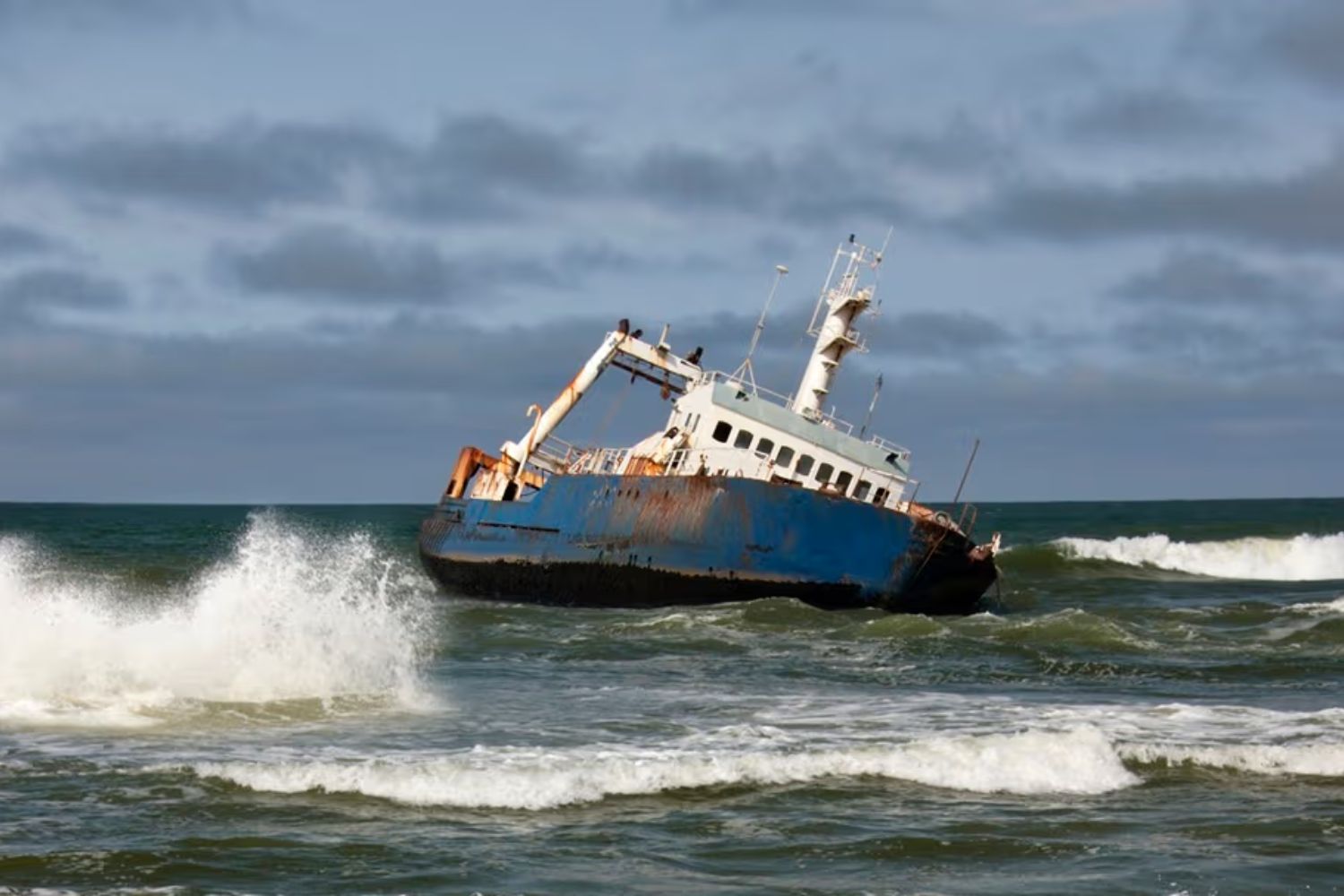
Dozens of cargo ships that sank in the Mediterranean between the late 1970s and early 2000s may have harbored toxic and radioactive waste. Most of the sinkings, concentrated in the 1980s and 1990s along the Italian coast, remain shrouded in mystery. Legambiente is now taking the case to Brussels, asking Europe for new investigations into the seabed and greater transparency on the illicit trafficking that still threatens the sea today.
The past that returns
The Italian investigations of the 1990s, launched also thanks to complaints from the Italian environmentalist association, traced some leads, but too many questions remain open. Behind every wreck lie questions of environmental safety, health risks and legal responsibilities. The suspicious sinkings affected strategic routes and international ports, suggesting the existence of a criminal network committed to disposing of toxic and even radioactive waste without leaving traces.
A symbolic figure of this research is the frigate captain Natale De Grazia, who died in 1995 while investigating “disposable ships” on behalf of the Reggio Calabria Prosecutor’s Office. His death, never fully clarified, has become a warning about the risk faced by those who try to shed light on opaque and potentially criminal international trafficking. In the following years, Legambiente continued to promote awareness initiatives, recalling the importance of not leaving this matter unresolved.
The case arrives in Brussels
For the first time, the matter was brought to the European Parliament with the event “Ships of Shame and Poison Ships – The role of the European Union in investigating hazardous and radioactive waste in the Mediterranean”, promoted by MEP Sandro Ruotolo together with Legambiente. Scientific, institutional and international police representatives participated in the initiative. The objective was to clarify how these sinkings are not an isolated problem, but a transnational dossier involving trade routes, European ports and intermediaries between Italy, Spain, Bulgaria and African shores.
During the meeting, updated data on shipwreck mapping and seabed monitoring technologies were presented, from ground penetrating radar to advanced chemical analyses. The urgency of bringing together scientific expertise, judicial cooperation and democratic transparency tools to transform reports, complaints and studies into concrete actions was discussed.
Six proposals to shed light
Legambiente has put forward six proposals to the European Commission and the EU Parliament. Acquire all available documentation on suspected sinkings, including investigations by the Italian Parliamentary Commission and the United Nations Environment Programme. Then, launch targeted scientific and environmental programs on the seabed of suspected wrecks and use advanced monitoring technologies, taking inspiration from projects such as NODSSUM (Nuclear Ocean Dump Site Survey Monitoring). Finally, involve EURATOM to investigate any radioactive waste produced or transited between the 80s and 90s, activate Europol and Interpol to reconstruct the criminal networks of toxic and radioactive waste trafficking and launch a European fact-finding investigation into “disposable ships” and toxic and radioactive waste, including the coastal and African countries involved in the same trafficking.
According to Enrico Fontana of Legambiente, “we cannot allow any more silences: truth and justice are a duty towards those who, like De Grazia, have dedicated their lives to the public good”.
Backdrops that speak
In the Mediterranean seabed, currents, erosion and human activities can move or release dangerous materials that have remained submerged for decades. Clarifying what those wrecks contain today is not just an act of remembrance, but a concrete necessity for environmental protection and the prevention of accidents.
The story of the “poison ships” or “disposable ships” is also a test for transparency and responsibility: addressing the past is essential to give credibility to current waste policies and protect the future of the sea. The Mediterranean deserves to know what lies beneath the surface and to finally see the truth brought to light.
