
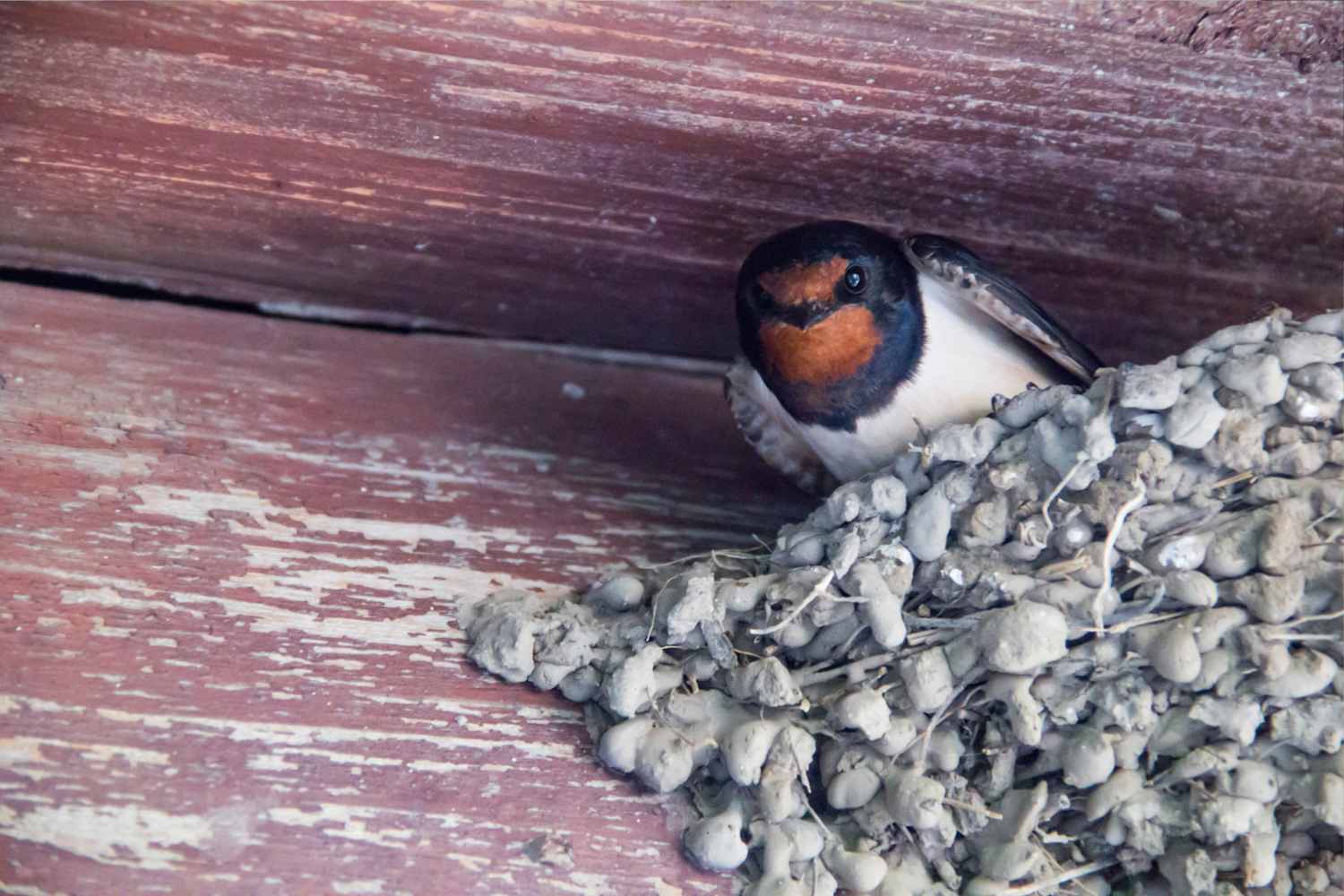
Every spring, punctual like few things in nature, the common swallow (Hirundo rustica) will make its return, from the African continent to the European one, and not in a generic point, but precisely in that precise courtyard, on that beam, in that nest that it had left six or seven months earlier, in September. After a journey of over 10,000 km across the Sahara and the Mediterranean. The question is how this is possible.
A navigation system that science has been studying for decades
Swallows do not orient themselves randomly, nor do they simply follow air currents, as they have an integrated navigation system that combines multiple mechanisms. The main one is magnetoreception: in the beak and ears there are deposits of magnetite, an iron oxide that reacts to variations in the Earth’s magnetic field. In the retina, however, there are molecules of cryptochrome 4, a photosensitive protein that would allow the bird to visually perceive the inclination with respect to the magnetic field. Added to these is the observation of the position of the sun and other geographical reference points along the route. The result of the various elements gives us a true “biological compass” of rare precision, capable of guiding an animal weighing less than 20 grams across deserts, seas and continents to a specific point on a wall.
The journey: 10,000 km with a loop route
The swallows that nest in Italy spend the winter months in sub-Saharan Africa, often as far as the Congo basin. The return journey north begins between late February and early March; the birds arrive in Italy in the first weeks of April.
An Italian study published in Movement Ecology which tracked 85 individuals from the Po Valley and southern Switzerland with geolocators, reconstructed the routes in detail: in the autumn migration the swallows cross the central Mediterranean, passing through Corsica and Sardinia, to then cross the Sahara. On their return in spring they instead follow a more western route, along the Atlantic coast of Africa and the Iberian Peninsula, before returning to Europe. A clockwise loop route, longer in the return phase, therefore traveled at a higher speed.
The invisible cost of travel: stress and survival
Behind the almost “perfect” precision of migration lies a very fragile physiological balance. Studies on corticosteroid levels have shown that during the journey swallows are subjected to high stress, which is necessary to sustain the energetic effort but potentially harmful in the long term. This stress can directly impact reproductive success, reducing the likelihood that eggs will hatch or that the young will survive. In other words, arriving at your destination is not enough: you have to get there in the right conditions.
40% return to the same nest
Finding Europe again is not enough, because the swallow must find its nest, an action it carries out with a frequency that research has quantified: according to a study in Scientific Reports – which analyzed 149 nests on three islands in South Korea – around 40% of individuals return to using exactly the nest from the previous year, which will be reinforced with mud and straw.
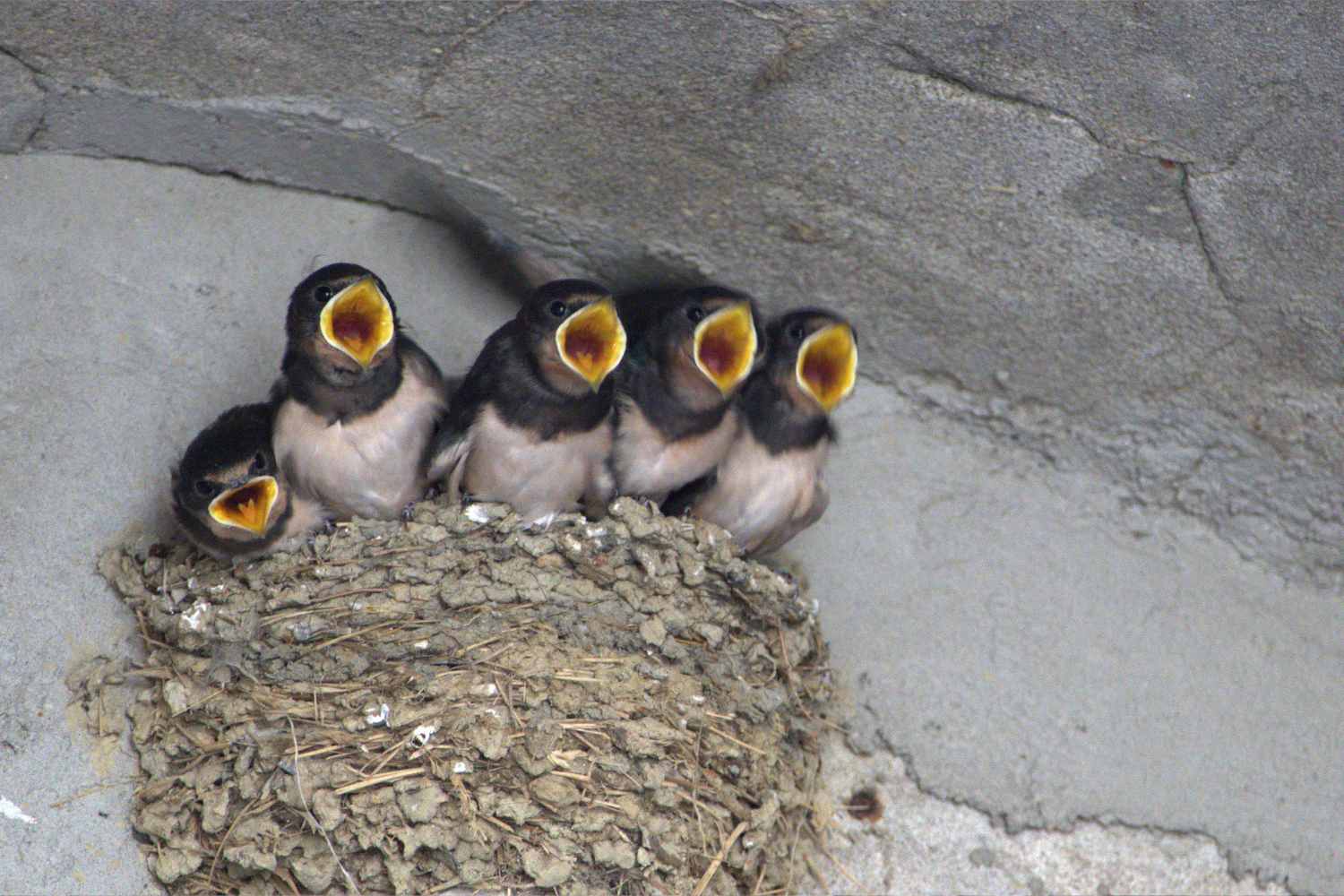
The choice is neither casual nor sentimental, it is a mere efficiency calculation: rebuilding a nest from scratch would require several days of work, therefore, reusing an existing one will free up precious time for mating, hatching and caring for the chicks. The male arrives on average a week before the female, takes over the best nest and begins to sing to attract his mate. The couple, once formed, tends to remain stable for life, given that swallows are essentially a monogamous species.
The nest is abandoned only in the event of infestation by parasites, such as ticks and fleas, serious structural damage, or if the previous year’s brood had gone badly. In these cases, the choice usually falls on a nearby nest, not on a random destination.
Because close to humans
The same study in Scientific Reports observed another data, namely that 96.6% of the nests analyzed were located in inhabited buildings, or in any case frequented by people. The reason is easy to say: the human presence discourages predators – snakes, rodents, nocturnal birds of prey – and increases the survival rate of the broods. Swallows have learned, over the course of evolution, to recognize a form of passive protection in humans.
The problem is that this balance has been broken. Intensive agriculture, overbuilding and the removal of nests from buildings are drastically reducing available spaces. In many cities and countryside, swallows are finding fewer and fewer places suitable for nesting.
Climate change is altering migration
The proverbial punctuality of the swallow is today under pressure, because the increase in global temperatures has already produced a measurable advance in the moment of arrival in Europe, with some populations staying longer and going less and less south during the winter. Some, according to research in recent years, now winter in Portugal instead of going below the equator.
Such a shortening of the route brings with it various consequences, including fewer insects available on the routes, more concentrated and more competitive food resources, and situations that are still little studied on reproductive dynamics. A study published in PLOS ONE documented such changes in migratory timing and their effects on European swallow populations.
What can we really do to protect them
If the swallows continue to return, it is also because they still find favorable conditions here and there. But it is no longer a given. Protecting them does not require extraordinary actions, but concrete and widespread choices.
Leaving nests intact under roofs and balconies, avoiding the use of pesticides in gardens, encouraging the presence of insects and supporting agriculture that is more respectful of biodiversity are simple but crucial interventions. Even small gestures can make a difference, especially in a context where every available habitat counts.
Not just a symbol: an environmental indicator
Today the swallow is no longer just the symbol of spring. It is a precise biological indicator, which tells us about the health of ecosystems better than many other signals. If it arrives earlier, if it stays longer, if it decreases in number, it means that something is changing profoundly.
And observing its return, year after year, is no longer just a tradition: it is a way to understand how our environment is still working.
