
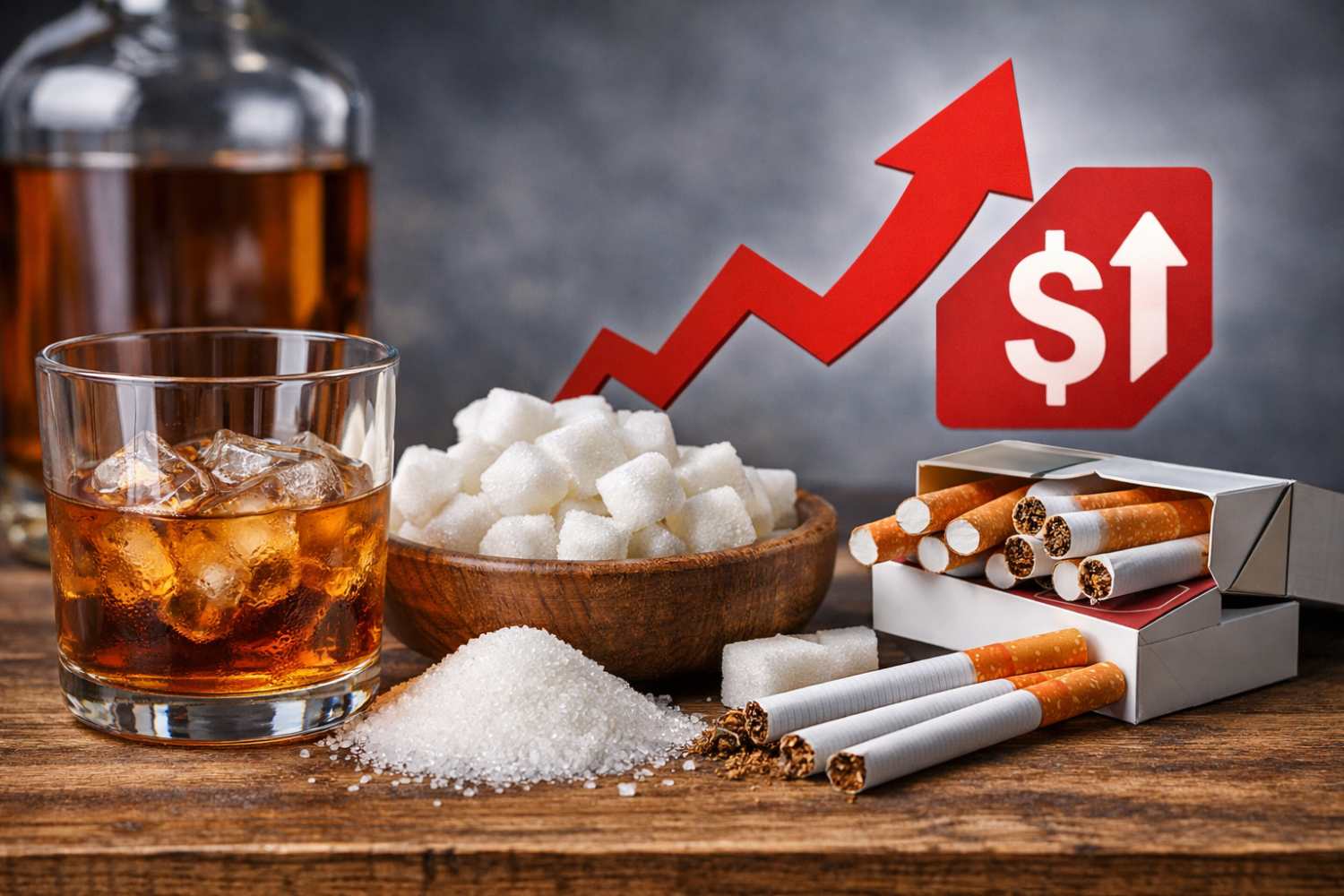
The World Health Organization is once again pressing an issue that we know well, but which many governments continue to ignore: the need to act to discourage the consumption of alcohol, sugary drinks and tobacco. As? An effective tool, capable of preventing millions of avoidable diseases and strengthening public health systems, could be to significantly increase taxes on these products.
The WHO Director-General reiterated this message on 2 February, during the opening of the 158th session of the Executive Council, once again underlining the need to increase the real prices of tobacco, alcohol and sugar-sweetened drinks by at least 50% through specific health taxes by 2035.
A message that does not come from nowhere, but which is part of a strategy launched some time ago and today considered increasingly urgent.
Prices too low, consumption too high
According to the WHO, alcohol, sugary drinks and tobacco are still too cheap in many countries, partly due to weak or non-existent tax policies. In some cases, prices have even decreased over time, making these products increasingly accessible, especially to young people.
The result is, according to experts, an increase in cases of type 2 diabetes, the growth of obesity and overweight, more cardiovascular diseases and more tumors. Non-communicable diseases which today represent over 75% of deaths globally and which are putting pressure on healthcare systems that are already in difficulty.
Do health taxes work?
On this point, the WHO appears confident: increasing taxes decreases consumption. It is not an ideological hypothesis, but a conclusion based on decades of scientific evidence.
Higher prices reduce the purchase of harmful products, dissuade young people from starting to consume them and also generate more public revenue which can be reinvested in healthcare, prevention and social services (although this does not always happen automatically).
Precisely for this reason, the WHO insists on the need for well-designed taxes that take inflation into account and are not eroded over time.
The objective of +50% by 2035 was formalized in July 2025 with the launch of the “3 by 35” initiative, but in 2026 the WHO returns to relaunch it forcefully, linking it to an even more critical context.
Cuts in international aid, growing public debt and healthcare systems under stress make healthcare taxes a key tool for the self-sufficiency of countries, as underlined by the Director General.
According to WHO estimates, a single 50% increase in the prices of tobacco, alcohol and sugary drinks could prevent up to 50 million premature deaths over the next 50 years and help raise up to $1 trillion for public health and development.
The WHO also cites concrete examples: in 2025, countries such as Malaysia, Mauritius, Slovakia, Sri Lanka and Vietnam have introduced or increased taxes on these products; in early 2026 India introduced a new excise tax on tobacco and Saudi Arabia a tiered tax on sugary drinks.
But there are still too many governments that maintain lenient tax regimes, or even grant incentives to the industries most harmful to health, frustrating the prevention objectives.
The message from the World Health Organization is clear: intervening on prices is a political choice, not just a technical measure. Illnesses linked to tobacco, alcohol and sugary drinks are not inevitable. Reducing them quickly is possible, and according to the WHO, health taxes remain the most effective and immediate way to do so.
