
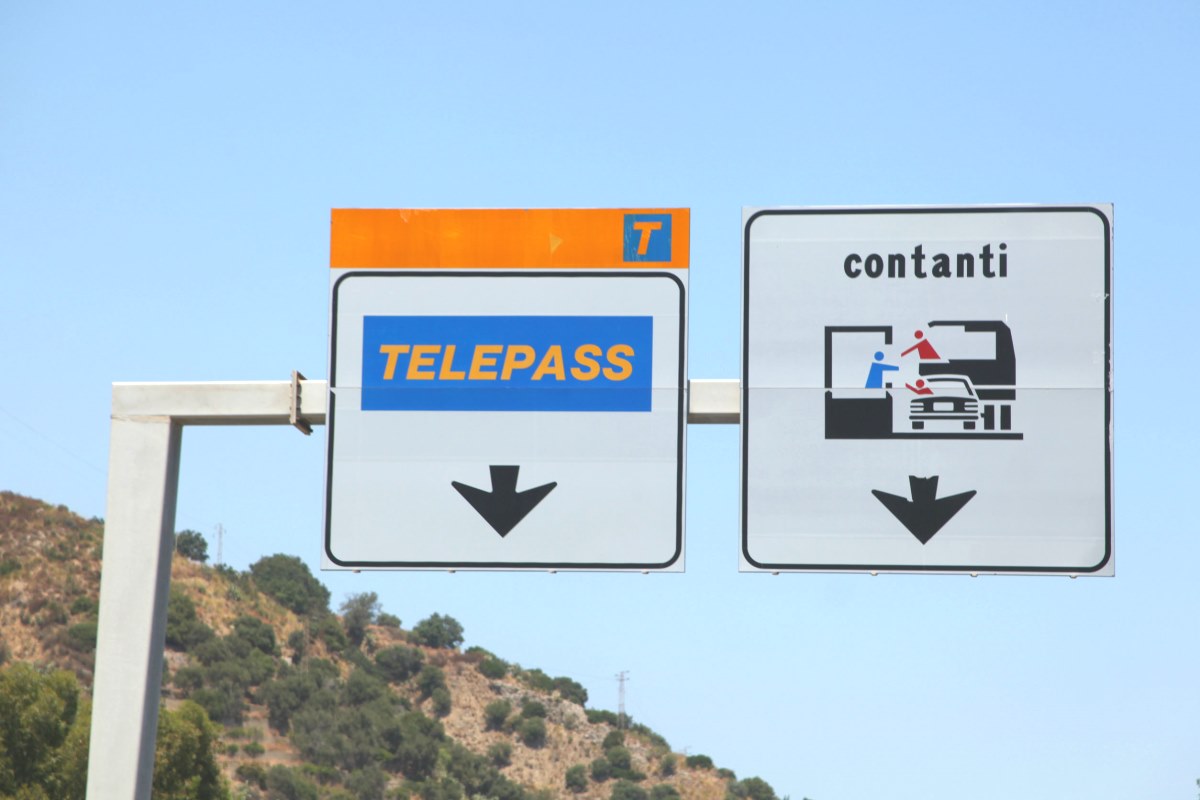
The farewell to the queues to the motorway toll booths does not only carry a benefit in terms of time for motorists. According to a new study commissioned byTelepass Observatory and made byCa ‘Foscari University Venicethe adoption of the remote control system during 2024 made it possible to avoid the entry into the atmosphere of 71 thousand tons of CO2marking an increase compared to 61 thousand tons saved in 2022.
The research, coordinated by the professors Raffaele Pesenti And Giovanni Vaiaanalyzed the entire Italian motorway network, calculating the decrease of polluting agents made possible by the elimination of the “stop and go” phases necessary for the retirement of the ticket and the manual payment of the toll. The study took into consideration a significant volume of traffic, with a daily average of 2.6 million transient vehicles, of which over 320 thousand represented by heavy vehicles.
Savings of time and fuel: a double advantage
In addition to the environmental benefit, the research also quantified the advantages in terms of time and fuel consumption. The crossing of the motorway gates with Telepass proved to be ten times faster than the traditional modes, leading to a total saving of almost 60 thousand days in only 2024.
The elimination of accelerations and decelerations related to payment operations also has a direct impact on consumption. Although the consumption during the braking is considered negligible, the acceleration to resume the march after the stop at the toll booth involves an estimated fuel expenditure between 5 and 10 milliliters for a class A. considering the average cost of fuel, the study estimates a total economic savings of more than 8 million euros in 2024.
As Giovanni Vaia of the Ca ‘Foscari Venice University points out, the study shows how the reduction of environmental impact can go hand in hand with economic development, through innovation in services. Francesco Maria Cenci Telepass adds how this research represents the scientific validation of an intuition that for over thirty years has contributed to a more efficient and sustainable mobility. The Telepass Observatory, with this analysis, aims to monitor and disseminate useful data to promote increasingly respectful mobility of the environment.
