
When we think of Thailand, the collective imagination immediately takes us to white beaches and crystal clear waters. But there is another Thailand, less talked about and perhaps more authentic, which is conquering those looking for a different journey: slower, deeper, more respectful.
It is the Thailand of the hinterland, of mountains shrouded in fog, silent temples and villages where time seems to have stopped. A territory that responds to an increasingly strong question among travellers: how can we move around the world leaving a lighter footprint?
Northern Thailand is becoming the symbol of more balanced tourism. While the Southern Islands continue to attract millions of visitors, regions such as Chiang Mai, Chiang Rai and Mae Hong Son offer a real alternative to overcrowding.
Here tourism is distributed differently: not huge resorts but family-run guesthouses, not crowded beaches but trekking paths through teak forests, not beach clubs but night markets where local craftsmanship is still a vital economic resource.
Ayutthaya and Sukhothai, the ancient capitals, are perfect examples of how history can become a driving force for quality cultural tourism. UNESCO heritage sites that can be explored by bicycle, at the right pace to observe, breathe, understand. The ruins of the temples emerge between ponds and vegetation, in a balance between nature and archeology that teaches a lot about respect for the territory.
Connect with local communities
One of the most interesting aspects of inland Thailand is the possibility of connecting with local communities in a respectful way. Hill tribe villages – Karen, Akha, Lisu, Hmong – have developed forms of community tourism that allow travelers to contribute directly to the local economy, without intermediaries who drain the experience of meaning.
In Pai, a small bohemian town surrounded by hills and waterfalls, the pace naturally slows down. You don’t come here to tick boxes on a hectic itinerary, but to stop: walk to a canyon, bathe in a hot spring, converse with those who have chosen to live differently.
Mae Hong Son, near the Burmese border, is perhaps the essence of this hidden Thailand: morning mists, Burmese-style temples, markets where very little English is still spoken. It is tourism for those who accept being a little lost, of not having everything under control, of trusting.
Protected nature and extraordinary biodiversity
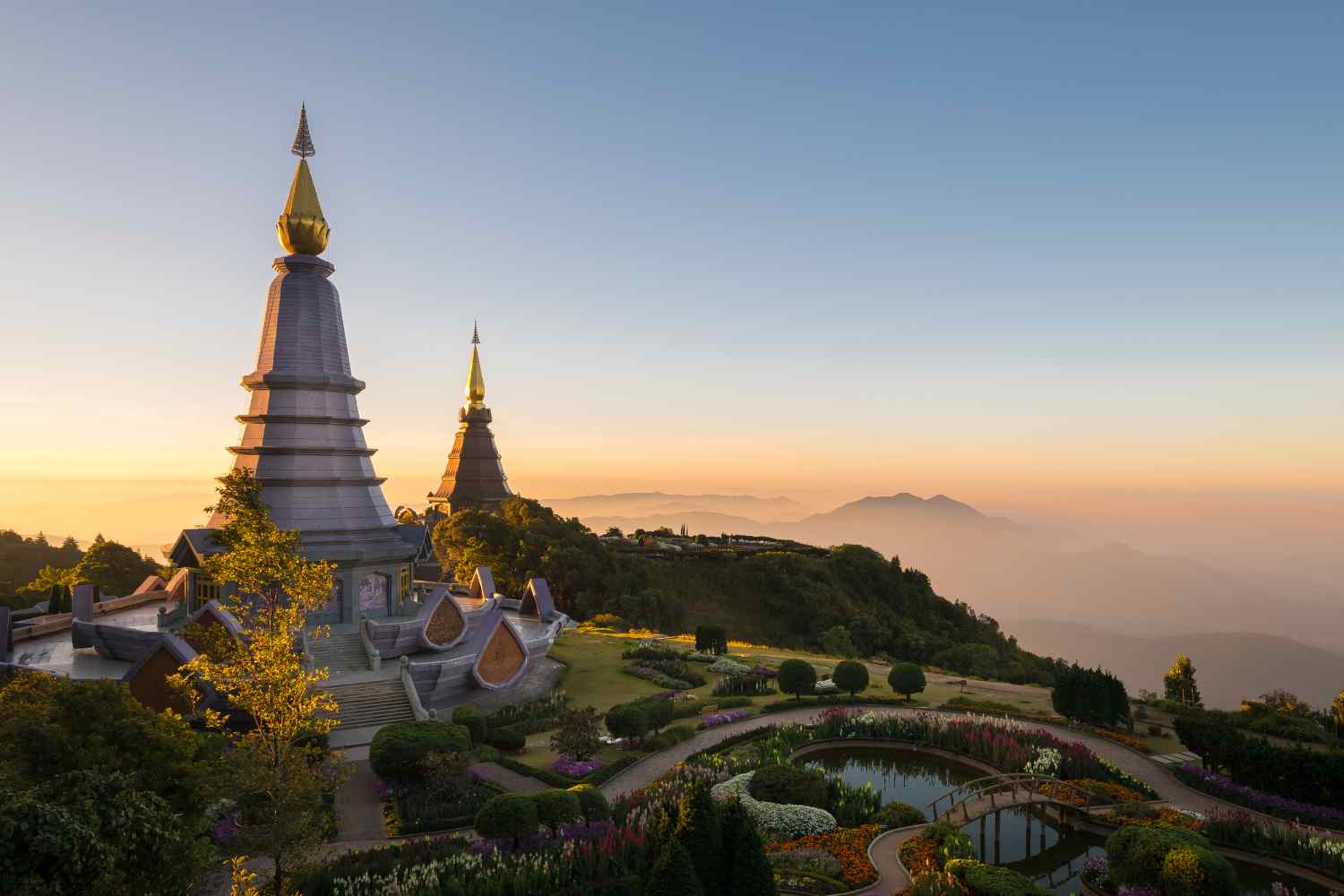
Thailand holds a naturalistic wealth that is often underestimated. Doi Inthanon, the highest mountain in the country, is the heart of a national park where rare orchids grow and hundreds of bird species live. The limestone caves of Chiang Dao, inhabited by colonies of bats and transformed into places of Buddhist worship, show how nature and spirituality have coexisted for centuries.
More and more travelers are choosing experiences linked to conservation: reforestation projects, elephant sanctuaries that have abandoned saddle tourism for more ethical models, treks led by local rangers who know every plant and every path.
Spirituality as a transformative experience
You cannot truly understand Thailand without approaching its spiritual dimension. The temples of the North are not just architecture to photograph: they are living places, frequented daily by monks and faithful.
Wat Phra That Doi Suthep, which dominates Chiang Mai from the top of a sacred mountain, is reached by climbing 306 steps – a path that is already meditation. Wat Rong Khun in Chiang Rai, the famous White Temple, is a contemporary work of art that speaks of spirituality through a visionary and personal language.
But it is in the smaller temples, those without crowds or entrance fees, that something profound can be seen. The smell of incense, the chanting of the monks at sunset, the silence interrupted only by cicadas: these are experiences that cannot be planned, they happen if you take the time to stop.
Craftsmanship and the circular economy
Thai markets, especially those in the North, are still authentic places of exchange and production. In Chiang Mai, the Saturday night night market stretches for kilometers: handmade fabrics, ceramics, carved wooden objects, spices. Buying here means directly supporting artisans and small producers.
Many shops offer the possibility of taking part in workshops: learning to dye fabrics with natural colours, working with clay, preparing curries following handed down recipes. They are experiences that create real connections and bring home something more than a souvenir.
A destination that convinces more and more travellers
The numbers confirm this trend: in 2025 over 300,000 Italians chose Thailand as a destination, with significant growth compared to the previous year. A figure that reflects not only the accessibility of the country, but also its ability to respond to different needs: those looking for beaches, of course, but also those looking for culture, nature, spirituality, sweet adventure.
Thailand is proving that it is possible to be a successful tourist destination without sacrificing authenticity and sustainability. The journey is not complete – many challenges remain – but the direction is the right one.
For those who travel with awareness, this country offers the rare opportunity to explore beautiful and diverse territories, while supporting local economies and more respectful forms of tourism. This is no small thing, in an era in which every journey asks us to question our impact.
Thailand beyond the sea exists, it’s just waiting to be discovered with the right look.
