
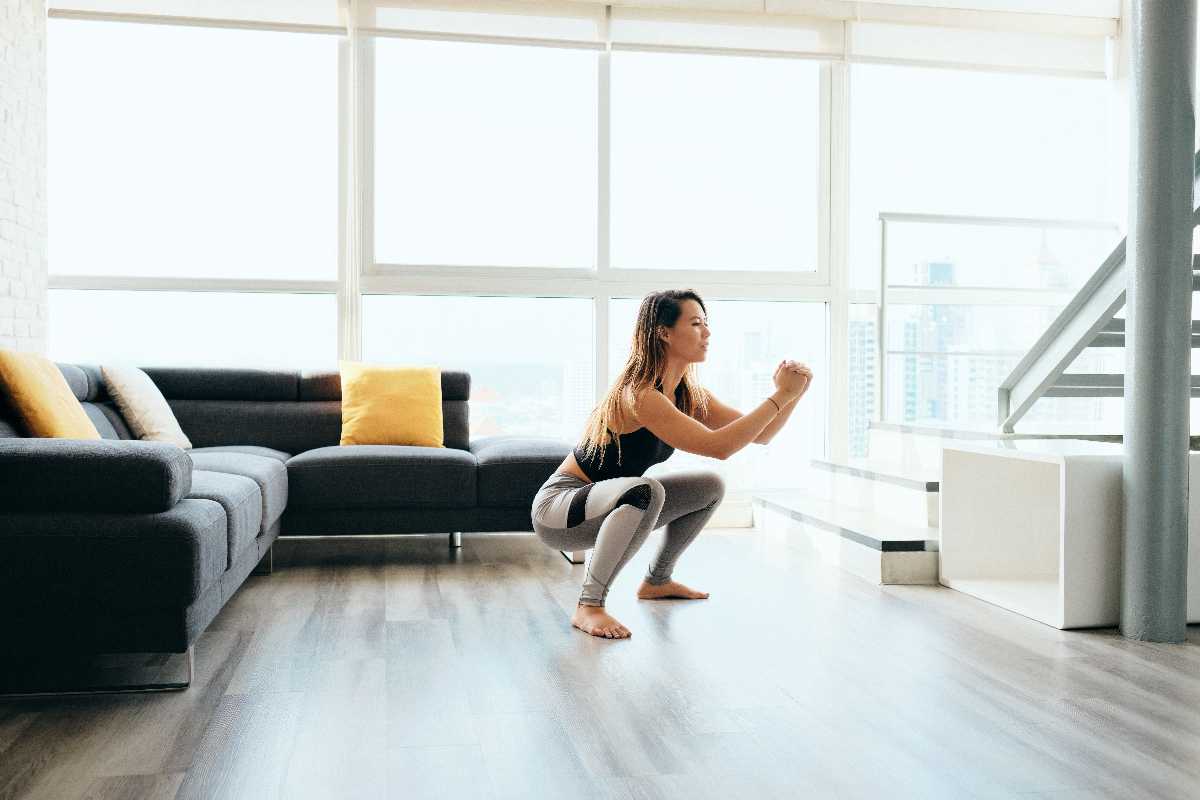
Are a couple of minutes of squats really enough to lower blood sugar? The idea is making the rounds on social media after the neuroscientist Janet Peets, who deals with dissemination on insulin resistance, indicated leg exercises as one of the simplest ways to help the body use the glucose present in the blood.
The underlying physiological principle is not at all far-fetched. But, as often happens when a health tip goes viral, the scientific reality is a little less spectacular than the headline.
View this post on Instagram
Because moving your legs can help control blood sugar
Peets starts from a simple concept: some of the largest muscle groups in our body, such as quadriceps and glutes, are found in the legs.
When these muscles work they need energy and therefore increase the absorption of glucose from the blood. In fact, skeletal muscle represents one of the main tissues involved in the use of glucose, both after meals and during physical activity.
Then there is a particularly interesting detail: muscle contraction can stimulate the entry of glucose into cells through mechanisms that do not depend exclusively on insulin. One of the protagonists is GLUT4, a transporter that is moved to the surface of muscle cells both in response to insulin and following muscle contraction.
This is where the suggestion to include small exercises throughout the day comes from.
Peets says, for example, doing bodyweight squats while waiting for the coffee to be ready, while brushing his teeth, while preparing dinner or immediately after eating. Two minutes at a time, several times throughout the day.
Do two minutes of squats really lower blood sugar?
An important clarification needs to be made here. The available research does not allow us to state that exactly “two minutes of squats” is the fastest or most effective method of reducing blood sugar levels.
What we know with greater certainty is that interrupting long periods of sitting with short bouts of movement can improve glycemic response after meals.
A meta-analysis published in 2026, which examined 39 studies, concluded that short active breaks reduce both blood sugar and postprandial insulin responses compared to sitting for prolonged periods. Among the activities analyzed, frequent short walks showed the most consistent results.
The phenomenon had already emerged in previous studies. In research conducted on overweight or obese adults, two minutes of walking every 20 minutes significantly reduced glycemic and insulin responses compared to five hours spent almost completely sitting.
Even simple resistance exercises, including half squats, calf raises and glute squeezes, have been studied as strategies for breaking a sedentary lifestyle. The findings suggest potential metabolic benefits, although not all studies have achieved the same results and the type, duration and frequency of activity make a difference.
In short, the most correct message is not “do two minutes of squats and your blood sugar levels will drop”, but rather: moving your muscles frequently, especially after eating and when we have been sitting for a long time, can help the body manage glucose better.
You don’t necessarily need squats
This is probably the most useful part of the advice, you don’t need to turn your kitchen into a gym or do dozens of squats after lunch.
Even a short walk can be enough to interrupt a sedentary lifestyle and activate the muscles. Indeed, in the most recent meta-analysis walking breaks were found to be among the most effective strategies in reducing glycemic excursions after meals.
You can therefore think of small gestures distributed throughout the day: getting up from the desk, taking a few steps, climbing a flight of stairs or performing simple free body exercises.
The advantage is that they do not necessarily require a real training session.
And that story about the towel that lowers blood pressure?
Peets also suggests a second exercise, this time for blood pressure: tightly squeezing an object, for example a handgrip or a rolled up towel.
View this post on Instagram
This is the so-called isometric handgrip training, an isometric exercise in which the muscles of the hand and forearm are contracted without producing an evident joint movement.
And it is an area in which the evidence is quite interesting.
One of the most studied protocols involves four contractions of approximately two minutes, interspersed with one minute of rest, performed approximately three times a week for several weeks.
A 2026 meta-analysis of 31 studies and 905 participants found an average reduction in systolic blood pressure of about 5.4 mmHg and diastolic blood pressure of about 2.7 mmHg after regular isometric handgrip programs. The effects were generally greater in people with hypertension.
Another meta-analysis focused on hypertensive people found an average reduction of approximately 6.7 mmHg in systolic and 4.5 mmHg in diastolic. Important though: the benefit concerned repeated training over time, not a single session.
So here too the famous “lower blood pressure by seven points” is a simplification. The average values change depending on the studies, the people involved and the protocol used.
Small movements yes, but they do not replace drugs and therapies
The most interesting message therefore remains very simple: we don’t necessarily have to wait for training to do something useful for the metabolism.
Breaking up the hours spent sitting with short moments of movement can have measurable effects on the glycemic response and, in the case of specific isometric exercises practiced regularly, also on blood pressure.
But this does not mean that squats, walking or exercises with a towel can replace medications prescribed for diabetes, hypertension or other metabolic diseases.
For those taking drugs that lower blood sugar, in particular insulin or medicines that can cause hypoglycemia, physical activity can also modify glucose levels: the quantity and intensity of exercise should therefore be adjusted together with your doctor.
The most interesting part of Peets’ provocation, in short, is not that the remedy is “out of the medicine cabinet.” It’s reminding us that even two or three minutes in which we stop sitting and start moving our muscles can be better than nothing.
