
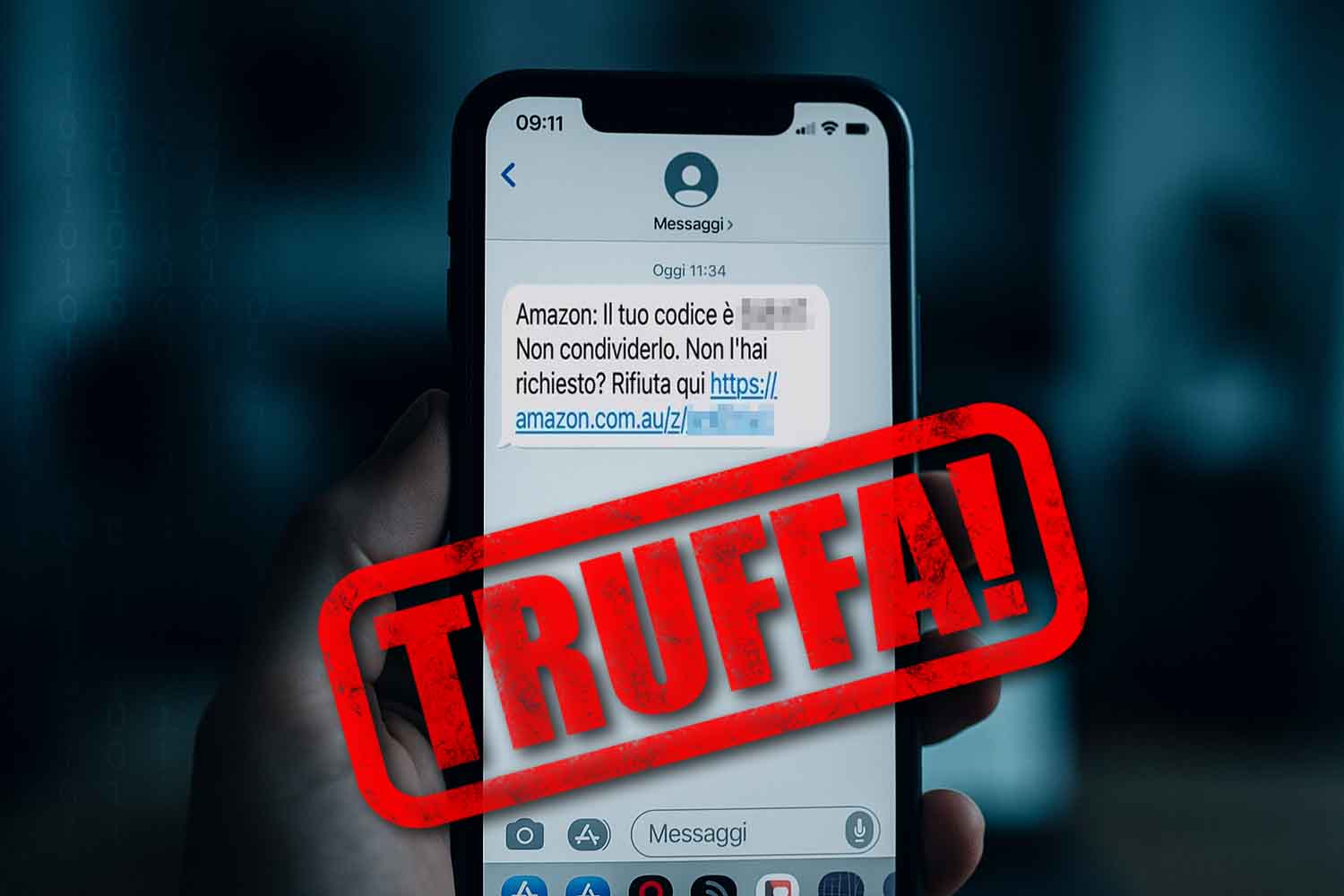
There is a message that is circulating on Italian smartphones these days and which, at a quick glance, might seem identical to Amazon’s official communications. “Amazon: Your code is 12345. Don’t share it. Didn’t ask for it? Decline here”with accompanying links. All very believable, all very familiar. And that’s exactly the point.
How the scam works
The trick is simple, almost banal in its effectiveness. The message suggests that someone is trying to break into your account or use your card for an unauthorized purchase. Just enough time to feel your heart speed up and you’ve already opened it. From there, the next step is all too predictable: you click on the link to “block” an action that, in reality, never existed.
Inside that page, which seems real, looks like Amazon and seems like everything it isn’t, the collection of your data begins: credentials, banking information, payment codes. It’s a theft disguised as a rescue.
What makes everything more subtle is the technique of SMS spoofingwhich allows scammers to have fake messages end up in the same conversation as genuine SMS. If you are tired, distracted or simply in a hurry, recognizing them is almost impossible. Amazon itself warns that scammers use fake alerts of suspicious purchases, non-existent orders or urgent confirmation requests. A soft but continuous psychological pressure.
How to defend yourself
The first sign to recognize is always the same: haste. All messages that ask you to react immediately, without thinking, should be treated as suspicion. Digital scams work on fear and confusion, never on calm. Another red flag is the request for personal information: Amazon will never ask you to give codes, PINs, card numbers or to purchase gift cards as a “verification” method.
The rule that saves your skin is surprisingly simple: log into your account without going through any links. If there really is a problem, you’ll see it in there. And if you’re not sure, customer service exists for that. Scams change shape every year, but the defense always remains the same: slow down. A single click can lighten your bill, but even a second of attention can save you from much bigger troubles.
