
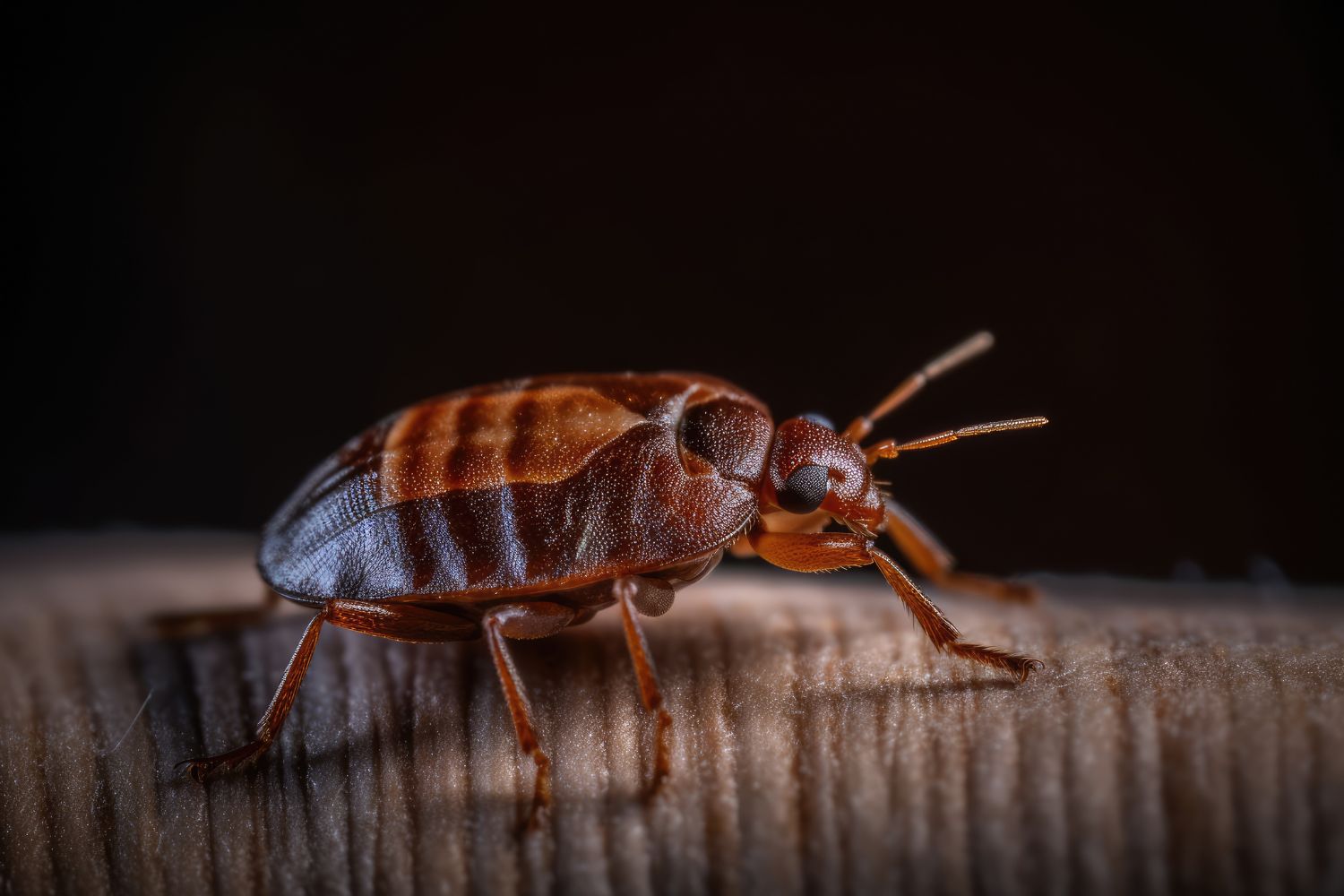
The bed bedbugs they also tormented i Neanderthal And therefore they were the First parasites of human beings: a study led by Virginia Tech (USA) has shown that hematophagi insects also feed on the blood of our ancestors.
According to the reconstruction of scientists, some bedbugs of the beds jumped down from a bat and attacked a Neanderthal that came out of a cave 60,000 years ago: From that moment they have also become parasites of human beings, finding human blood excellent and in general simple to feed on it.
The bedbugs of the less adventurous beds, however, who remained on the bats, have not had a very long life: in fact their populations have continued to decrease from the last glaciation, also known as he was glacial, which took place About 20,000 years ago.
What are bed bedbugs and what they cause in humans
The beds of beds or beds (Scientific name: CIMEX Lectularius) I am Hematophagi insectsThat is, they feed on blood, and have a flat-standing body-brownish body, with dimensions that vary from 1 to 7 millimeters.
They are attracted by the heat and carbon dioxide emitted by the human body especially during the night rest, and they skillfully hide in the cracks of the mattresses, in the pillowcases of the cushions and in the cracks of the walls near the bed.
Unfortunately these parasites are extremely prolific: a female specimen, in fact, is able to lay down hundreds of eggs in a single time. And it is really very difficult to get rid of it when they took possession of a house.
Fortunately, however, at least so far, bed bedbugs, but “only” cause annoying irritation which become a source of strong stress. Their stings – which present themselves with a linear distribution or bunches – are painless, but can become very itchy and trigger redness and, if you scratch too much, the area can also be infected.
When you come from these small insects on the skin, purple blisters and spots may also appear. In case of stings, it is advisable to contact your doctor who will prescribe Pomate containing corticosteroids and antihistamine to be taken orally to relieve the most intense itching.
The study on Neanderthal and its applications
Scientists have now compared the entire sequence of the genome of two genetically distinct lines of beds of the beds, that linked to human beings and the “remaining” with bats: their results indicate that that associated with man followed a demographic trend similar to that of humans And therefore the bed bedbug could really be the first real urban parasite.
We wanted to analyze the changes in the effective size of the population, or the number of reproductive individuals who contribute to the next generation – explains Lindsay Miles, main author of the research – because this can provide information about what happened in the past
In fact, according to the team, the historical and evolutionary symbiotic relationship between human and bedbugs of the beds will provide information on models that provide for the dissemination of parasites and diseases during the expansion of the urban population.
By directly connecting the global human expansion to the emergence and evolution of urban parasites such as bed bedbugs, researchers hope to identify the traits that have co-evidently both in human beings and in parasites during urban expansion.
As the researchers’ analyzes have shown, the lineage associated with bats declines from 245,000 years ago to today, while the one associated with the man declines until about 12,000 years ago, when he begins to increase.
But not only that: the demographic models of bed bedbugs, at the genomic level, reflect theglobal human expansion.
Initially, with both populations, we witnessed a general decline consistent with the last glaciation; The evolutionary line associated with bats has never recovered and continues to decrease in size. The really exciting part is that The evolutionary line associated with humans has recovered and its actual population has increased
According to the authors, in fact, the early foundation of great human settlements has expanded parasites in the city such as Mesopotamia About 12,000 years ago.
This makes sense because modern human beings abandoned the caves about 60,000 years ago – comments on this Warren Booth, co -author of the research – there were bedbugs of the beds that lived in the caves with these human beings and, when they left, they brought with them a subset of the population, so there is less genetic diversity in that evolutionary line associated with man
With the increase in the dimensions of the human population and the continuous expansion of communities and cities, the evolutionary line associated with the man of bed bedbugs therefore saw an exponential growth of its effective dimension.
Using the complete genome data, researchers now have a basis for further studies on this genetic division dating back to 245,000 years ago. Since the two evolutionary lines have genetic differences, but not sufficient to evolve them into two distinct species, we will have to focus on evolutionary alterations of the evolutionary line associated with man compared to that associated with bats, which occurred more recently.
It will be interesting to observe what has happened in the last 100-120 years. The bedbugs of the beds were quite common in the old world, but when the DDT (Dicloro-Difenil-Tricloroetano) was introduced for the control of parasites, the populations collapsed. It was thought to have been practically eradicated, but within five years they began to reappear and resist the pesticide
The team already had already discovered a genetic mutation which could contribute to this resistance to insecticidesand are now deepening the genomic evolution of parasites and the relevance for the resistance of the parasite to insecticides.
It is a fantastic resource to have – we are using it for study the evolution of resistance to insecticides and the spread of species, using museum champions collected from 120 years ago to our current champions
concludes Booth
The work was published on Biology Letters.
