
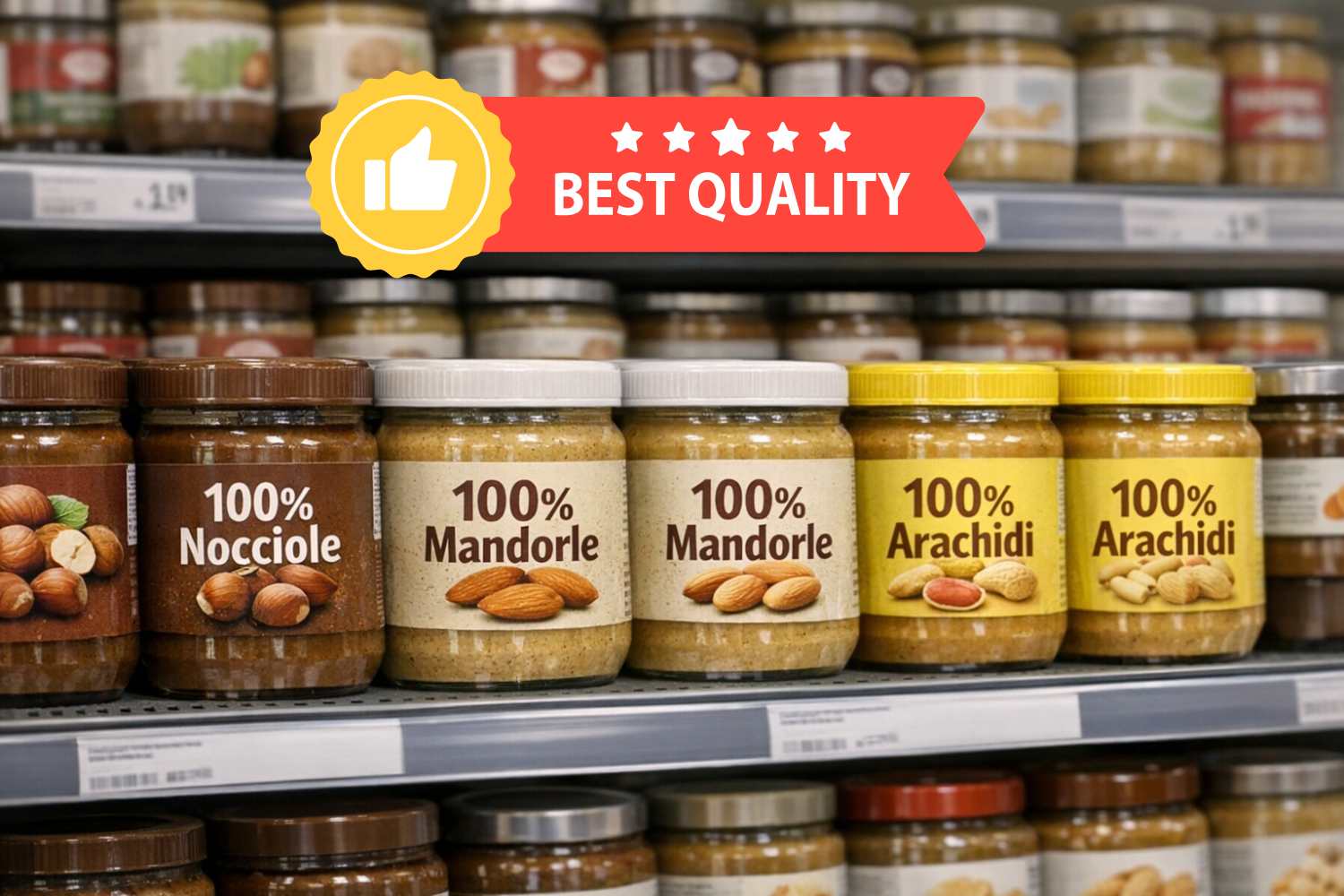
Dried fruit spreads have become a must in the kitchens of those who want to eat well without sacrificing taste. Whether almonds, hazelnuts, peanuts or other products, these products are gaining more and more space on supermarket shelves and in the eating habits of adults and children.
The success of these creams is not accidental. Unlike classic spreads, often loaded with added sugars, salt, artificial flavourings, preservatives and emulsifiers, dried fruit creams focus entirely on the simplicity of the ingredients. They are naturally rich in fibre, proteins and good fats and lend themselves to numerous uses: they can be spread on a slice of wholemeal bread for breakfast, added to porridge or yoghurt, or used to enrich pancakes, smoothies, homemade desserts and ethnic sauces.
In short, a single cream for many moments of the day. And the market now offers an impressive variety, with brands ranging from certified organic to private labels from large retailers. But how to navigate among so many options? Yuka took care of it, drawing up a ranking of the 10 best based on composition.
The 10 best dried fruit creams
According to Yuka, these are the 10 best dried fruit spreads:
Looking at the ranking, it immediately becomes apparent that the best products are almost always those with a single ingredient. No salt, no sugar, no emulsifiers, just dried fruit. A clear message for consumers: when it comes to spreads, less is more.
What is Yuka
For those who don’t know it yet, Yuka is a French app, available for free on iOS and Android, which allows you to scan the barcode of food and cosmetic products to obtain an immediate analysis of their quality. Each product receives a score from 0 to 100 based on the ingredients, nutritional values and the presence of potentially harmful additives.
An intuitive traffic light – from green to red – allows you to understand at a glance whether a product is an excellent choice or whether it is better to leave it on the shelf.
It is worth remembering, however, that Yuka is a practical and independent tool, it does not accept funding from brands or insert advertising, but it is not infallible. His method is partly based on the Nutri-Score, which can lead to some counterintuitive evaluations: ultra-processed products low in fat and sugar could be rewarded, while simple and natural foods such as oils or artisanal cheeses risk being penalized.
In the case of dried fruit creams, however, the logic is quite linear: the fewer ingredients there are, the better, and the algorithm reflects this well. However, the golden rule remains valid, that of getting used to reading labels and comparing products.
