
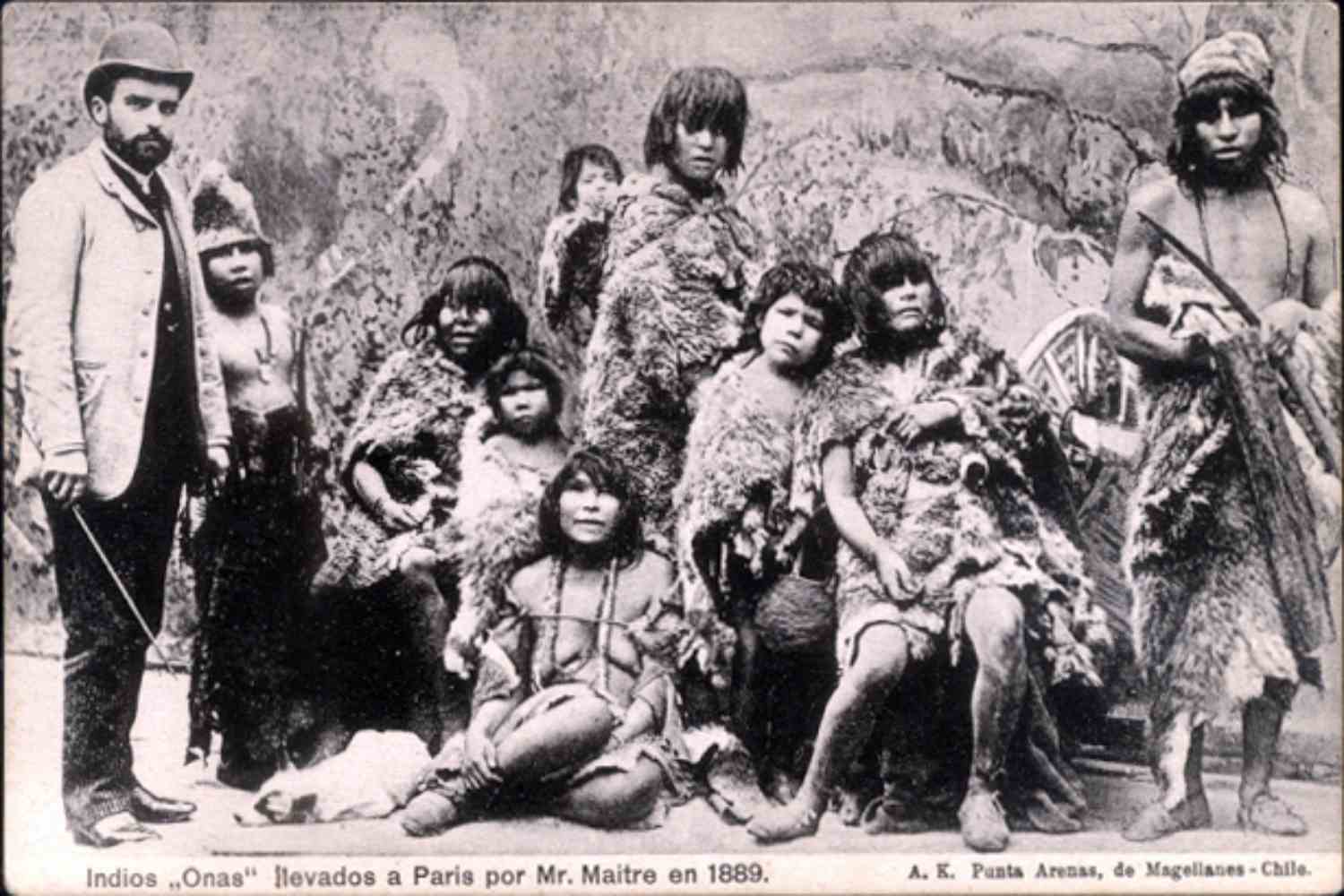
The “human zoo“Represent one of the most dehumanizing practices in western history, born in the context of colonialism and fueled by the racist pseudo-science of the time. Between the 19th and 20th century, thousands of people from Africa, Asia, Americas and Oceania came exhibited in cages or reconstructions of their “primitive” villagesas if they were animals or ethnological curiosities.
The main purpose was to strengthen the idea of superiority of European civilizations and justify colonial domination. Presented as Examples of “primitive or” natural “populations”these human beings were often on display in degrading conditions, locked up in fences that simulated traditional environments.
One of the best known cases is that of Saartjie Baartmanknown as the “Venus obtained”, a South African woman exhibited in Europe in the early nineteenth century due to her particular physical conformation.
After his death, his body came sag and his remains were exposed In a museum until 1974, demonstrating the contempt for its human dignity. Similarly Ota Bengaa young Congolese Pygmine, was exhibited in 1906 at the Bronx zoo, locked up in a cage with a orangutan To represent an alleged “missing ring” in evolution.
In Italy they spread above all during fascism
The first testimonies of this phenomenon date back to the period of colonialism, when Christopher Columbus brought American indigenous people to Europe as living trophies. During the Renaissance, personality such as Cardinal Ippolito de ‘Medici they collected not only exotic animals, but also people of different ethnic groups. However, modern human zoo affirmed themselves with the growing imperialism of the late nineteenth century.
In Italy human zoo spread above all during the fascist period, often as a colonial propaganda tool. In Naples, during the Triennale, they were exhibited 60 Ethiopi and Eritrean in a reconstructed villageuntil the war interrupted the event. These individuals, subsequently released by the partisans, in many cases they joined the resistancewitnessing their fight against those who had humiliated them.
Ethnological exhibitions also had enormous popularity in other European countries. At the Universal Exposition of Brussels in 1958, for example, it was a Congolese village reconstructed Where visitors dealt with the people on display with a cruel contempt, pulling them bananas if they did not react.
In Paris, the Jardin Zoologique D’Acclimatation He hosted dozens of “ethnological exhibitions”, while events such as universal exhibitions of 1889 and 1900 included “indigenous villages” populated by individuals from French colonies. These practices lasted until the mid-twentieth century, helping to spread racial prejudices and to justify pseudo-scientific theories that supported the hierarchy of “breeds”.
Today, these exhibitions are considered a symbol of racism and dehumanization. However their effects persist in inequalities and prejudices still present. The awareness of this shameful past is essential to understand the roots of many discrimination today and to promote a more right and inclusive society.
