
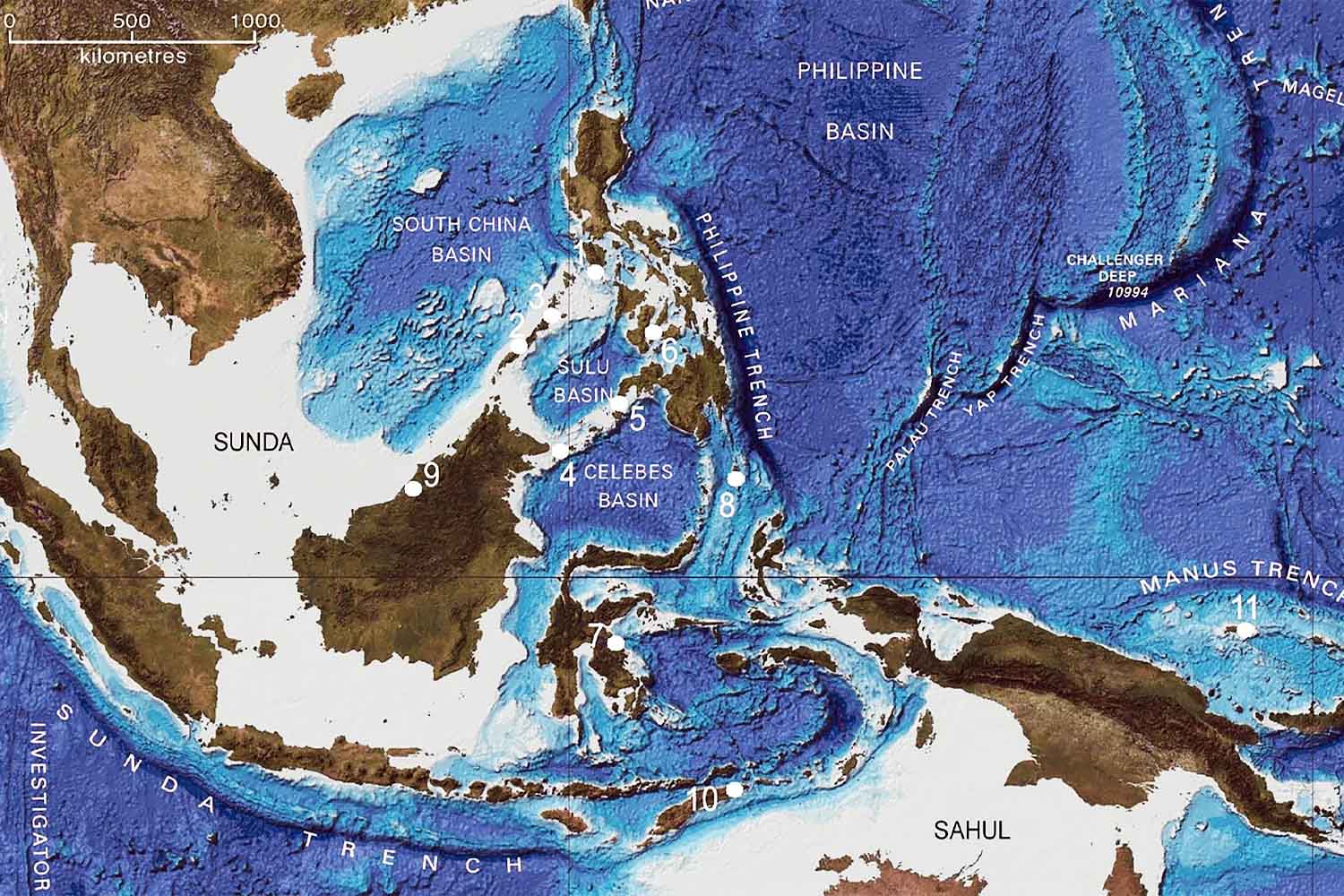
The history of our species has never been so full of holes. Every now and then a discovery comes along that forces you to put the pieces back together, like when you think you understand everything about a person and then you discover that they had a hidden side. Here, Mindoro, an island in the Philippines that today only seems like a tropical paradise, has just played this trick on us.
Philippine archaeologists, along with an international team, have spent years exploring caves and rock shelters that from the outside look like perfect places to take an Instagram photo. Inside, however, they tell another story: that of the populations that arrived here tens of thousands of years earlier than we ever imagined. And they weren’t the classic ramshackle “hunter-gatherers” with clubs. Not at all.
These communities knew how to sail, fish in the open sea, recognize the tides like we read the weather on our phones today. And the great thing is that they did it when – according to the manuals – human beings should still have been too “primitive” to go from one island to another.
A past that doesn’t return
Mindoro is not an island you swim to in a moment of madness. Even in the Paleolithic, to get there you needed decisions, preparation and adequate tools. Whoever set foot there had to cross channels of sea that were anything but trivial. There were no natural bridges that took you from one coast to the other. Of course, these people used boats and knew the currents.
What does it mean? That maritime life – the real one – was not born late, as we have always said. It was already in its advanced stage tens of millennia before. And the Philippines, it seems, was not a remote corner, but a crossroads.
The surprising thing is that archaeologists did not rely on poetic intuitions. No romance. Only layers of caves, repeating finds, precise dating. Where there are shells worn in the same way, bones of open sea fish and tools cut according to the same logic in multiple eras, the message is only one: these people lived there, and they lived there well.
The caves speak for themselves
In the caves of Bubog 1, Bubog 2, Cansubong 2 and Bilat, scholars found more than just a “camp”. In every layer of earth, in every centimeter excavated, consolidated habits emerge: meals based on molluscs collected en masse, reef fish flanked by pelagic species, tools created with stone, bone, giant shells.
The presence of fish living in deep water, for example, says something very simple: they weren’t taking what came their way. They had boats. They had suitable tools. They knew how to move. And they weren’t alone. Some obsidian tools found in Mindoro have the same “chemical signature” as those found on the island of Palawan. This means exchanges, contacts, knowledge that travelled. More than lost islanders: they were part of a network.
The research has a curious effect: it gives back to our ancestors a complexity that, for some reason, we did not want to recognize. We always imagined that life on remote islands was a late chapter, born when technology was already advanced. But no. The ocean was already part of their days, their movements, their survival. The time that separates us from them does not change the fact that the sea, for these ancient communities, was like a second home. Or a neighbor you could trust, as long as you listened to him.
And the beauty (or annoyance, for those who love certainties) is that this discovery does not close the case. He opens it. Who built those boats? How did they change over the seasons? Did fishing methods vary? And how did climatic conditions influence travel? Questions that make this story alive, current, ready to open other doors.
A story that comes back to light
Together with the finds, what emerges is the portrait of communities that were not dragged by the events. They were protagonists. They knew how to manage the scarcity of resources, storms, changes in the sea. They knew how to stay and they knew how to move. And they probably spoke, traded and collaborated with other peoples on other islands. It’s a much more human, concrete and creative story than the books let us understand.
The research, published on Archaeological Research in Asiait doesn’t just tell us “who they were”. It also tells us something about ourselves: that our relationship with the environment, especially with the sea, is older, more rooted and more ingenious than we had ever admitted.
