
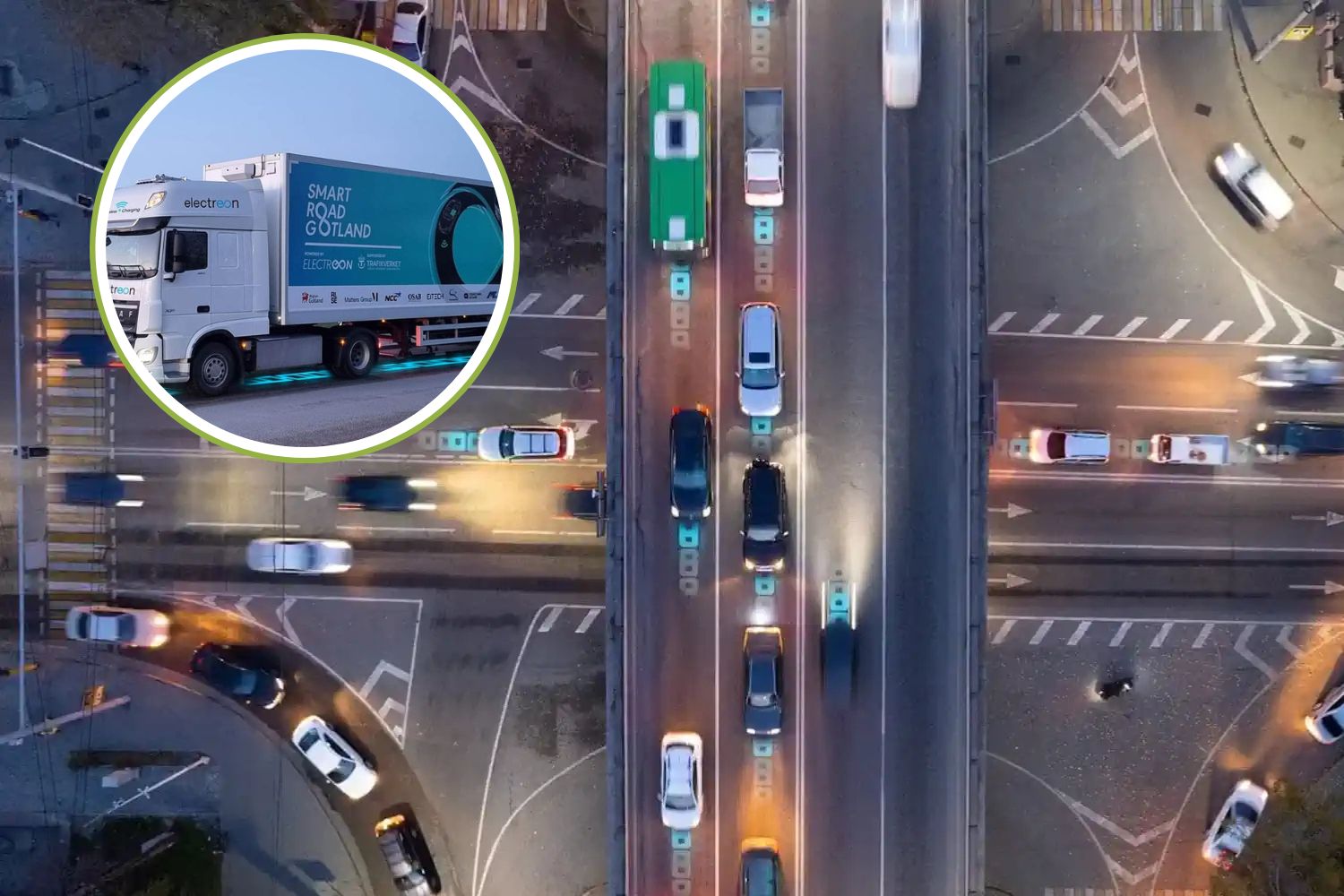
It seemed like science fiction, but instead it’s reality. France has just inaugurated the first public motorway in the world capable of charging electric vehicles while driving, without the need for stops or cables. The experimental stretch, just 1.5 kilometers long on the A10 motorway, about 40 kilometers from Paris, represents a pilot project that is as ambitious as it is revolutionary.
Called “Charge as you drive”, the system allows electric trucks, cars and buses to receive energy on the move through a dynamic induction charging mechanism. In practice, the road surface hides a network of copper coils which, activated by sensors, transfer current to the vehicle when it passes through them.
The principle is the same as wireless charging of smartphones, but on a much larger scale.
Under the asphalt, the coils are activated only when an authorized vehicle passes over, generating a magnetic field that transmits energy to the receivers installed on the bottom of the vehicle. The average power recorded so far is over 200 kW, with peaks exceeding 300 kW — about six times a Tesla Supercharger.
Translated: this little highway is capable of powering a 40-ton truck while keeping it moving and, at the same time, recharging the battery.
From dream to real challenge
The French objective is clear: to reduce emissions from freight transport, responsible for more than 16% of national greenhouse gases. But transforming trucks and trucks into electric vehicles is not as simple as “putting a bigger battery”. A long-distance truck would need a huge battery pack, weighing several tons, which would reduce carrying capacity and increase costs.
That’s why highway charging on the go is a game changer. It allows vehicles to “sip energy” while traveling, without stopping for hours at charging stations, and to fit batteries that are 50-80% smaller, lighter, cheaper and more sustainable.
An idea that could rewrite the very logic of road transport: no longer “refuel and leave”, but recharge while running. According to experts from Gustave Eiffel University, who monitor the project, the system is exceeding all expectations. Germany, Italy, the United States, South Korea, China and Israel are also already starting similar tests. Europe seems ready to illuminate the future of transport, literally from the bottom up.
But how much does the future cost?
Behind the enthusiasm, a very concrete question remains: who will pay the bill? The construction and maintenance costs of an electric highway are still to be defined, as is the management of payment for the energy “sipped” by the vehicles. In theory, every vehicle could be recognized and charged automatically, but intelligent and transparent control systems are needed, capable of calculating consumption meter by meter.
Then there is the question of the electricity infrastructure: to support a similar road network, high voltage connections and an expansion of the national network will be needed, with billions of investments.
Yet, despite everything, the direction seems clear. France has decided to really start, with deeds and not words, and the A10 project is not an exercise in style, but a test of real resistance. In the coming months, researchers will study the durability of the materials, the reliability of the system and maintenance costs, to understand if the future of the electric car will really pass under the asphalt.
And, to be honest, the idea of charging your car without even touching a cable… there’s something magical about it.
You might also be interested in:
