
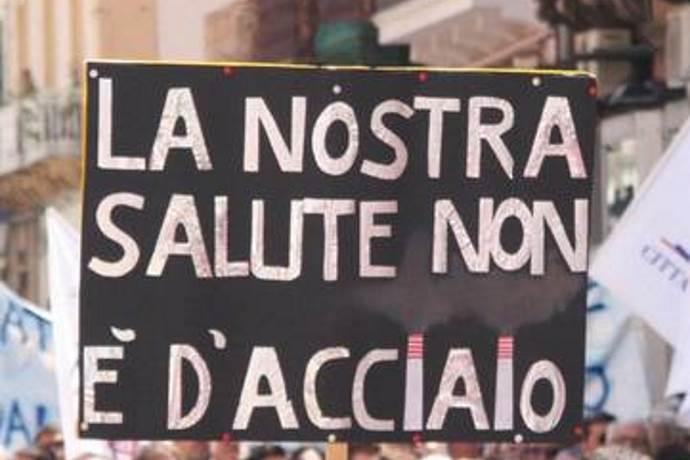
With 470 requirements and a production limit set at 6 million tons per year for the next 12 years, the new integrated environmental authorization (Aia) for theex ilva Of Taranto It has been approved. A decision defined as “temporary”, pending the institutional agreement on the decarbonisation of the plant, but which has already raised strong criticism from local authorities and Taranto civil society. The release of the Hague arrives in a crucial moment for The largest steel system in Europe still fed by coalwith implications concerning the public healththeenvironment and the future of the Italian steel industry.
A contested free go -ahead
The approval of the AIA took place last Thursday at the end of the Services Conference convened by the Ministry of the Environment. Despite the negative opinion expressed by the Puglia Region, Province of Taranto, the Municipality of Taranto and the Municipality of Statte, the ministerial representatives – including the dicasteries of the environment, businesses, health and interior – have given the definitive ok.
“These were sent to the Aia,” said the mayor of Taranto Piero Bitettiunderlining how in the approved document there is only a “slight passage” on the decarbonisation and no certainty on the times for the disposal of the altiforni. Bitetti added that the request to postpone the decision until the definition of the program agreement on the Green transition has been ignored, despite the worrying health data already known to the institutions: “As a guarantor of the public health of the Tarantini, I asked the Ministry of the Environment for an opinion on the basis of the last opinion of theHigher Institute of Healthbut the answer received is not absolutely satisfactory. “
What the new AIA provides
AIA replaces and integrates 33 previous measures and is based on a technical document of over 400 pages – the final investigation (PIC) – developed by a commission of the Ministry. The new prescriptions concern, among other things, the coverage of the fertuous mineral deposits, the management of the drain waters and the reduction of polluting emissions.
According to the Ministry of the Environment, the goal is to strengthen the environmental garrison of the industrial site in line with the decarbonisation objectives. But the document is in all respects a “bridge authorization“, Pending the interinstitutional agreement scheduled for July 31, which should define times, funds and methods for conversion to electric ovens.
Public health: what do the data say?
The concerns about the impact of the public health system are not new. In the past, numerous epidemiological studies have highlighted correlations between the emissions of the plant and a Increase in respiratory and oncological pathologies In the resident population, particularly in the Tamburi district.
According to the Higher Institute of Health, which expressed an opinion attached to the documentation of the Hague, the health situation requires “further and stringent measures to contain emissions” to protect citizens’ health. However, the provisions of the current age appear, according to Legambiente, inadequate: “The release procedure was opaque and unable to offer concrete answers in terms of environmental and health protection”, reads the association’s declaration during the service conference.
Local authorities: between opposition and ignored requests
The territorial bodies involved had asked not only to postpone the approval of the Hague to after the signature of the program agreement, but also to lower the production limit from 6 to 4 million tons per year. The goal was twofold: to reduce harmful emissions e accelerate the conversion of the plants towards more sustainable technologies.
Gianfranco PalmisanoPresident of the Province of Taranto, confirmed that the requests of local authorities were rejected: “We asked for a postponement to wait for July 31 and nothing. We asked to insert clauses on the decarbonisation and nothing here too”.
The associations: “A signature that does not represent us”
Among the most critical voices there is that ofJustice Association for Tarantowho announces legal battle: “We will not allow that we continue to sacrifice the health, the future and the dignity of Taranto on the altar of the steel”. The movement has already launched a public mobilization and points the finger at what defines a “legal coverage” to continue producing with coal, despite the scientific evidence and opposite opinions.
“The local authorities will decide,” said Minister Urso, on the other hand, announces triumphantly: “The farmyard has been released….
Posted by Justice for Taranto On Thursday, July 17, 2025
The Government: “Salvo plant, pending the green turning point”
For its part, the government defends the choice. The Business Minister, Adolfo Ursosaid that the Hague was necessary to avoid the closure of the plant, which would have been imposed by a sentence of the Milan court in the absence of a new environmental authorization: “Taranto will continue, the factory is except. The Italian steel is saved”. The minister reiterated that it is a transitional measure and that the agreement of 31 July will be decisive for the transition to a more sustainable production.
And now?
The Hague can be reviewed since August, precisely on the basis of the outcome of the agreement on decarbonisation. But without certain times, nor binding guarantees, the fear remains that coal continues to burn for a long time.
In the meantime, Taranto observes, protests and waits. The city asks for clear answers on health and environment, aware that any delay in the ecological transition has a cost that is measured in vine and quality of life.
