
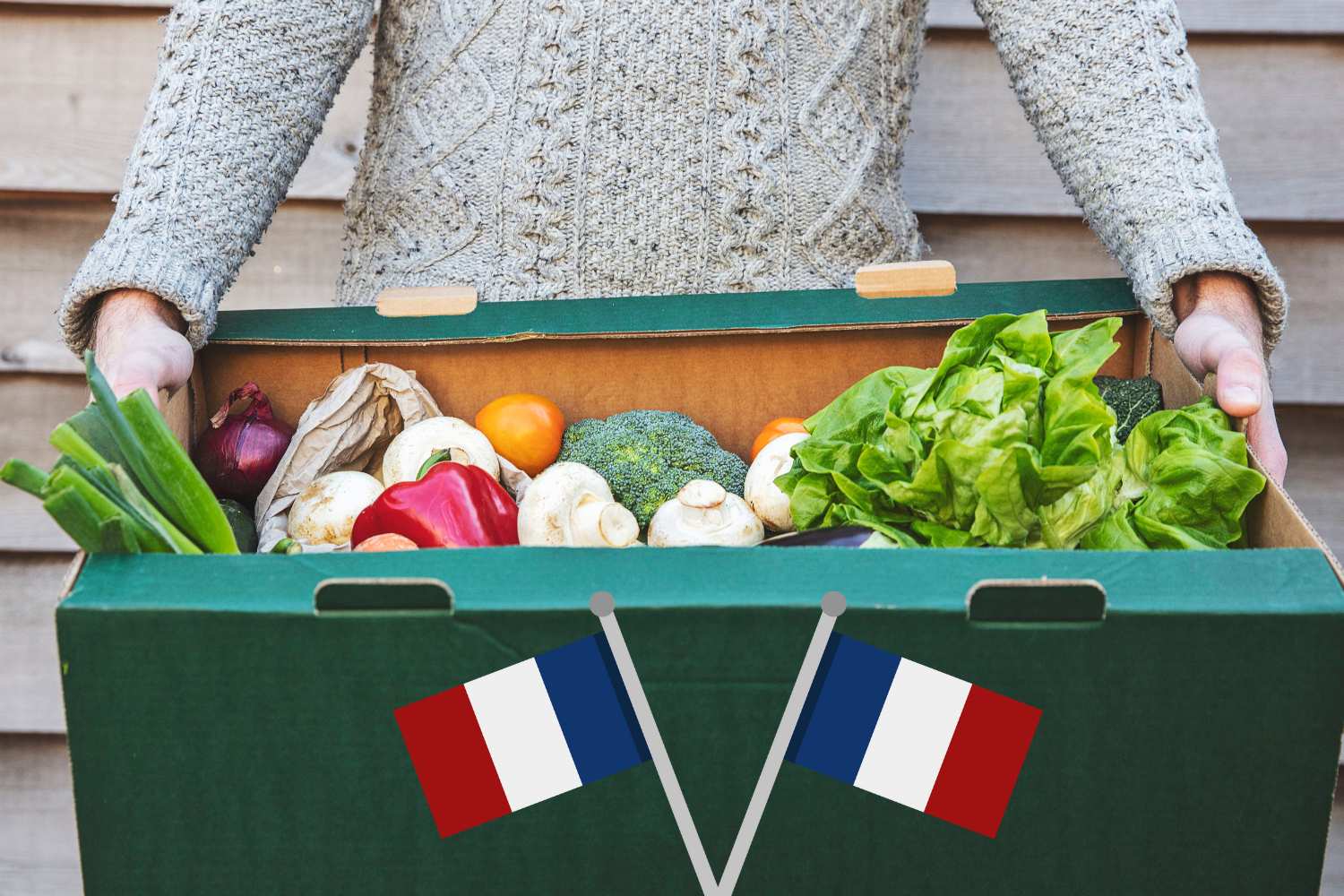
On National Day against Food Waste, which occurs on February 5, we want to tell you about the extraordinary lesson of the French. In February 2016, France made a clear choice: to prevent food that is still edible from ending up in large-scale retail bins. With the Loi Garot, named after the deputy Guillaume Garot who promoted its parliamentary process, the State has transformed a widespread practice into an offense. Supermarkets with over 400 square meters of surface area can no longer throw away unsold but safe food: they are obliged to allocate it for donation. The declared goal was ambitious, to halve national waste and prevent millions of tons of food from ending up in landfill by 2025.
View this post on Instagram
A law that changed the rules of the game
The scope of the rule was quickly measured. According to an IPSOS survey, in 2018 93% of affected supermarkets were involved in donation programs, compared to 33% recorded before the law came into force. The volumes of food redistributed grew significantly already in the first years, with increases of between 15 and 50% depending on the territory. Numbers that tell of a structural change, not a simple voluntary adjustment.
Since 2018, the law has also been extended to collective catering which prepares over 3,000 meals a day and to food producers with turnovers exceeding 50 million euros, introducing a ban on the destruction of unsold items along other crucial junctions in the supply chain. Waste, in this framework, ceases to be a marginal variable and becomes a regulated responsibility.
Sanctions and incentives, the double track
Loi Garot does not entrust everything to good will. It provides for administrative sanctions for those who do not comply with obligations, with fines that can reach tens of thousands of euros. Controls are delegated to local authorities, often in collaboration with the non-profit organizations that receive the surpluses and which can report any non-compliance. At the same time, the French system has introduced tax breaks and bureaucratic simplifications for companies that donate, making redistribution more convenient than destruction.
This combination contributed to making the rule effective and applied, preventing it from remaining a declaration of principle. Although still with evident limitations, the provision has accelerated a process which, without a clear obligation, would have required much longer.
Beyond the law, a network of daily practices
The regulatory framework has also favored the spread of complementary initiatives. In France, applications such as Too Good To Go, also present in Italy, have become widespread tools for recovering unsold food from restaurants, bakeries and supermarkets, reducing waste and offering consumers products at reduced prices. Alongside digital platforms, solidarity fridges have multiplied, neighborhood fridges managed by associations or local communities where you can freely leave and take food.
An important role is also played by épiceries solidaires, spaces that allow families in difficulty to access donated food at symbolic prices. Not simple distribution points, but places of education in the responsible management of resources, where the fight against waste takes on a concrete and daily dimension.
In Italy, the theme is also marked by a symbolic appointment. National Food Waste Prevention Day is celebrated on 5 February, promoted by the Zero Waste campaign with the University of Bologna and the Ministry of the Environment. Established in 2014 on the initiative of the agroeconomist Andrea Segrè, over the years the day has become a point of reference for the dissemination of data and analysis, thanks to the Waste Watcher International Observatory. With the constant support of the institutions and the public radio and television service, the initiative draws attention to a problem that concerns the environment, economy and social justice.
The comparison between France and Italy shows two different but not incompatible paths. The French experience highlights the effectiveness of clear obligations aimed at large waste generators, while the Italian context has focused more on incentives and simplifications. The challenge remains to integrate regulatory tools, social initiatives and economic responsibilities, so that food is once again considered a resource to be protected, not waste to be managed.
