
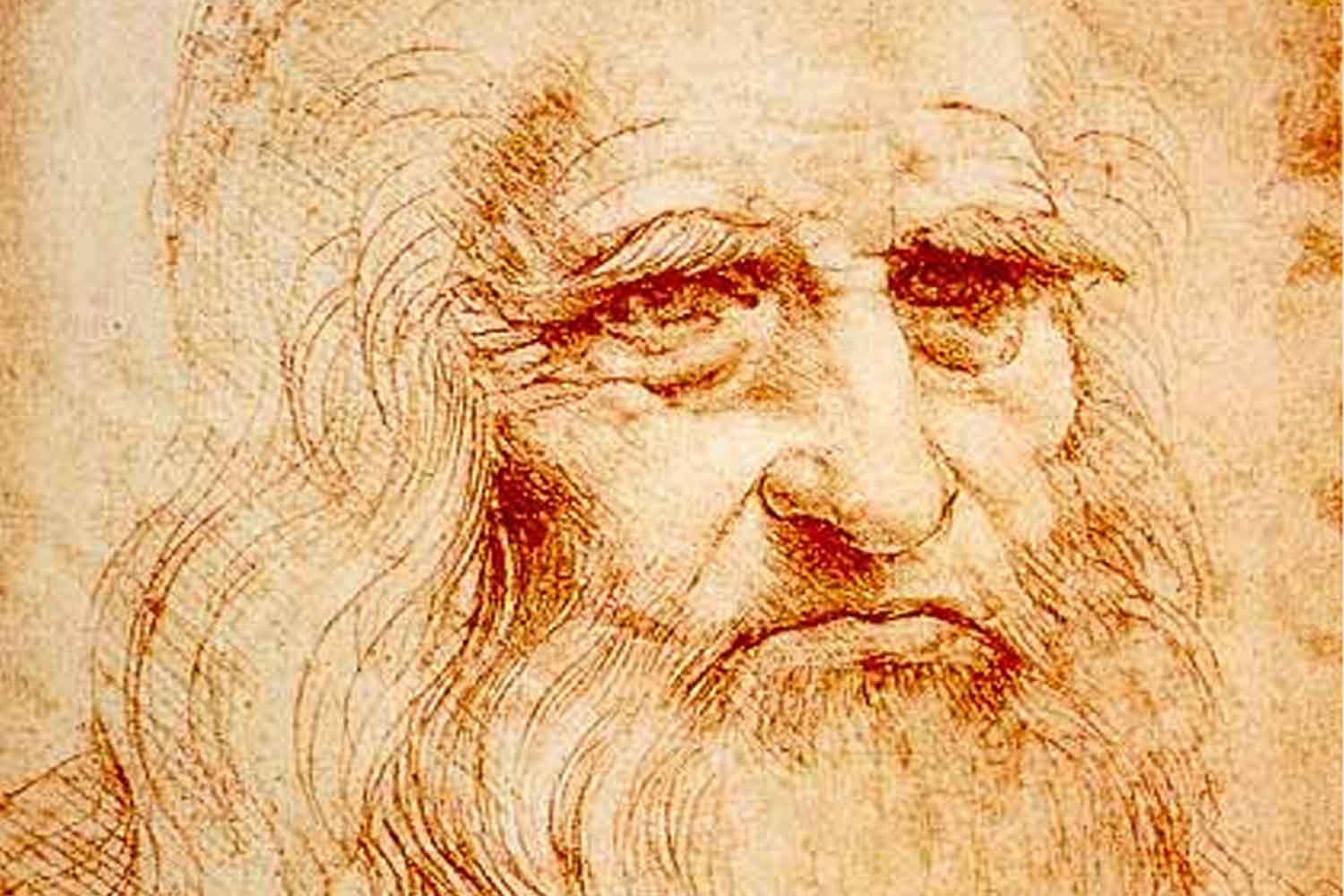
Leonardo da Vinciuniversal symbol of human genius, returns to talk to us today not through his works, but from his DNA. A scientific project started more than thirty years ago has in fact allowed reconstruct its genetic profileopening new scenarios to understand who this extraordinary artist, inventor and thinker really really was. To sign the company are Alessandro Vezzosi And Agnese Saturdayfounders ofAssociation for the Leonardo da Vinci Heritagein the volume “General Da Vinci. Genealogy and genetics for Leonardo’s DNA”published by Angelo Pontecorboli Editore with the support of the Richard Lounsbery Foundationthe patronage of Municipality of Vinci and the support of international scientific bodies.
For five centuries the figure of Leonardo has been surrounded by an aura of mystery. Today, science throws new light on its family past thanks to a meticulous investigation that has allowed to reconstruct the complete family tree of the Da Vinci familystarting from 1331 to date.
The researchers identified 15 Direct descendants in men’s lineincluding Six individuals subjected to genetic tests for the analysis of the chromosome ytransmitted exclusively from father to son. Five out of six are still alive: Leonardo’s male descendants today live in Tuscany and are between 40 and 90 years old.
This study, led by the geneticist David Caramellidirector of the Biology Department of BiologyUniversity of Florencein collaboration with the forensic anthropologist Elena Pilliconfirmed the genetic continuity of the male line of Leonardo until the fifteenth generation. A result that not only validates the genealogical tree, but represents A starting point for future analysis on organic samples associated with the works and documents attributed to the genius.
Excavations in the Da Vinci tomb and paleogenomic analysis
In the heart of Tuscany, in Church of Santa Croce in Vincianother key moment of research took place. Anthropologists Alessandro Riga And Luca Bachechi they conducted Excavations in the alleged tomb of the Da Vinci familyrecovering bone remains dated to the radiocarbon. The paleogenomic analyzes, still coordinated by caramels together with the molecular geneticist Martina Lariidentified a male individual compatible with Leonardo’s family line.
Now, the decisive step will be Compare the y chromosome of the remains with that of the living descendants. If the correspondence is confirmed, the genealogical reconstruction can be validated and, in perspective, investigate any biological traces by Leonardo on Manuscripts, paintings and objects he used. Thus opens the concrete possibility of accessing the true genetic heritage of the master of the Renaissance.
The Leonardo DNA project
The Leonardo DNA projectlaunched in 2016 and coordinated by Rockefeller University of New York, represents one of the most ambitious initiatives in the field of historical genetics. At the project they collaborate for leading bodies such as the J. Craig Venter Institute in California and theUniversity of Florencein synergy with scientific foundations and public administrations.
At the center of the study is the chromosome ywhich acts from Biological trace to map male descent. But the work of Vezzosi and Saturday is not limited to the laboratory: through a documented trip between Archives, historical maps and notary actsthe two authors also have map of seven historical residences of the Da Vinci family in the village of Vinci and identified Two properties belonging directly to Leonardo.
The mystery of Leonardo’s mother
In addition to the genetic aspects, the book also digs in family mysteries linked to Leonardo. A section is dedicated to the figure of the, internationally active merchant, and above all to the mother Caterinawhose identity is reinforced today through documents that indicate it as a possible slave at the service of a Florentine family. If confirmed, this discovery would open new scenarios about Leonardo’s social and cultural origin.
Another fascinating discovery is linked to a charcoal design depicting a “Unicorn dragon”found in an ancient Palazzo di Vinci and attributed with caution to Leonardo himself. The work, with an extraordinary expressive force, is now under study and restoration under the aegis of the Superintendence Archeology, Fine Arts and Landscape of Florence.
In the final chapter, the volume also faces Leonardo’s early intuitions on the mechanisms of inheritanceanticipating what we call today epigenetic processes. There is also a direct comparison between The somatic traits of current descendants and the famous self -portrait of the masteropening fascinating hypotheses on his physiology and even on the causes of his death.
From paper to the big screen
The volume presented in preview May 22, 2025 at the Vinci Theaterprecisely in the hometown of the genius, acts as a basis for one International film production and a scientific documentary. Vezzosi’s work and Saturday represents A turning point in historical-scientific researchreturning to the global community a more human and authentic portrait of Leonardo da Vinci. But above all, it scores the beginning of a new erain which genetics can become a tool to rewrite the biography of the greats of history.
