
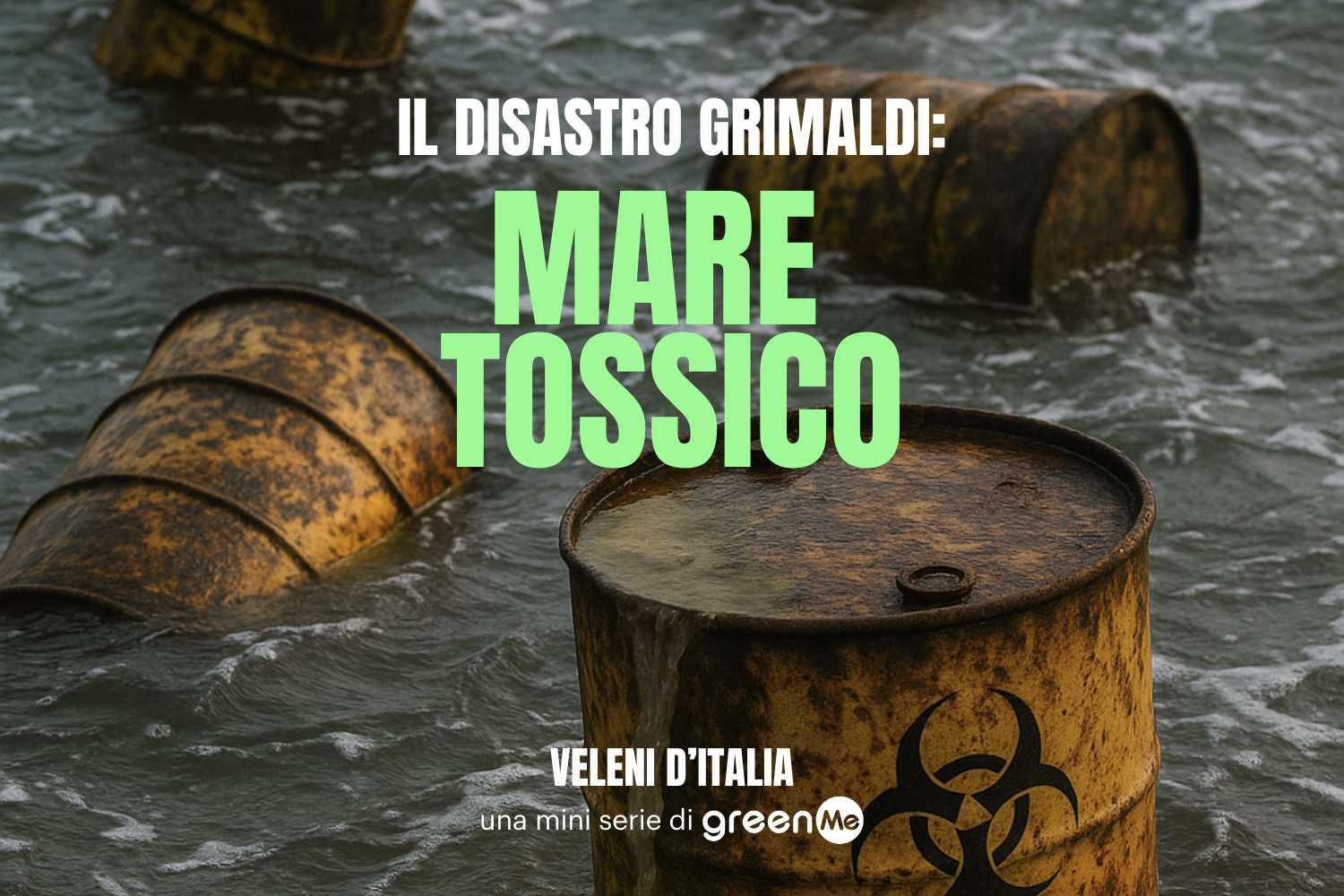
In December 2011, the Grimaldi Lines Eurocargo Venezia ship, headed from Catania to Genoa, was involved in an environmental disaster in the heart of the Cetacean Sanctuary, between Gorgona and Livorno. During a violent shipwreck, over 30 tons of toxic substances, including cobalt monoxide and molybdenum, ended up in the Tyrrhenian Sea, endangering the marine ecosystem and protected fauna. Despite the severity of the damage, the 2015 ruling acquits those responsible. This tragic and controversial episode marks the first chapter of our new GreenMe “Poisons of Italy” series, which explores Italy’s most serious environmental disasters
The Eurocargo Venezia of the shipowner Grimaldi Lines, which left Catania and headed for Genoa, carried dozens and dozens of drums that night, as always. There are toxic substances inside, but at a certain point those barrels almost all end up in the Tyrrhenian Sea. We are in the middle of the Cetacean Sanctuary between the island of Gorgona and Livorno and the disaster has struck.
View this post on Instagram
Until they arrive at their destination, however, none of the crew notices anything and for a long time afterwards not even the citizens of Livorno will have any news. What really happened? And whose responsibility was it?
It is the night between 16 and 17 December 2011 and that cargo ship has on board catalysts owned by a Luxembourg company and coming from the petrochemical center of Priolo Gargallo in Syracuse. More than 30 tons of dangerous material at the mercy of waves up to 5 meters high.
Yes, because in those hours an unparalleled storm takes place in the middle of the water: the sea is stormy, as the weather reports had widely announced. It is a troubled journey, yet at four in the morning, when the ship touches the coasts of Gorgona, the smallest and most unknown island in the Tuscan Archipelago, the inspection reports give no signs of anomalies.
But when, at 7.30, the Eurocargo Venezia docked in the port of Genoa, only at that moment did those on board realize that 198 drums were missing. Disappeared, disappeared, disappeared in some unspecified part of the Tyrrhenian Sea between the island of Gorgona and the shallows of Santa Lucia, in the protected area between dolphins and whales. And now also among toxic waste.
For weeks they could not be found and the authorities inexplicably remained silent for days about the incident: indeed, the citizens of Livorno discovered the accident only 11 days later and only because the Tirreno editorial team intercepted some circulars from the municipalities in the area.
But how did those drums end up there? According to Commander Pietro Colotto, the Cargo Venezia was overwhelmed by a ten meter wave which at 5.20am on 17 December swallowed up half the load.
How is it possible that no one noticed during the journey that they had lost the toxic load? The coast guard warns the ship’s owner, but the damage has already been done. Between bureaucratic quibbles and delays, the recovery operations of the drums began only 5 months after the disaster, on 4 June 2012.
Grimaldi invests 6 million euros, but of the 198 bins, 71 remain on the bottom. They are not found. Of concern is the fact that the substances are highly flammable, especially cobalt monoxide and molybdenum.
On 1 December 2013, prosecutor Luca Masini will ask for three people to be sent to trial, including the commander of the Eurocargo Venezia. The charges are negligent pollution, environmental disaster and danger of shipwreck.
The investigation will reveal that the Venezia had continued towards Genoa in such difficult conditions that it risked collision with another ship, rather than trying to avoid the storm. Precisely to avoid the collision, while the sea was in full storm, the ship would have made an emergency maneuver by dropping the toxic drums into the sea.
On March 17, 2015 the absurd sentence: all acquitted. No one guilty because the fact does not exist. No one will compensate for the damages estimated at 22 million euros caused to the Cetacean Sanctuary.
