
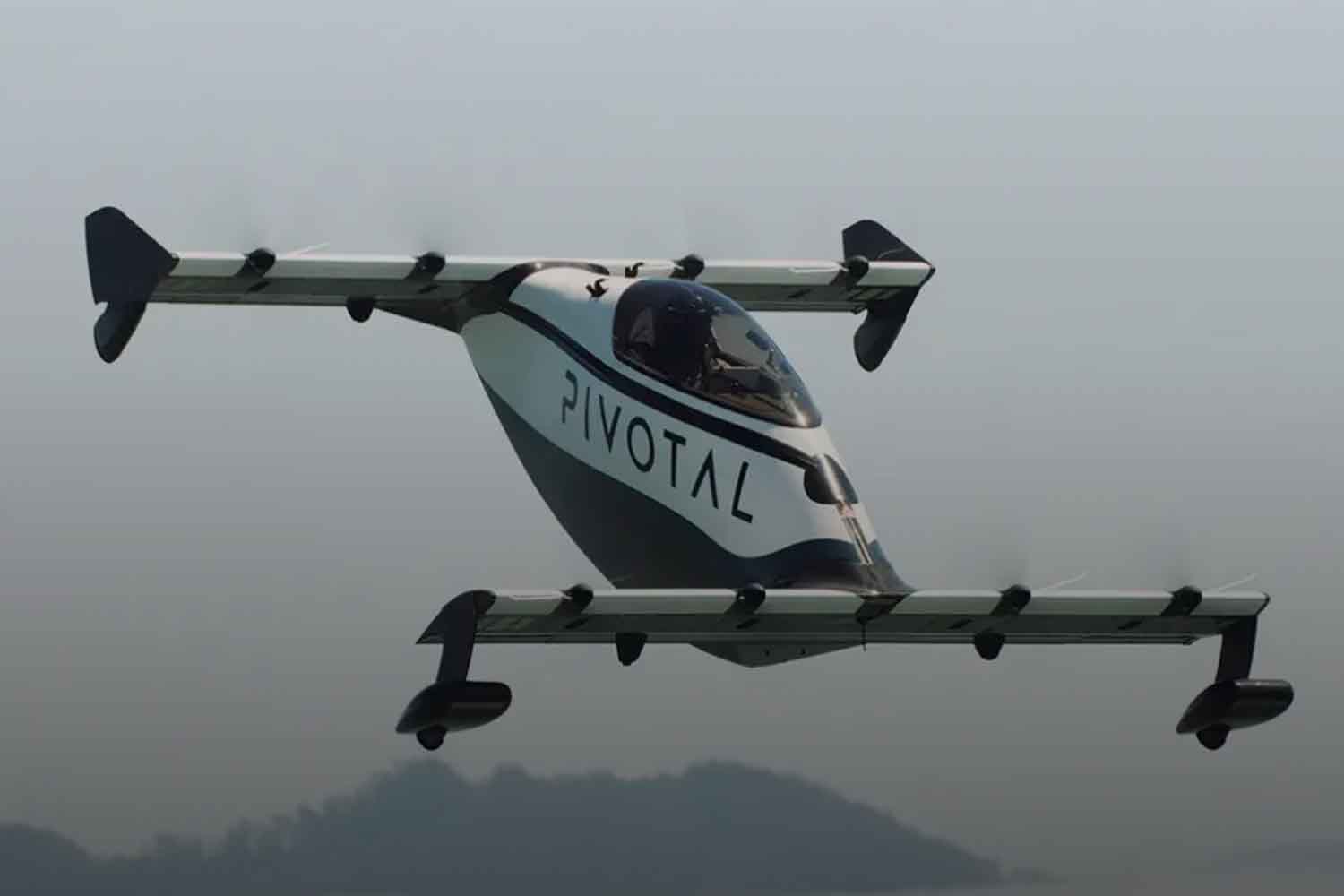
There is a question that, sooner or later, anyone who has spent their life stuck in morning traffic has asked themselves: What if you could fly above all this? Today it is no longer just a fantasy. The Helix flying car is real, you can order it and it promises to revolutionize, at least in part, the way you get around. As long as you have 170 thousand euros to invest and a good dose of pioneering spirit.
Behind this project is Pivotal, a Californian company founded by Marcus Leng, who has been working on the idea of a personal flying vehicle for over fifteen years. What in 2009 was little more than an experiment has today become a vehicle that can be ordered on the market.
Helix is not the classic futuristic concept destined to remain on a glossy cover. It is the result of years of testing, prototypes and real flights. Marcus Leng managed to get a first working model into the air as early as 2011, becoming one of the first in the world to take a personal vehicle of this type into the air.
Today Helix can be purchased, although with some uncertainty about delivery times. To get on the list you need a deposit of around 42 thousand euros, while the final price is around 170 thousand euros, excluding taxes. Estimates speak of about a year’s wait before seeing the vehicle ready to fly.
What is Helix
From a technical point of view, Helix falls into the category of eVTOL, an acronym for Electric Vertical Take-Off and Landingi.e. electric vertical take-off and landing vehicles. Simply put: you don’t need tracks, just an open space.
Weighing approximately 160kg, Helix is classified as an ultralight aircraft. Much of the structure is made of carbon fiber, a choice designed to minimize mass and improve energy efficiency. The cabin is single-seater and accommodates a single person, sitting in the center of a structure that is more reminiscent of a giant drone than a traditional car.
The flight system is based on two large ailerons, one front and one rear, each equipped with four electric propellers. In total, therefore, eight rotors that guarantee stability and control during flight.
How much it flies, how much it consumes and how “green” it is
Helix is not designed for long journeys or for crossing half of Italy. Its autonomy is around 30 kilometres, more than enough for short, scenic journeys or to avoid a particularly congested stretch of traffic. The cruising speed is around 100 km/h, while full charging takes just over an hour.
From an environmental point of view, the absence of fossil fuels is a plus: zero direct emissions, less noise than a traditional helicopter and a potentially lower impact. However, the issue of real use remains: it is not a means of transport designed for mass transport, but for a few very selected users.
Safety, rules and limits
One key detail: Helix can’t fly everywhere. In the United States it falls under the regulations on ultralights, which prohibits flying over densely populated areas and requires flights only during the day and in favorable weather conditions. You don’t need a traditional pilot’s license, but Pivotal requires specific training before delivering the vehicle.
On the safety front, Helix is equipped with redundant control systems and an emergency parachute, designed to reduce risks in the event of serious failures. It is not a toy, but not even a means of improvising as urban aviators.
The flying car will not eliminate traffic in our cities, at least not in the short term. It is an expensive vehicle, with stringent regulatory limits and designed for a very specific use. But it represents something important: the demonstration that electric, personal and relatively accessible flying is no longer just science fiction.
Maybe Helix won’t really change urban mobility. But it is one of those projects that opens a path, shows a possibility and forces everyone – companies, institutions and citizens – to rethink the way we move in space.
You might also be interested in:
