
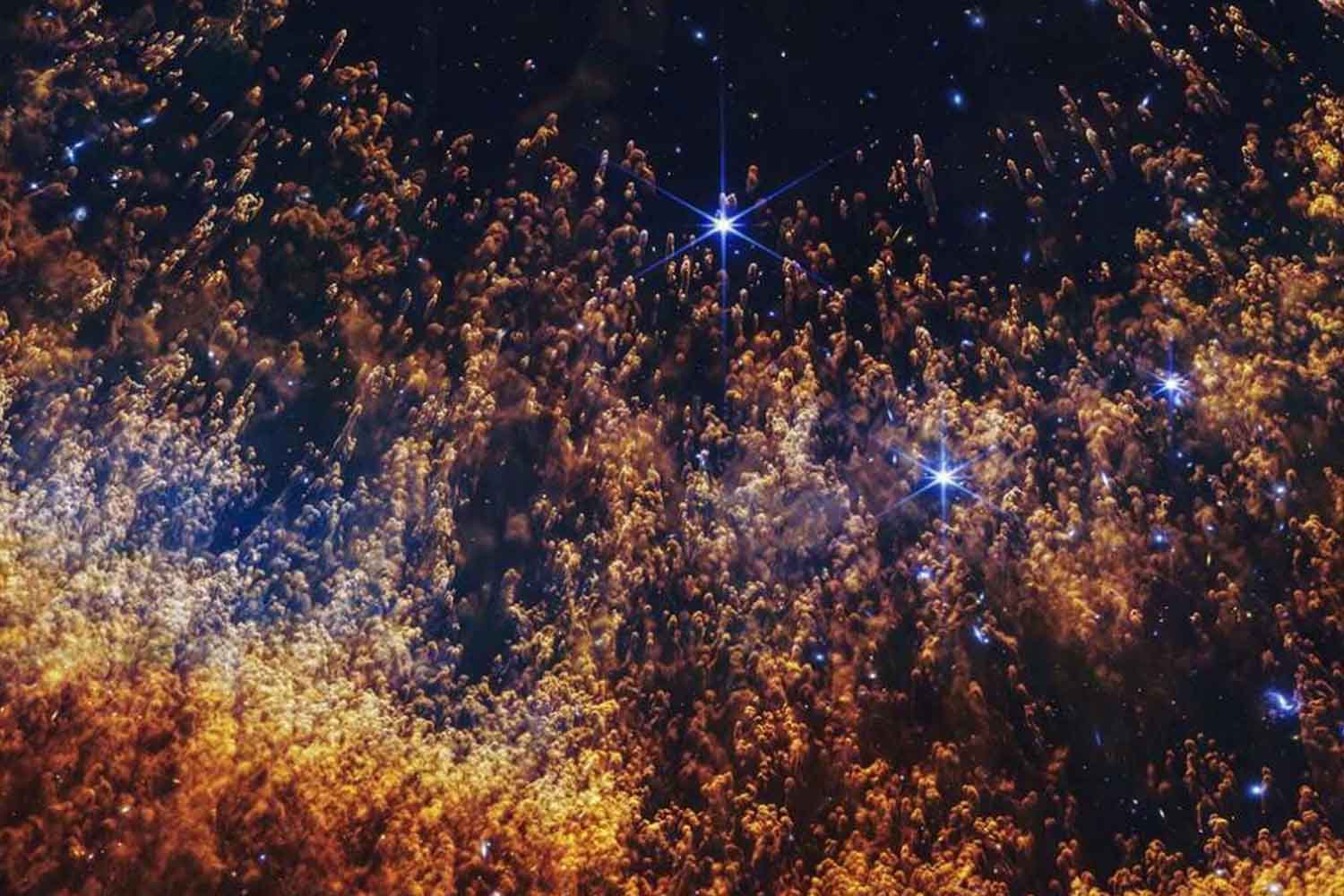
There’s something deeply poetic (and also reassuring) about knowing that the end of a star is not really an end. The new image of Helix Nebulacaptured by James Webb Space Telescopereminds us of this with a visual power that is difficult to ignore: what appears as smoke dissolving in space is, in reality, the raw material from which new worlds will be born.
A photograph that is not only spectacular, but also deeply symbolic of the natural cycle of the universewhere nothing is lost and everything is transformed.
A nebula observed for centuries
There Helix Nebula it is one of the planetary nebulae best known and loved by astronomers. It is located approximately 650 light years from Earth and has been observable for over two hundred years. Over time it has been photographed by historic telescopes such as Hubble And Spitzerbut James Webb’s new image marks a real leap in quality.
The reason why it is so iconic is also aesthetic: its circular shape, similar to a large cosmic eye, has earned it comparison with the Eye of Sauron de The Lord of the Rings. In reality, at the center there is nothing threatening, but one white dwarfwhat remains of a star similar to our Sun that has reached the final phase of its life.
The concentric layers resembling an iris are composed of gas and dust expelled over time. The warmer parts shine with blue tones, while the colder ones turn towards red, creating a chromatic mosaic that tells of the temperatures, densities and movements of matter.
The “smoke columns” seen by Webb are not explosions, but flows of gas
The real revolution comes thanks to the tool NIRCam by James Webb, capable of observing the universe in infrared with a precision never seen before. In the image they emerge ionized gas strips which look like columns of smoke or luminous trails rising, like cosmic fireworks.
At first glance, they give the idea of gas projectiles starting from the internal surface of the nebula. But the comparison with a complementary image obtained by the ground-based telescope VIEW completely reverses the perspective: .
These comet-like structures move toward a ring of cooler material, where hydrogen atoms come together to form molecules visible in a deep orange color. Once cooled, this gas slowly disperses into space, transforming into a reddish fog which, millions of years from now, will contribute to the birth of new stars and new planets.
As explained by NASAthe colors of the image clearly show “the last breath of the star transforming into the fundamental ingredients for new worlds”, enriching our knowledge of the origin of planetary systems.
It’s a powerful reminder: even what dies in the universe continues to generate lifein different forms, over times that go well beyond our human scale.
