
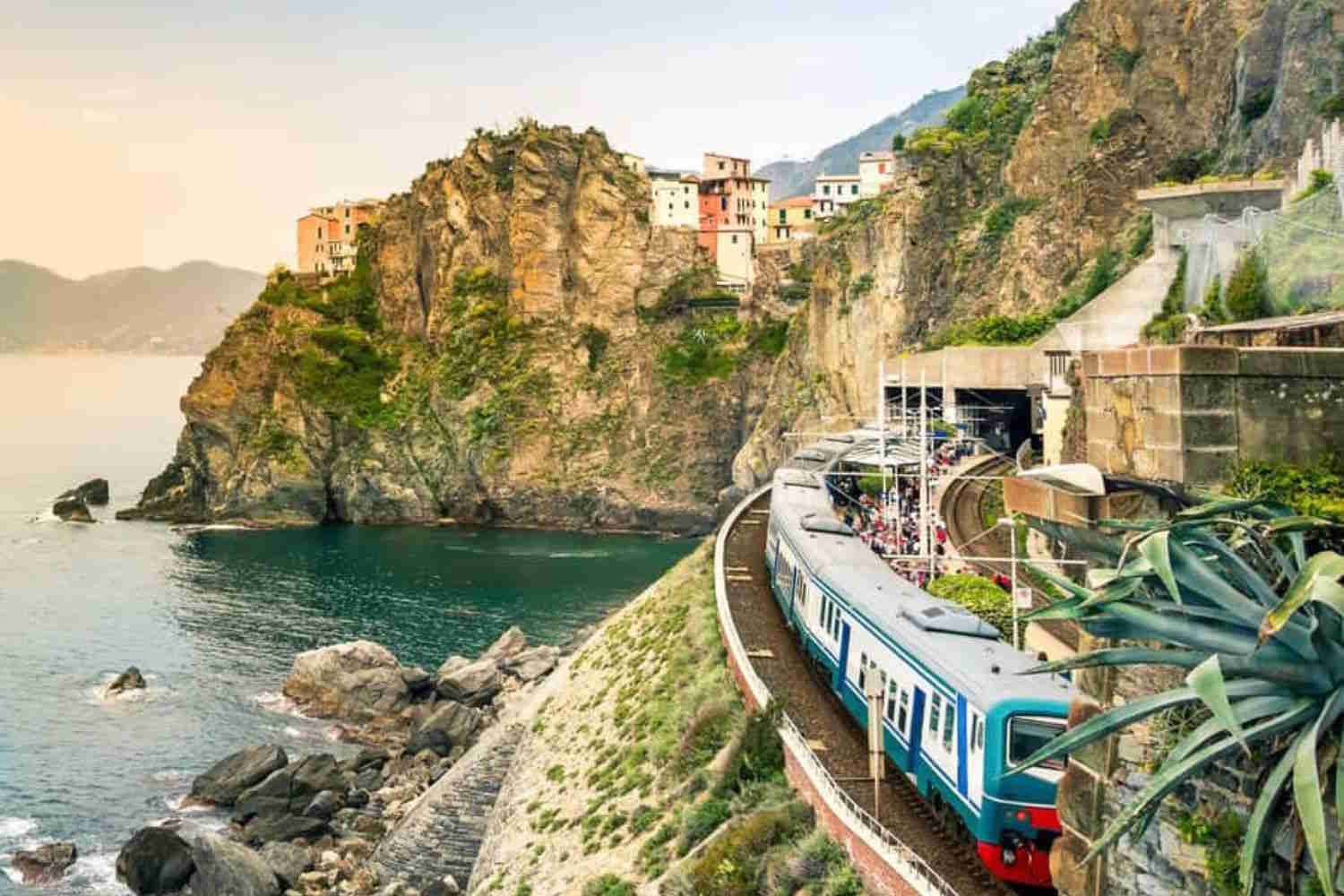
The Italian railway network connects some of the most beautiful cities in the country directly and frequently. From Florence you can easily reach Pisa, Livorno, Rome and Naples. Not to mention that many of these routes offer panoramas that are not seen from the highway: the Tuscan countryside, the Tyrrhenian coast, the villages perched on the hills.
The beauty is that you don’t need to be eco-warriors convinced to appreciate this choice. It is simply more comfortable. No queues, no petrol, no search for parking. Go up, go down, explore.
Here are the Italian cities that is worth reaching by train, without ever touching the car keys.
The triangle of wonders: Florence, Rome, Naples
Florence remains the jewel of Tuscany, easily accessible from all over Italy. The Santa Maria Novella station is a perfect crossroads: from here regional trains start towards the Chianti hills, arrows to the big cities, and panoramic connections to the Tuscan coast.
Rome is the beating heart of the Italian railway network. Connections to every corner of the country branch out from the capital. The high speed trains connect it to Milan in 3 hours, in Naples in just over an hour, while the regional ones reach Lazio villages such as Orvieto, Viterbo and the Castelli Romani.
Naples offers an irresistible mix of art, history and gastronomy. From Napoli Centrale start trains to the Amalfi coast (via Salerno), for Puglia, and the regional lines that cross the Vesuvian towards Pompeii and Sorrento.
The buds of the North: from Milan to lakes and mountains
Milan is not only business and fashion, from the central station, trains start which in a few hours take you to the banks of Lake Como (Varenna, Bellagio reachable via Como), of Lake Maggiore (Stresa), or towards the Dolomites through Verona and Bolzano.
Venice also remains magical in the railway approach: the train crosses the lagoon on a 4 -kilometer bridge, giving unique views. From Venice Santa Lucia you can easily reach Padua (30 minutes), Verona (1 hour and 15 minutes), and the Venetian cities full of art and tradition.
The discoveries of Central Italy
Siena deserves a special mention, reachable from Florence through the line that passes through Empoli, the journey of about 90 minutes crosses the most authentic Tuscan hills, between Chianti vineyards and centuries -old cypresses.
Perugia and Assisi are connected to Rome and Florence through Terontola. The regional train that serves Umbria is slow but panoramic, perfect for savoring the rhythms of the Italian province.
The panoramic sections not to be missed
The Cinque Terre: from La Spezia, regional trains connect Monterosso, Vernazza, Corniglia, Manarola and Riomaggiore. The daily ticket includes train and hiking paths.
The Amalfi Coast: From Naples to Salerno in Arrow (40 minutes), then buses located for Amalfi, Positano and Ravello.
The Bernina Express: from Milan, via Tirano, one of the most spectacular train trips of the Alps, UNESCO heritage.
How to plan the perfect journey
Comparing hours and prices is essential to optimize the trip. Platforms such as OMIO allow you to view all available options, from the super economy rates of regional trains to the flexible offers of high speed.
Practical tips:
Beyond the destination: the journey as an experience
Traveling by train to Italy means slowing down and rediscovering the pleasure of time. It is to see the sunset on the fields of sunflower in Tuscany, cross the rice fields of Piedmont early in the morning, skirt the sea between Genoa and La Spezia.
It is not just an environmental or economic question: it is a different way of living Italy, more authentic and contemplative. From the window you can see details that escape those traveling by car: flowery courtyards, bell towers that sprout among the trees, villages that seem to stop over time.
To better organize your next train journey, compare timetables and rates on Omio and discover Italy that you don’t expect, one station at a time.
