
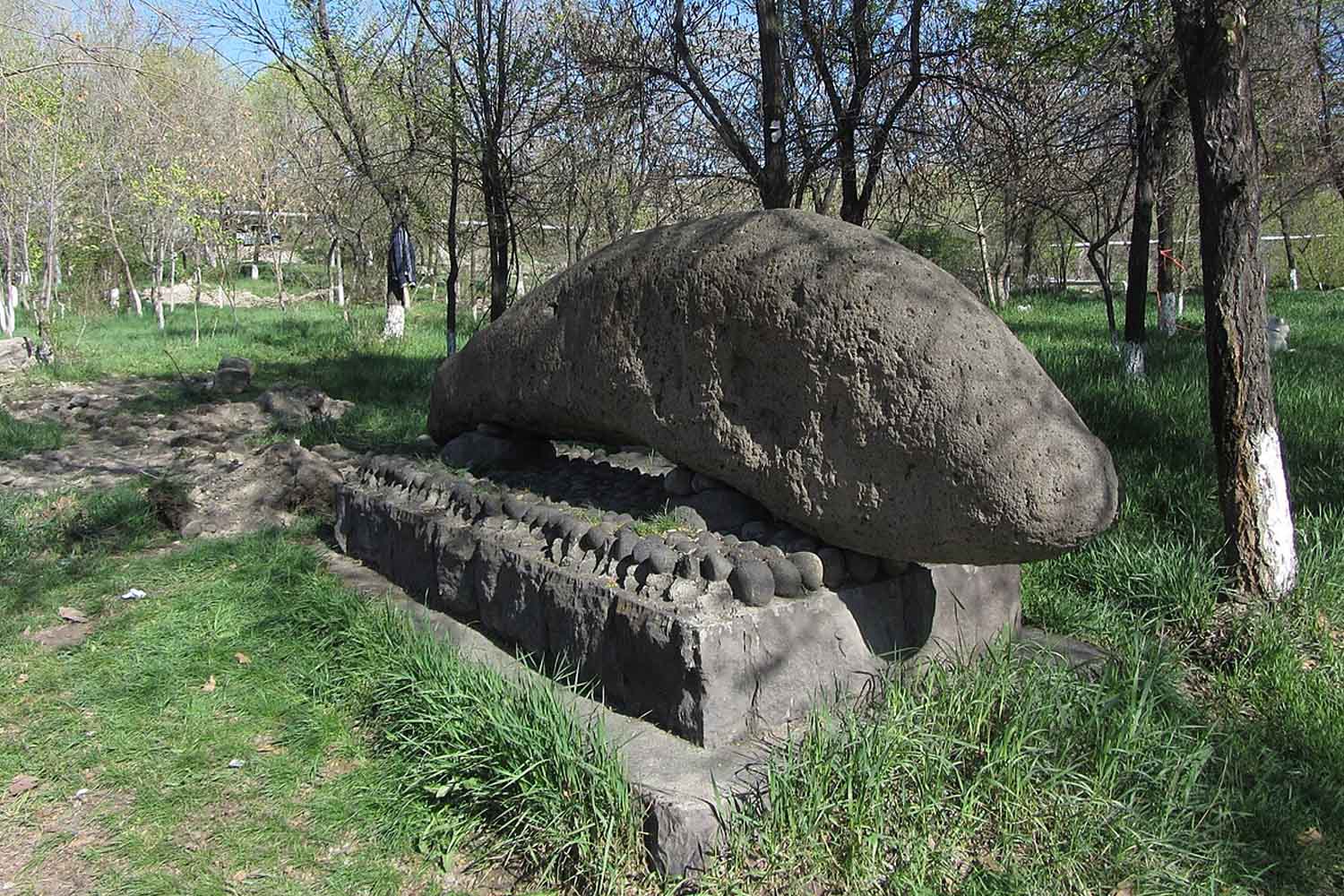
There are places where the landscape preserves a memory that is older than words. In Armeniaamong windy plateaus and mountains that remain covered in snow for most of the year, gigantic stelae sculpted over six millennia ago emerge. They call them vishap,”dragon stones”, and for the first time in the country’s history they were the subject of a systematic study capable of putting together data, measurements and solid hypotheses.
We are talking about monuments erected between 4200 and 4000 BC, in a time span that ideally dialogues with the megaliths of Stonehenge. Each vishap weighs between three and eight tons and can exceed three meters in height. They are monolithic blocks engraved with fish figures or shapes that resemble a stretched cowhide. Essential, symbolic signs, which can still be clearly read on the stone today.
Dozens of specimens dot western Armenia. Forty-three are concentrated in the Geghema Mountainsthirty-six on the slopes of Mount Aragatsseventeen in the area of Vardenis Mountains. Others emerge along the same mountain axis, as if an ancient hand had drawn an invisible line between springs, hills and valleys.
Colossi erected at three thousand meters, where the snow lasts eight months
The most surprising part concerns the altitude. The researchers of the Yerevan State University Institute of Archeology and Ethnography they analyzed the dimensions, weight and geographical location of the steles. The initial hypothesis seemed intuitive: the higher you climb, the more extreme the conditions become, so the stones would have to be smaller to facilitate transportation and processing.
The results told another story. Some of the most impressive vishaps are found above 2,700 meters above sea levelin areas where the ground remains covered in snow from October to May and where available resources require organization and resistance. Blocks weighing over seven tons stand out in environments that still test those who pass through them today.
This data reveals a precise desire. The Neolithic communities who sculpted and built these monoliths attributed a profound meaning to the place. Fatigue was not an obstacle. The location mattered as much as the stone itself.
A water cult engraved in the rock
The analysis strengthened a hypothesis that has long fascinated archaeologists and historians: the Vishaps were linked to an ancient water cult. Most of the stelae are located near natural springs, mountain basins or strategic water collection points. The fish-shaped carvings speak with a clarity that spans millennia.
In territories where melting snow feeds streams and seasonal canals, water determines the survival of entire communities. Cowhide stelae appear more often in lower-elevation valleys, along routes that appear to follow ancient irrigation systems and grazing areas. The landscape thus becomes a sacred map, where spirituality and resource management intertwine.
One detail adds depth to this reading. Classical and medieval settlements, churches and isolated fortresses developed along the same routes in the following centuries. The waterways continue to sustain life long after the vishap builders have passed away. The mountains preserve the memory of those who inhabited and shaped them.
Stones that span the ages
Every ancient monument brings with it a question that remains suspended in time: why invest enormous energy to erect something that exceeds the duration of a human life. The vishaps tell the strength of cooperationthe ability to organize work and resources, the desire to leave a mark on the territory.
Subsequent generations have recognized this symbolic power. The Urartians, contemporaries of the Babylonians and Assyrians, engraved inscriptions in cuneiform characters on some stelae. The first Christian communities carved crosses on already ancient surfaces, rewriting the meaning of those monoliths in the light of the new faith.
The dragon stones thus become a vertical archive. Every era adds a layer, every civilization leaves a mark. Today the systematic study conducted by Armenian archaeologists offers a more solid interpretation, capable of connecting environmental data, geographical distribution and iconography.
Walking among those giants means entering into a silent dialogue with a humanity that saw water as a sacred presence and mountains as a place to honor.
