
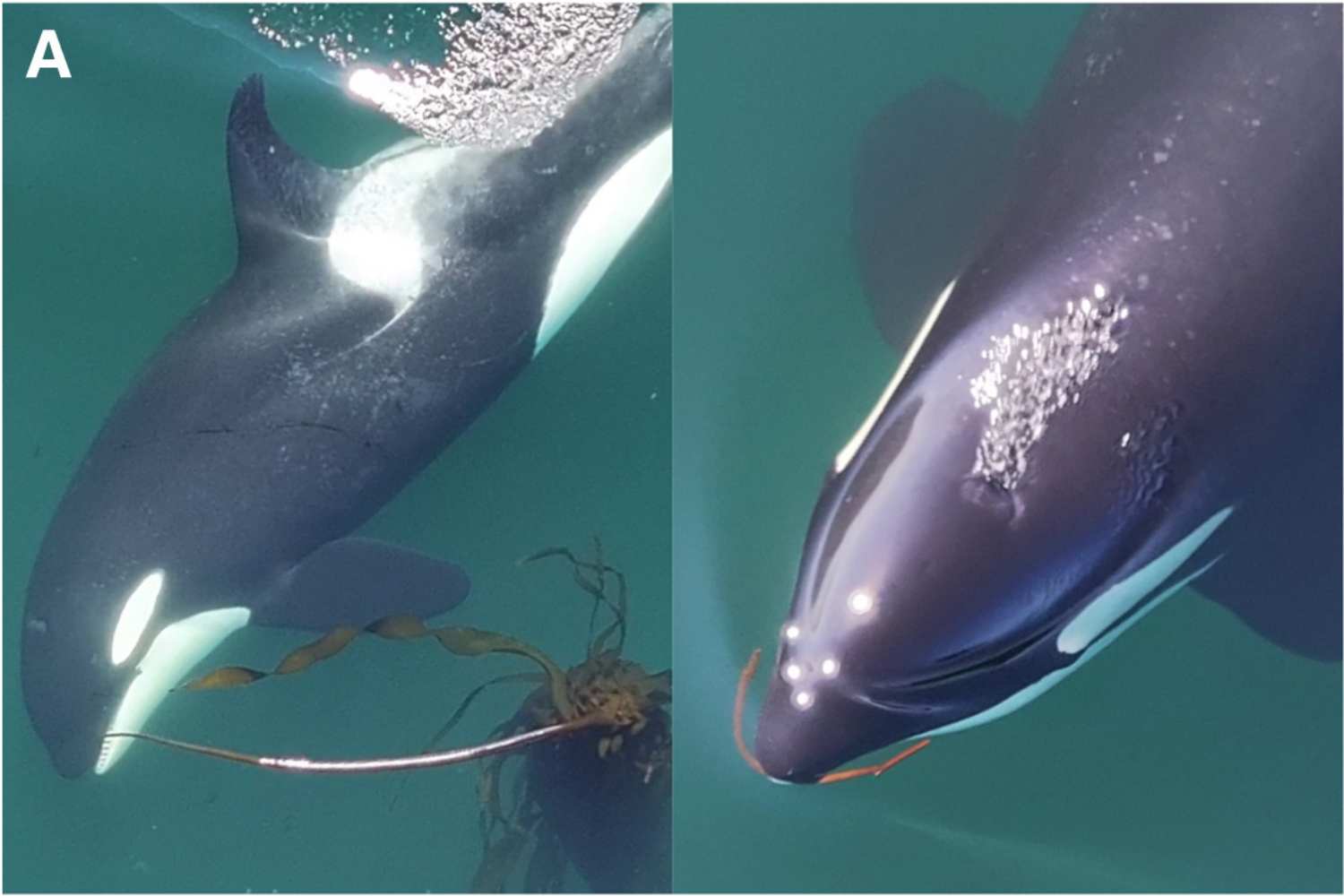
In the animal world, the use of tools It is rare and often associated with primates or few other intelligent mammals. But a new discovery made in Mar Salishbetween the United States and Canada, reverses this belief: a group of southern resident orche has been observed use seaweed to interact with each other in a way never seen before.
The behavior, documented in 2024 thanks to films taken from droneswas renamed “Allakelping“: The orcies they voluntarily collect long Kelp threads from the seabed and slide them among their bodies, as if they used them for massage or clean each other.
This type of interaction, observed in at least 30 cases In just two weeks, it could be used for two purposes: keeping theleather hygiene (eliminating dead cells or injuries) or strengthen social ties within the group.
The orche are known for their intelligence
According to scientists, the use of tools for food not related to food is unique in the world of cetaceanswhere similar behaviors were known only among the Tursiopi dolphins (which use sponges to hunt) or whale megatte (who create bubble nets to trap fish). But in all these cases the goal was food survival. Here, however, alkelping seems to have a more function cultural or relational.
In fact, the orche are known for theirs intelligencethe complex social structure and even for the use of vocal dialects specific for each population. The fact that two individuals coordinate to use an object like Kelp to interact with each other could bring them even more to others Evolved social mammalslike i primates.
The behavior has been observed thanks to new technologies that allow you to see from above e without disturbing animalsovercoming the limits of traditional boat observations. This discovery not only opens new perspectives in the study of Animal cultural behaviorsbut also turns on a reflector on the need for protect the habitat of these orche.
With a population just 74 individualsthe resident orche of the South are critically threatenedand the disappearance of the Kelp – aggravated by climate change – it could also compromise these fascinating interactions.
