
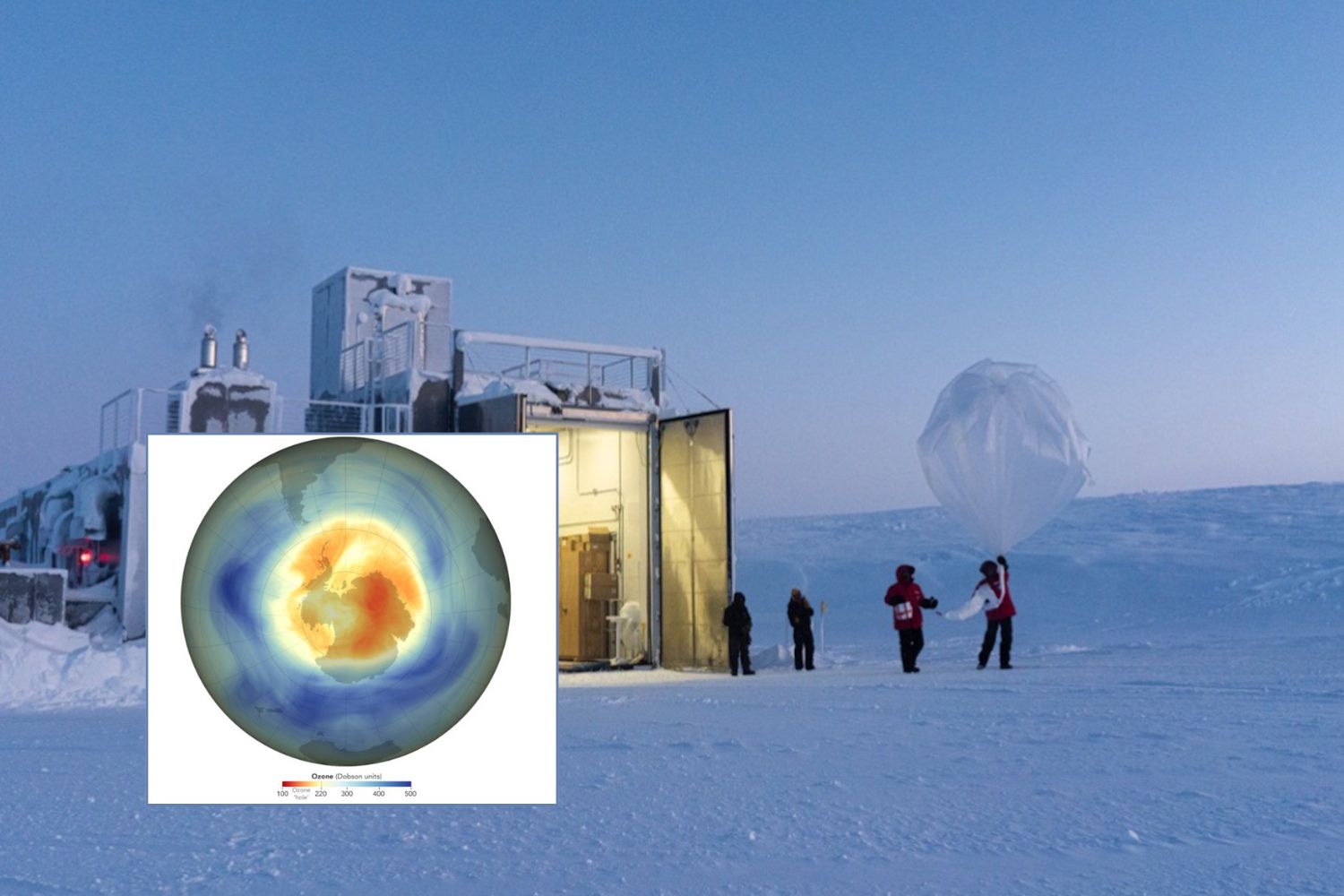
NOAA and NASA scientists classified this year’s ozone hole over Antarctica as the fifth smallest since 1992, the year the Montreal Protocol, the historic international agreement to phase out ozone-depleting chemicals, went into effect.
During the peak of this year’s ozone depletion season, scientists note, from September 7 to October 13, the average extent of the 2025 ozone hole was about 7.23 million square miles (18.71 million square kilometers).
As expected, we are seeing ozone holes get smaller than in the early 2000s,” said Paul Newman, senior system scientist at the University of Maryland and leader of NASA’s ozone research team. They are forming later in the season and breaking up earlier.
What is the ozone hole?
As NASA explains, every year for a few decades, during the Southern Hemisphere spring, chemical reactions involving chlorine and bromine cause rapid and significant destruction of ozone in the southern polar region. This impoverished area is defined as “ozone hole”.
The extent of the ozone hole is determined through a map of the total amount of ozone in the atmospheric column. It is calculated by considering the Earth’s surface enclosed by a line with a constant value of 220 Dobson Units (unit of measurement for total ozone). This value was chosen because, in historical observations over Antarctica before 1979, ozone levels lower than 220 Dobson Units have never been recorded. Furthermore, according to direct measurements carried out on the Antarctic continent, a quantity of ozone lower than this threshold is attributable to the loss caused by compounds containing chlorine and bromine.
Ozone: what it is and why it is fundamental for life on Earth
The ozone layer that surrounds our planet functions like a real natural sun creamprotecting living things from harmful ultraviolet (UV) radiation from the Sun. It is found in the stratosphere, between about 11 and 50 kilometers above the Earth’s surface. When the amount of ozone decreases, a greater dose of UV rays reaches the soil, with harmful effects: increased cases of skin cancer and cataracts, damage to crops and other negative impacts on health and ecosystems.
Ozone depletion begins when certain compounds containing chlorine and bromine reach the stratosphere. There, intense UV radiation breaks them down, releasing reactive forms of chlorine and bromine that attack and destroy ozone molecules.
Ozone-depleting products have been used for decades, including:
These compounds, now banned, however remain in the atmosphere for a long time and are still present in old products, such as insulation materials in buildings, or in landfills. As the residual emissions (“legacy emissions”) are shrinking, scientists predict that the ozone hole over Antarctica may shrink and recover in the late 2060s.
The ozone hole doesn’t just depend on chemistry
Second Laura Ciastometeorologist of NOAA’s Climate Prediction Center and member of the Ozone Research Group, climate factors such as temperature, weather conditions and the strength of the Antarctic polar vortex influence the size of the ozone hole from year to year.
A weaker-than-normal polar vortex last August helped keep temperatures above average and likely fostered a smaller ozone hole, Ciasto said.
Protecting the ozone layer means protecting ourselves. Its slow recovery demonstrates that environmental policies work when they are based on science and applied with determination, but also that we cannot let our guard down: our health, agriculture and biodiversity depend on this fragile invisible shield.
