
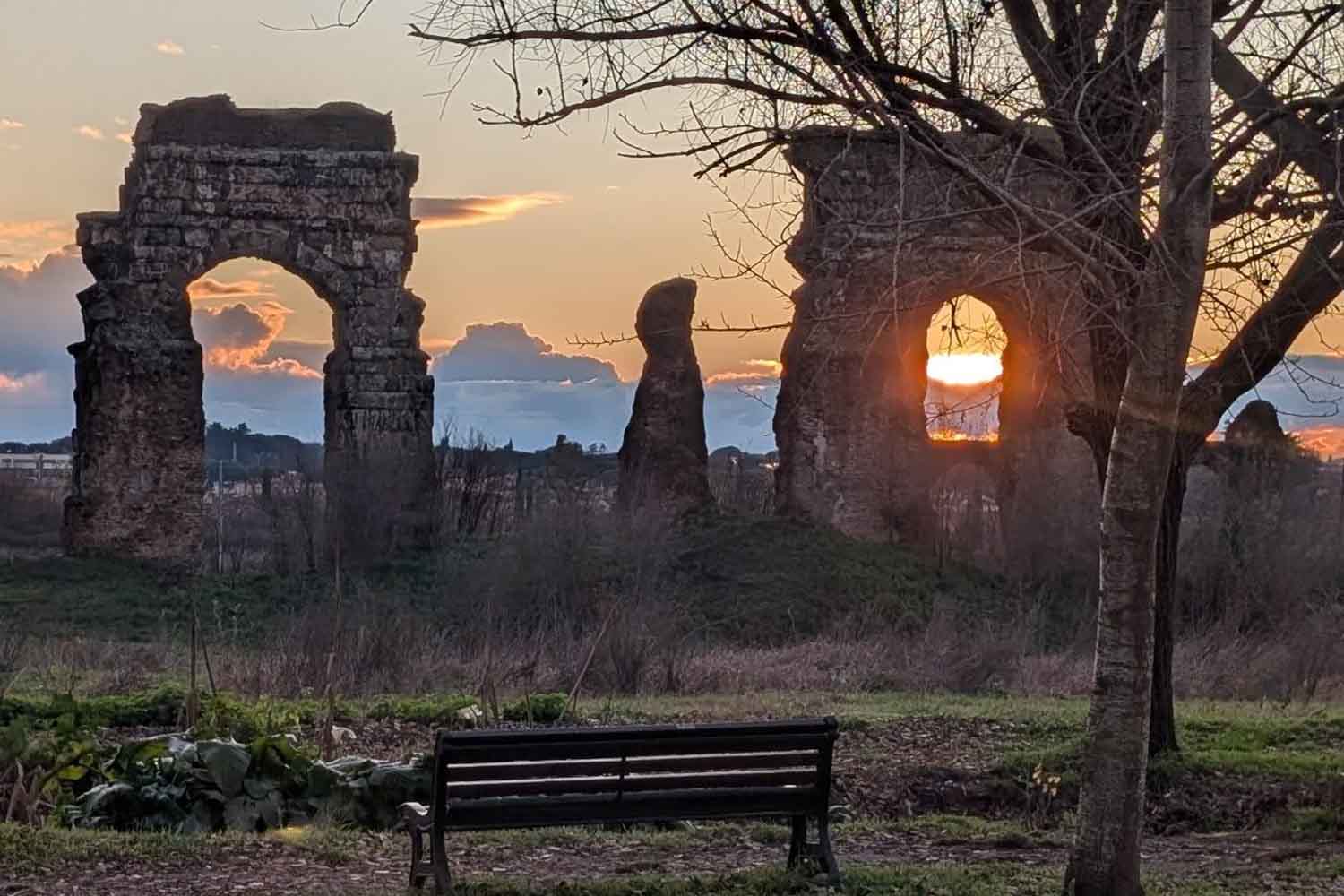
There is a place in Rome where time has never really stopped flowing. It flows in the form of water, of ancient arches, of slow walks on Sunday mornings. It is the Parco degli Acquedotti, and today it is back at the center of attention because it won the FAI tender “The Places of the Heart”obtaining important funds for its redevelopment. But this is not insider news. It is one of those stories that talk about lived cities, memory and real affection.
A park that is not only green, but a piece of Rome that continues to breathe
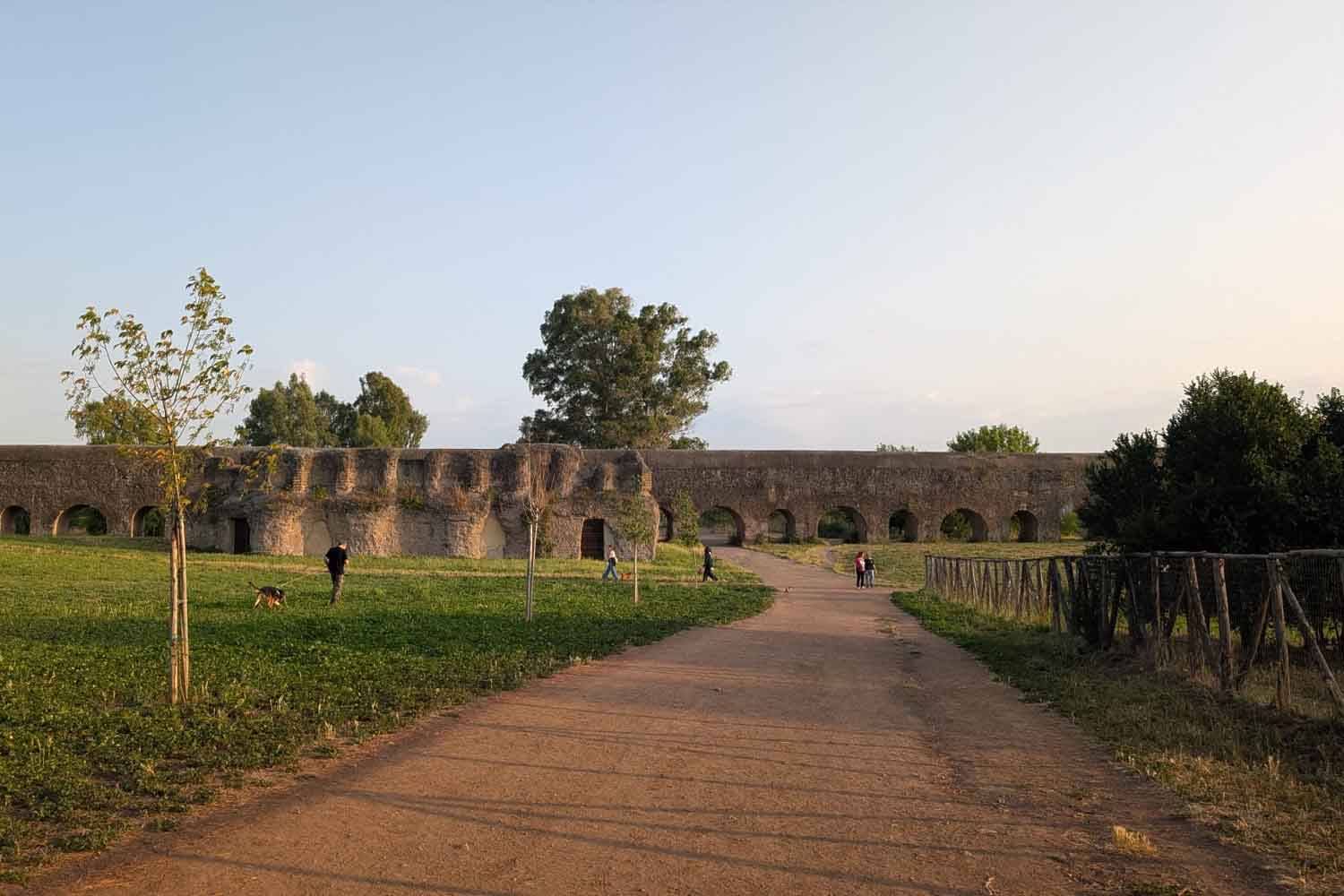
The Aqueduct Park is located in the south-eastern quadrant of the capital, between Appio Claudio and via delle Capannelle, and is part of the Appia Antica Regional Park, which with its 240 hectares is the largest urban protected green area in Europe. Here, monumental archeology and daily life coexist without the need for explanations.
Here open fields, beaten paths and monumental remains of six Roman aqueducts coexist: Anio Vetus, Aqua Marcia, Tepula, Iulia, Claudio and Anio Novus.
It is not a “postcard” park, but one of those where you run, walk your dog, chat on a bench while centuries of history pass in the background. Six of the eleven aqueducts of ancient Rome cross this area: from the Anio Vetus to the Aqua Marcia, from the Tepula to the Iulia, up to the Claudio and the Anio Novus. Huge arches, powerful lines, constructions that tell us how serious water was already two thousand years ago.
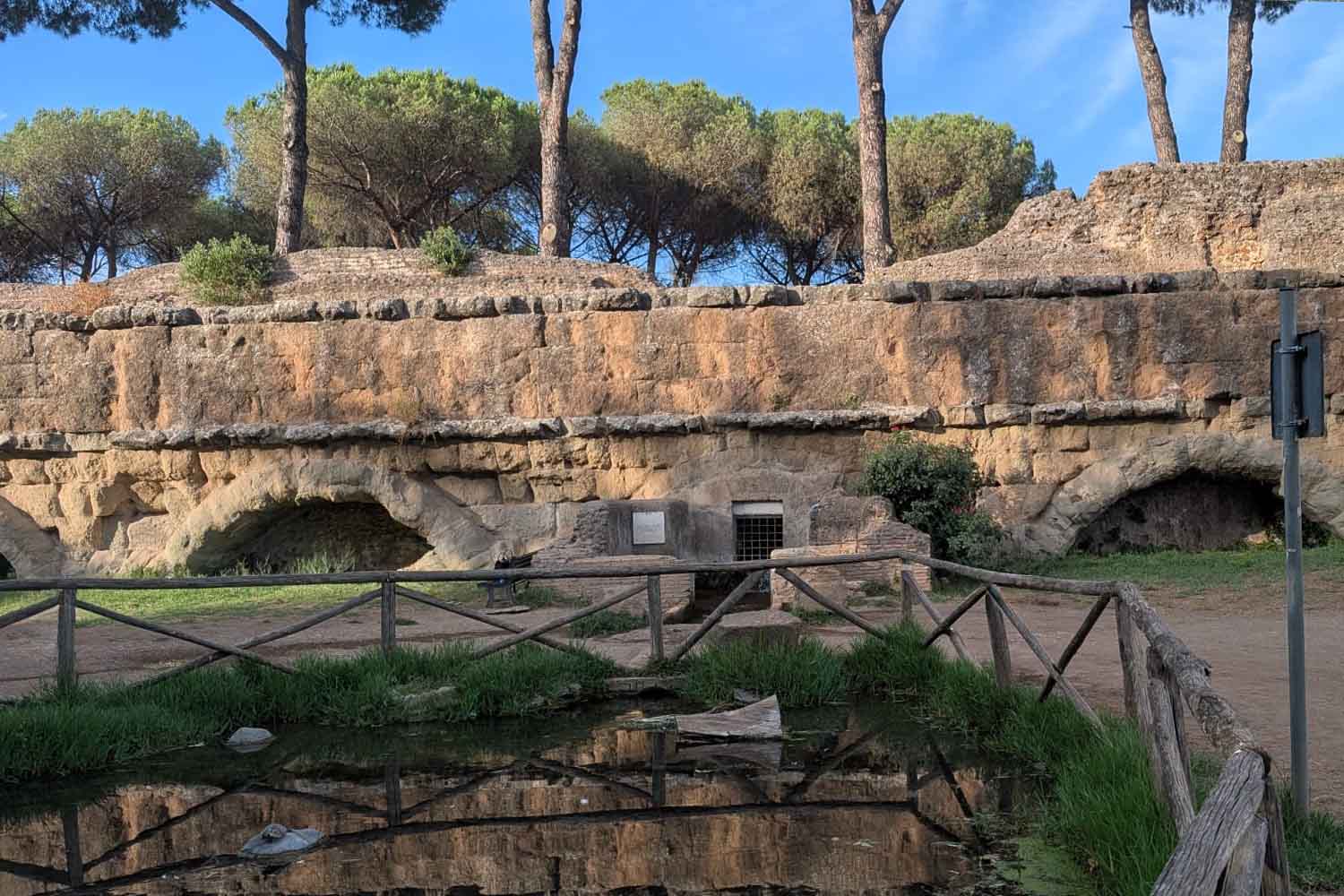
Next to them there is also the Felice Aqueduct, built in the sixteenth century by Pope Sixtus V. It is precisely from one of its branches that the park’s lake was born, one of those places that many Romans know well but which rarely end up in the official stories of the city.
Why the aqueduct park has become a “place of the heart”
In the 2024 FAI census, the lake area of the Parco degli Acquedotti collected 17,251 votes, coming in 24th place nationally and being the most voted Roman place. A number that does not arise by chance.
Here historical memory is not closed behind a fence. It is traversable, everyday, almost domestic. It’s one of those places that you don’t feel the need to explain, because you just need to bring someone there to make them understand. And it is precisely this spontaneous relationship with the territory that convinced the FAI to support the redevelopment project.
The total financing is 106 thousand euros, of which 36 thousand made available by the FAI and Intesa Sanpaolo, while the rest comes from Roma Capitale, the Appia Antica Park and the departments involved.
What will change
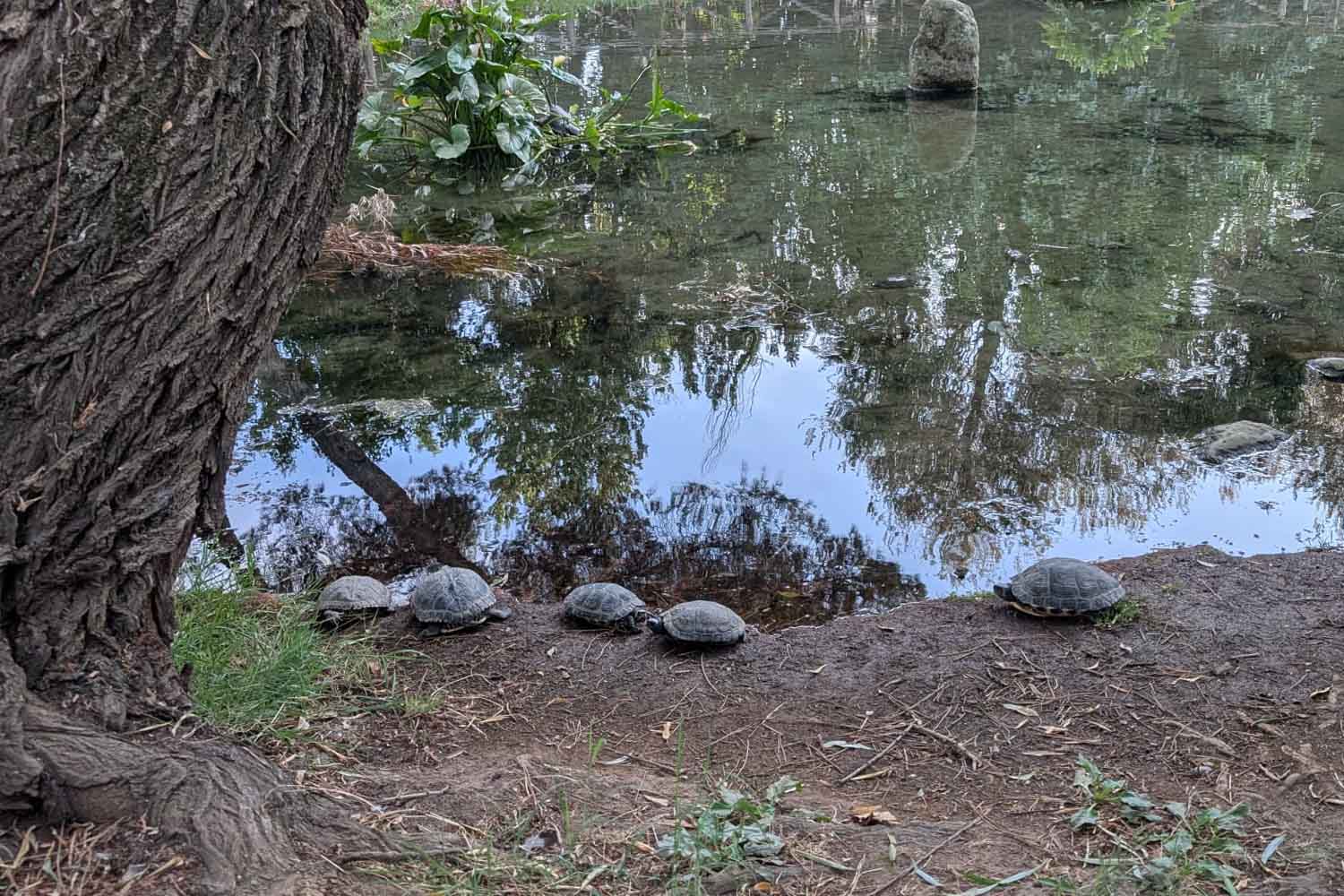
The redevelopment project aims to recover the lake, its banks and historical views, also working on the route of the Acqua Mariana ditch, built in 1122. The idea is to make the area more legible, more accessible, more stable from an environmental point of view. There will be no spectacular transformations. We’re talking about low-impact materials, simple paths, rest areas designed for those who really use the park, and attention to the biodiversity that already exists.
This result comes from a long and concrete relationship between people and place, developed in the field long before anyone officially noticed it. First there was daily use, then the request for protection, finally recognition. And this is perhaps the most interesting aspect: the Aqueduct Park was not “relaunched”, it was listened to.
You might also be interested in:
