
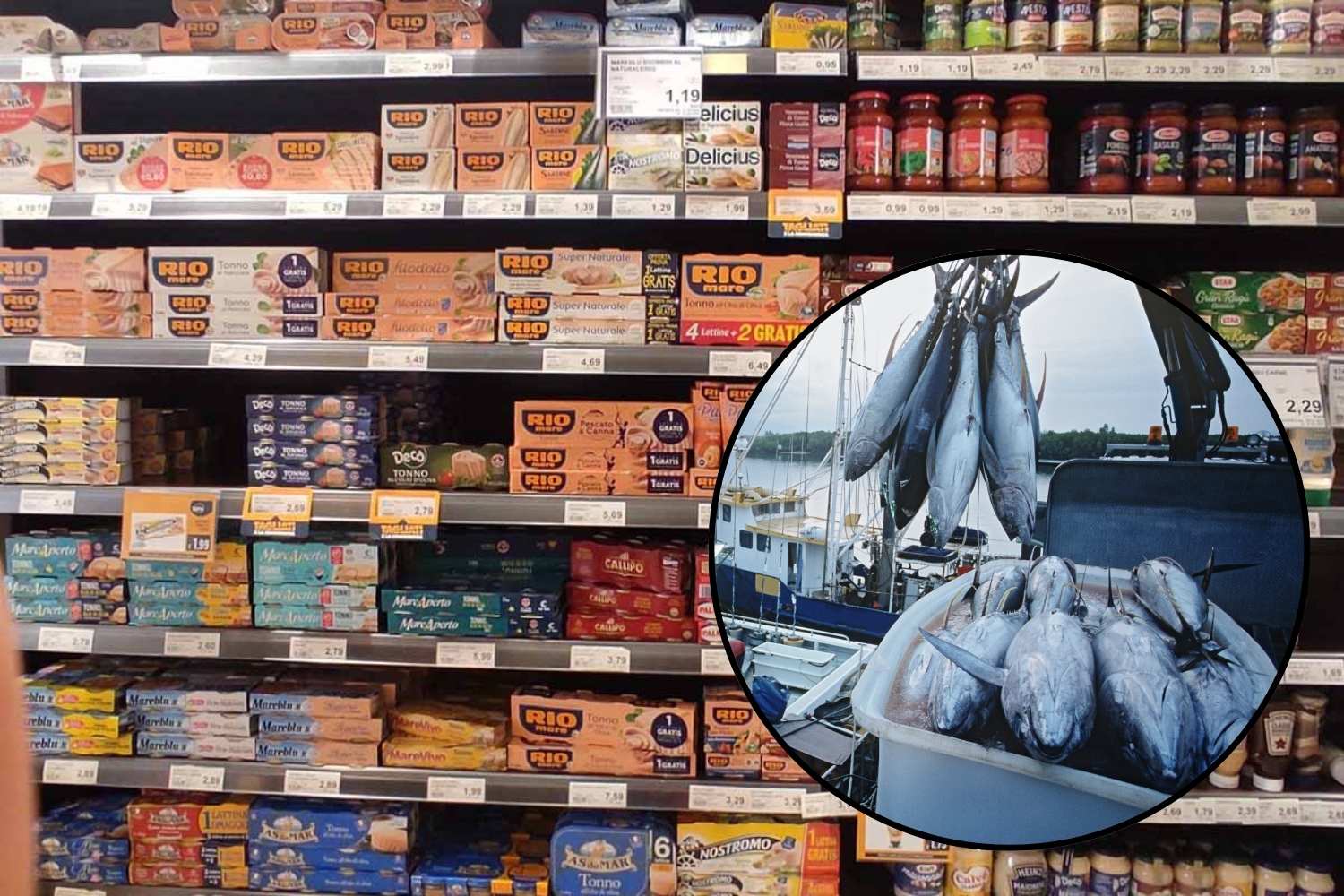
In December 2016, the United Nations General Assembly officially proclaimed the May 2nd as World Tuna Day through A/Res/71/124 resolution. This day has as a fundamental objective to sensitize governments, international organizations and civil society on the importance of the conservation of tuna and Promote sustainable fishing practices that guarantee both the survival of the different species of tuna and the health of marine ecosystems as a whole.
According to FAO, tuna represents not only a crucial food resource for billions of people, but also a significant economic engine for many coastal countries, with a global market value that exceeds 42 billion dollars per year.
A fish too loved (and too caught)
Tuna is one of the most consumed fish in the world, present in every form: raw in the sushi bar, grilled in restaurants and especially in canned in our handouts. And precisely this commercial success decreed its ruin.
According to FAO, over 33% of global tuna stocks are above. Some species are in serious danger, such as the Red Tuna of the Atlantic and the yellow fin tuna, while others, such as the striped tonnetto, are exploited to the limit of sustainability.
Tuna fishing is not only intensive, in some cases it is wild, indiscriminate and without real transparency. The large industrial fishing boats sift the seas with advanced technologies, radar, auxiliary fleets and gigantic circuits that capture everything that moves, not only tuna.
ByCatch: When we kill everything else to take a tuna
One of the least visible tragedies of tuna fishing is the so -called bycatch: that is, the accidental capture of other marine species. Sea turtles (many already at risk of extinction), sharks, dolphins, swordfish and even marine birds such as Albatros end up trapped in the same networks or the loves of the parishrs.
According to FAO, the bycatch represents A serious threat to marine biodiversity It is one of the most urgent problems in the management of world fishing. The impact is particularly serious for slow reproduction species such as sharks, turtles and marine mammals.
In the case of fishing with FAD (fish aggregating devices), the problem is even more serious: these floating devices indiscriminately attract any form of marine life, causing a collateral massacre in the name of profit. Studies conducted by regional organizations for the management of fishing document significantly higher rates of accessory catches when using these devices.
Most of the creatures accidentally caught are rejected in the sea already dead or dying, a practice known as “waste” which represents not only an ecological damage but also a waste of marine resources. International estimates indicate that waste can represent up to 20% of the total fish in some tuna fishing operations with circuit networks.
In short, tuna fishing does not only put this fish at risk, but the entire marine ecosystem. Furthermore, when altering the food chain, eliminating a predator such as tuna, the balance of the ocean changes. Smaller species proliferate, corals suffer and biodiversity is impoverished. It is a domino effect that affects everyone.
In the meantime, the fishing fleets – often belonging to large multinationals or operated by third countries in international waters – are mercilessly exploit the richest areas, imposing above all the local economies of developing countries, which would draw sustenance from that fish.
More sustainable tuna by 2027
The UN, however, shows itself optimistic and on the page of its website dedicated to the World Tuna Day writes that the Common Oceans Tuna of FAO project aims to ensure that by 2027 all the main tuna stocks are caught in a sustainable way, avoiding overflowing and damage to biodiversity.
The data seem to be already encouraging but not yet sufficient: out of 23 monitored tuna stocks, only 2 are still overlapped: a clear improvement, but there is still a way to guarantee maximum sustainability.
In any case, the vigilance remains crucial. The UNCLOS agreement of 2023, known as the “Treaty of the High Sea”, marks an important step to protect marine biodiversity, but the challenges are still numerous. Climate change, for example, is altering the reproduction of tuna, pushing them towards more distant waters and increasing the costs for vulnerable coastal communities.
What we can do
World Tuna Day is not an opportunity for promotions to the supermarket or to enhance yet another gourmet recipe. It is a warning, an invitation to make self -criticism and change course. Because tuna – like many other marine animals – is paying our indifference at a high price.
