
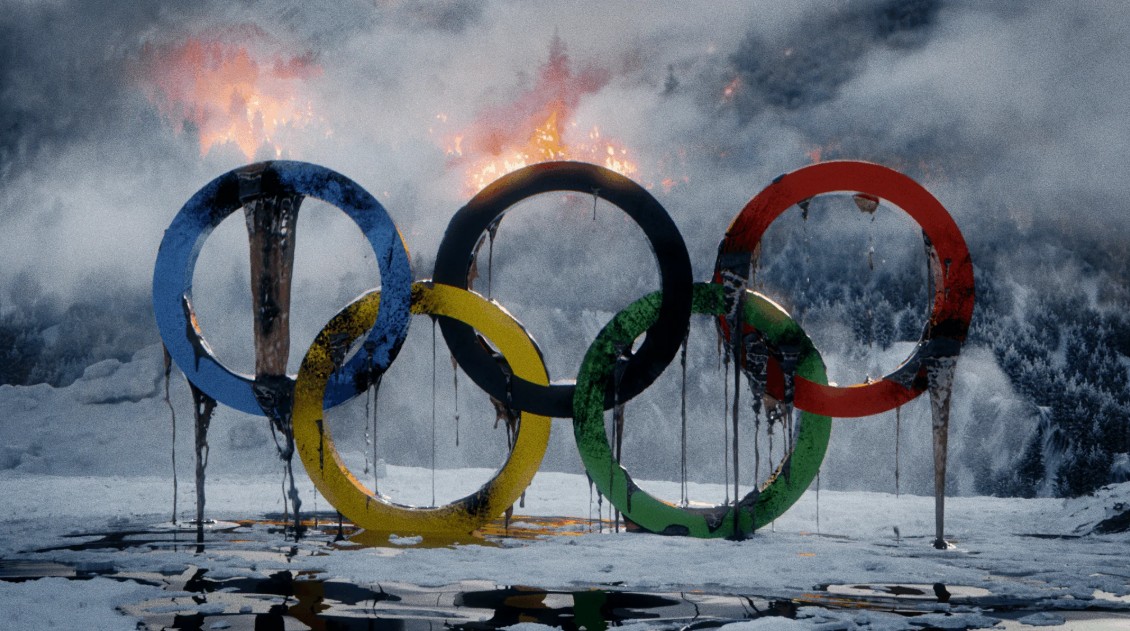
There is very little left until the start of the Milan Cortina 2026 Olympic and Paralympic Winter Games: presented as the “most sustainable ever”, in reality it is clear that, behind these ecological promises, a much more complex and worrying system is hidden.
Less than a week after the inauguration, serious contradictions emerge related to the environmental, social and economic impact of the event. Greenpeace is responsible for reeling off a series of data, starting from the study carried out by Scientists for Global Responsibility And New Weather Instituteaccording to which the Olympics will lead to a loss of 2.3 km² of snow cover and a reduction of more than 14 million tons of glacier ice.
We talked about it here: Milan-Cortina 2026, the snow is paying the bill: the shocking data on the emissions of the polluting sponsors of the Olympics
But what’s truly shocking is that emissions from the Olympics, fueled largely by companies like Eni, Stellantis and ITA Airways, could be responsible for a much bigger impact. If the sponsorship of these companies were eliminated, the climate impact of the Milan Cortina Olympics could be reduced by almost 60%.
Furthermore, the intensive exploitation of nature for the construction of plants, refuges and high-altitude construction sites is already having devastating repercussions. In Cortina d’Ampezzo, overbuilding has led to serious damage to the ecosystem, with the construction of a cable car in an ecologically sensitive area. The same land gave way due to construction pressure, raising concerns from environmental groups. Yet, despite the mobilization of local communities, the bulldozers have returned to work, continuing to irreparably damage the territory.
Forgotten promises
The initial promises of a sustainable economic event have been forgotten. In 2019, when Milan Cortina applied to host the Games, the expected budget was 1.36 billion euros, with the promise that no public funds would be used. Today, however, the overall budget has increased to over 5.4 billion, with a significant portion covered by public money. The most striking example is the Porta Romana Olympic Village in Milan, the cost of which has increased by 40 million euros, with a further risk of overloading public coffers.
Furthermore, much of the Olympic-related infrastructure will not even be ready for inauguration, with 57% of planned projects only seeing the light of day after February 6, 2026, resulting in uncertainty and an even greater economic impact on taxpayers.
Completing the picture of contradictions are the increasingly evident links between the Olympics and the war industry. As Greenpeace reminds us, Leonardo, an armaments giant accused of being among the accomplices of the genocide in Gaza, is one of the official sponsors of Milano Cortina 2026. This alliance profoundly contrasts with the principles of peace and friendship that should characterize every Olympic event.
It’s not just this that causes concern. Despite the initial decision to exclude Russian and Belarusian athletes due to their connection to the war in Ukraine, the Olympic Committee instead reaffirmed the legitimacy of Israeli participation, despite international accusations of war crimes. The politics of the sponsors and participating athletes raises questions about the real capacity of the Games to promote values of peace and solidarity.
View this post on Instagram
Eni’s sponsorship
Among the main sponsors of the Games – Greenpeace further underlines – is Eni, the Italian oil and gas giant, accused of being among the main responsible for greenhouse gas emissions which contribute to reducing the snow and Alpine glaciers on which winter sports themselves depend. With 395 million tons of CO2 emitted every year, Eni is endangering the future of the Olympics themselves. It is estimated that in the long term its emissions could melt over 50% of the Italian Alpine glaciers, damage that would forever compromise the practicability of winter sports.
Despite its sustainability claims, Eni continues to invest heavily in fossil fuels. For every euro invested in the “green” division, it spends 7.7 in the oil and gas sector, thus demonstrating how sustainability is just a facade.
In short, a few days before the start of the 2026 Winter Games, with Milan Cortina we find ourselves dealing with a long list of contradictions that cannot be ignored. The promises of a sustainable and inclusive event have been swept away by numerous bad choices and now the International Olympic Committee should be called upon to take up the challenge of freeing the Olympics from polluting interests and economic motivations that are suffocating their very essence.
Milano Cortina 2026 could be an opportunity to demonstrate that sport can truly be a symbol of peace and sustainability, but are we still in time?
Eni’s reply
(…) we reiterate that Eni shares the importance of combating climate change and will continue to invest in the energy transition, as demonstrated by the continuous and growing investments, aimed at a path of progressive decarbonisation which will lead to zero net emissions by 2050, also through the progressive increase in its low and zero carbon production, which by 2025 can count on 5.8 GW of installed renewable capacity and 1.65 million tonnes/year of refining capacity of biofuels).
We reject, in any case, any report that uses scientific bases to arrive at attributions of responsibility in a methodologically incorrect way that have no scientific or legal basis.
