
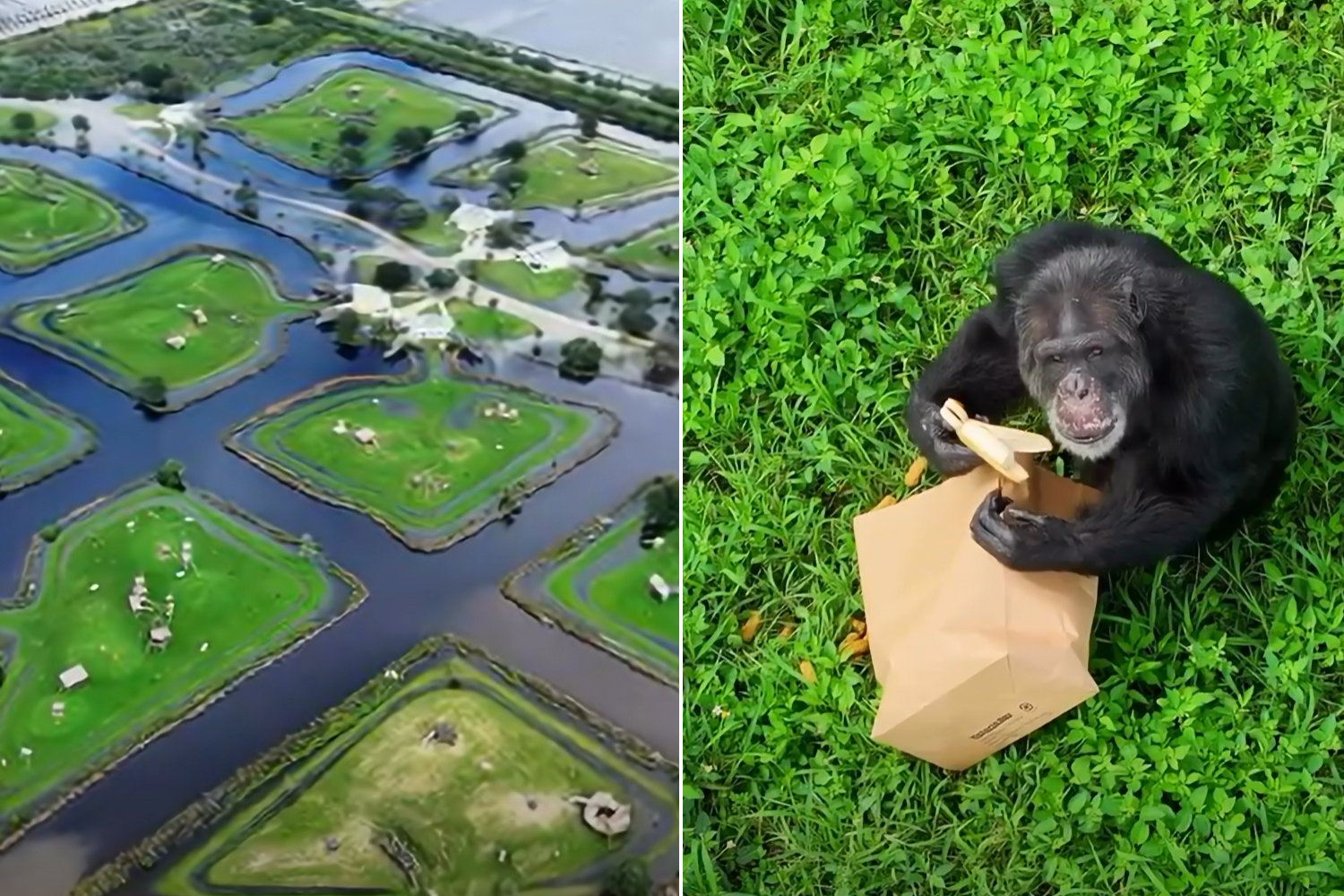
The extreme rainfall that hit Florida’s east coast in early November turned an animal shelter into an emergency theater. In the Fort Pierce area, north of West Palm Beach, the rainfall recorded between November 1 and 3, 2026 caused sudden flooding of internal canals. On November 2, the National Weather Service recorded over 130 mm of rain, pulverizing the previous historical record that had stood since 1946 and submerging the internal paths of the Save the Chimps sanctuary, a 61-hectare reserve divided into 12 islands and founded in 1997 by the primatologist Carole Noon.
The flooding of the streets prevented the usual daily distribution of around 1,360 kilograms of food, normally transported by electric vehicles. In this critical context, a 38-year-old male specimen named Kaleb found himself completely isolated in an external portion surrounded by water. After the failure of the off-road vehicle used for the fords, facilities manager Mark Yohannan and the center’s operators activated the non-hurricane weather emergency plan for the first time, deciding to take off a transport drone purchased for extraordinary situations.
The air delivery of food and the situation of the sanctuary
The images released by the facility show the remotely piloted aircraft lowering from above a paper bag containing bananas, fresh food and some blankets to protect the primate from humidity. After consuming the meal delivered from the sky, Kaleb independently crossed a flooded stretch with the help of a rope stretched above the water, reaching an area more accessible for the keepers. Despite the logistical difficulties, the shelter areas located on the raised grounds have guaranteed the safety of the over 200 primates hosted, many of whom were rescued from biomedical experimentation laboratories, circuses and illegal trafficking out of a historical total of almost 350 specimens welcomed.
The operators and veterinarians of the reserve spent several nights inside the shelters to ensure health care and the continuity of meals via tractors and trucks. On Saturday 7 November the level of the reservoir began to drop, leaving only 20% of the internal road network passable. Save the Chimps management has started estimating the damage to roofs, structures and company vehicles, promoting a fundraiser to restore the area to full operation and remediate the mold.
View this post on Instagram
