
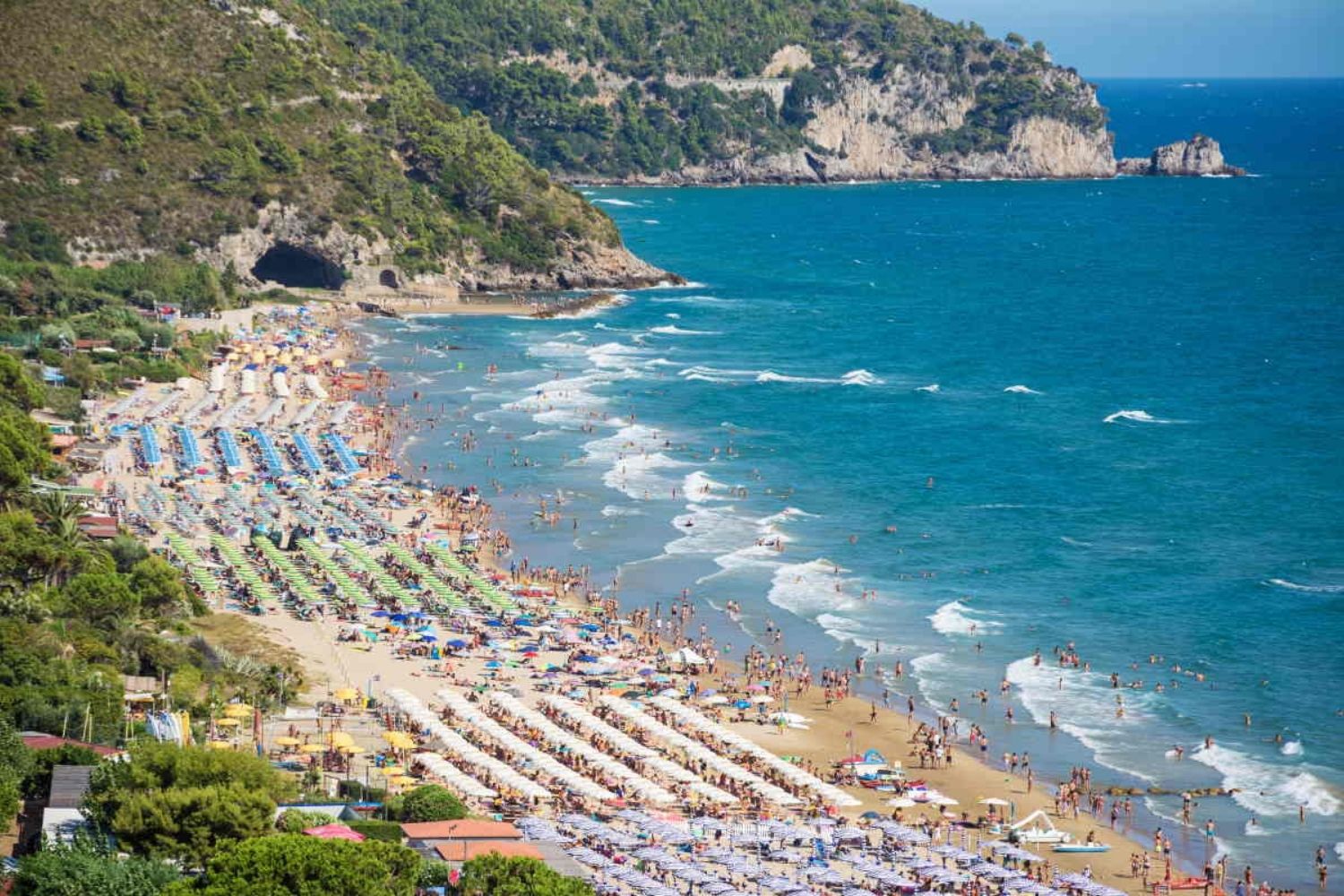
This year in Italy the theme of the bathing establishments is particularly hot. Stars prices, empty umbrellas, entrepreneurs who denounce crises and families who renounce the sea. The paradox is evident: we live in a country with about 8,000 kilometers of coast, yet finding a free stretch of beach becomes more difficult every year.
It is not just a question of portfolio, it is a theme of access to a common good, the sea, which the Constitution and the Navigation Code declare everyone, but which is actually more and more fenced and payment.
The latest data from ISPRA and Legambiente speak clearly. Only 41% of the Italian coasts are sandy and suitable for bathing, and a good slice of these beaches is given by concession. The official mapping of the government says that the areas occupied by plants are 33%, but it is a “rigged” number: in fact it is calculated on the entire coast, including cliffs and ports, not on the actually usable areas. Looking at the truly bathing beaches, the privatization share rises dramatically: in some regions such as Liguria, Emilia-Romagna and Campania it is touched 70%.
Result? In many locations, finding a square meter of free sand is a company.
Italy “black jersey” for free beaches
Looking beyond our boundaries, photography becomes even more merciless. In Greece only 15%of the beaches are privatized, in Croatia and Portugal just 5%, in France and Spain 2%. Italy holds the negative record in the Mediterranean. Worse than us only Hungary, with 100% of the privatized lake banks.
The main node are the bathing concessions. The European Union, through the Bolkestein Directive, asks Italy to open the sector to the competition through transparent public calls and clear rules, to ensure that the beaches remain accessible to everyone and do not remain in the hands of the operators themselves for decades. So far, however, the extensions have accumulated and the canons paid by dealers remain negligible compared to the collections.
Italian governments, fearing the clash with the bathing, have always postponed the races, and so the highest price pay citizens: families who can no longer afford an umbrella and coast traits that should be a common good, transformed into a privilege for a few.
The beaches that disappear
In addition to privatization, there is another problem that risks making the Italian sea a mirage, we obviously speak of climate change. The beaches are increasingly tight – on average 35 meters deep – eroded by storms and soil consumption.
According to Legambiente, between 2010 and 2024, extreme events in coastal municipalities have increased by 15% and the national level of adaptation to climate change warns: with the raising of the sea and record temperatures, in a few decades many beaches simply will no longer exist. So what are we discussing about?
The Sicilian ultimatum: “Just prevent access to the shoreline”
A sign of change comes from Sicily, where the Region has imposed an ultimatum: via Staccionate, fences and turnstiles that prevent access to the shoreline, under penalty of the immediate revocation of the concessions. The Italian-Belgian company, the historic owner of several plants in Mondello, has been accused of having made the sea, the Italian-Belgian company of having made the sea an area with a limited number with barriers, turnstiles and controls to the entrances.
“Citizens must always have the opportunity to access the sea freely and for free“The president of the Schifani region said, announcing tight checks and tight times: the dealers will have ten days to remove the structures. The councilor for the territory and the environment Giusi Savarino has reiterated that only mobile and easily moveable devices will be tolerated, while all rigid delimitations will have to disappear.
The decision has unleashed controversy among the managers, who speak of attack on the sector, but for many citizens it is the first true defense of the constitutional principle that the shade well common and accessible to everyone wants.
Don’t you want to lose our news?
Sources: Ispra / Legambiente
